What Maintenance Does an Absolute Multi Turn Photoelectric Encoder Require
2026-10-10
Industrial motion systems depend on feedback devices that remain accurate over years of continuous operation. An Absolute Multi Turn Photoelectric Encoder from Jingyue is engineered for exactly this purpose, combining optical sensing precision with mechanical durability to deliver reliable position data across multiple revolutions. Yet even the most robust encoder benefits from a structured maintenance routine. This guide outlines the practical steps engineers and maintenance teams should follow to protect performance, extend service life, and avoid unplanned downtime.
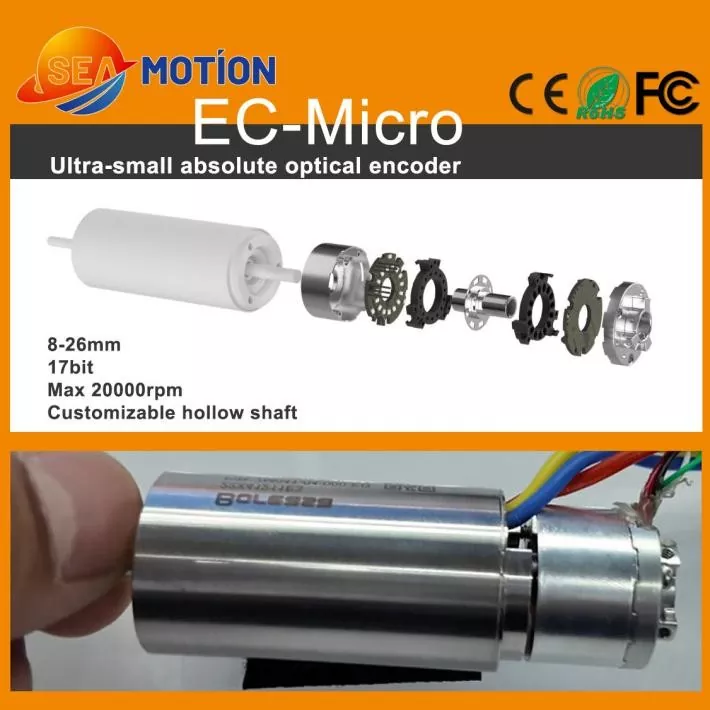
Understanding the Maintenance Profile of an Absolute Multi Turn Photoelectric Encoder
Unlike consumable components, an Absolute Multi Turn Photoelectric Encoder has no wearing parts in its sensing element. The photoelectric disk and optical receiver operate without contact, which means maintenance focuses on environmental protection, mechanical coupling, and signal integrity rather than component replacement. Jingyue designs each unit with this low-maintenance philosophy, but field conditions still dictate how much attention is required.
Key Maintenance Areas and Recommended Intervals
| Maintenance Area | Action Required | Recommended Interval | Risk If Neglected |
|---|---|---|---|
| Shaft coupling | Check for backlash, wear, or misalignment | Every 3–6 months | Position drift, vibration damage |
| Sealing and housing | Inspect gaskets, IP rating integrity | Every 6 months | Moisture ingress, optical contamination |
| Cable and connector | Verify strain relief, pin condition | Every 6 months | Signal loss, intermittent faults |
| Mounting fasteners | Confirm torque values | Every 12 months | Mechanical loosening, misalignment |
| Signal output | Compare against reference position | Every 12 months | Undetected accuracy degradation |
| Optical chamber | Clean only if contaminated (authorized service) | As needed | Scattering, reduced signal strength |
Step-by-Step Maintenance Checklist
-
Power down and lock out the system before any physical inspection.
-
Inspect the coupling between the encoder shaft and the driven mechanism. Even minor backlash can introduce positioning errors in an Absolute Multi Turn Photoelectric Encoder.
-
Examine seals and cable entries for cracks, hardening, or chemical exposure.
-
Verify mounting torque according to the Jingyue datasheet specification.
-
Check output signals using a reference standard to confirm multi-turn counting remains consistent.
-
Record findings in a maintenance log to track trends over time.
Environmental Factors That Demand Extra Attention
An Absolute Multi Turn Photoelectric Encoder installed in washdown areas, outdoor cabinets, or high-vibration machinery requires shorter inspection intervals. Jingyue offers sealed housings and reinforced bearings for these conditions, but the maintenance schedule should still be adjusted based on ambient temperature, humidity, and particulate exposure.
Absolute Multi Turn Photoelectric Encoder FAQ
Q: How often should an Absolute Multi Turn Photoelectric Encoder be recalibrated?
A: Recalibration is rarely required because the device retains absolute position without batteries. However, an annual verification against a reference standard is recommended, and recalibration should only be performed if the output deviates beyond the specified tolerance.
Q: Can an Absolute Multi Turn Photoelectric Encoder be repaired in the field?
A: Field repair is limited to external items such as couplings, cables, and mounting hardware. The optical assembly and internal electronics must be serviced by the manufacturer, and Jingyue provides authorized repair and replacement programs for these components.
Q: What causes signal loss in an Absolute Multi Turn Photoelectric Encoder?
A: Signal loss typically results from cable damage, connector corrosion, electromagnetic interference, or contamination inside the optical chamber. Systematic inspection of the cable path and sealing system resolves most cases without replacing the encoder.
When to Replace Instead of Maintain
Replacement becomes the practical choice when the housing is physically damaged, the optical chamber cannot be cleaned to specification, or position errors persist after coupling and wiring corrections. Jingyue technical support can help determine whether maintenance or replacement is the more cost-effective path.
Contact Us
Protect your motion system with a maintenance plan built around genuine Jingyue components and expert guidance. Contact us today to request a maintenance schedule, replacement parts, or a technical consultation for your Absolute Multi Turn Photoelectric Encoder application.