What Maintenance Does a Pig Manure Scraper Need Every Six Months
2026-08-07
A well-maintained Pig Manure Scraper is the backbone of efficient waste management in modern swine production. Without a disciplined semi-annual service routine, even the most durable equipment can suffer from premature cable wear, motor strain, and corrosion—leading to costly downtime and unhealthy barn conditions. At Deba Brothers, we have spent decades engineering scraper systems that withstand harsh manure environments, but we always remind producers that equipment longevity depends just as much on proactive care as on initial build quality. This guide outlines a practical six-month maintenance checklist, answers the most common service questions, and helps you protect your investment while keeping your pigs comfortable and your labor costs low.
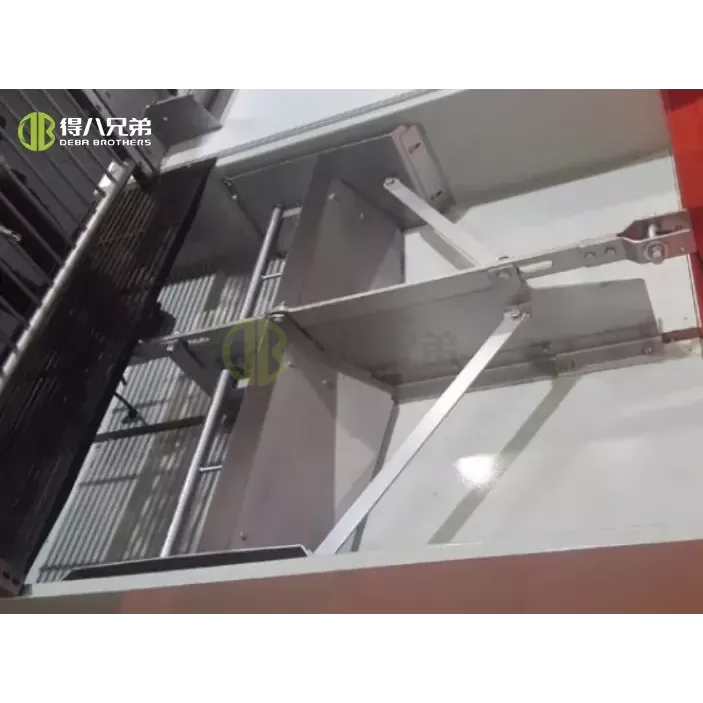
Semi-Annual Maintenance Checklist (Every 6 Months)
The following table organizes critical inspection points by component. Print this out and keep it near your control panel.
| Component | Action Required | Acceptable Condition | Red Flag (Immediate Repair) |
|---|---|---|---|
| Stainless Steel Cable | Measure diameter at 3 points; check for broken wires | Diameter reduction < 5%; < 2 broken wires per foot | Kinks, birdcaging, or > 5 broken wires |
| Drive Pulley & Sheaves | Inspect groove wear; align belt tension | Smooth surface; belt deflection ½ inch per 12-inch span | Grooves glazed or worn unevenly |
| Scraper Blades (Poly/UHMW) | Measure blade thickness; check for warping | Minimum ¾-inch thickness; flush with floor | Cracks, melting, or > ¼-inch gap under blade |
| Hydraulic/Power Unit Oil | Sample and send for particle count; change if cloudy | ISO 32 or 46; no water or metallic shimmer | Dark brown color or strong burnt odor |
| Limit Switches & Sensors | Clean with contact spray; test trip points | Activates within ± 1/8 inch of setpoint | Sticking, delayed response, or erratic signals |
| Chain & Tensioner | Lubricate with food-grade grease; check slack | 2–3% slack per ASTM standard | Excessive rust or stiff links |
| Floor Channel Drains | Flush with high-pressure water; clear debris | Free flow; no standing slurry | Blocked weep holes or settled solids |
Step-by-Step Service Procedure
Beyond visual inspections, every six months you should perform a dry-cycle test and a wet-load test back-to-back. Start by isolating power and locking out the control panel. Remove the access covers and clean all moving parts with a mild alkaline cleaner—never use acid-based products, as they accelerate pitting on galvanized components. After cleaning, manually rotate the drive shaft to feel for bearing roughness. Then, restore power and run the Pig Manure Scraper through three full passes without manure to verify limit switch accuracy. Finally, introduce typical slurry and observe the blade floor-contact pressure. If the scraper leaves more than ¼ inch of residue, adjust the blade tension rods equally on both sides to maintain even wear.
Critical Lubrication Schedule
Every six months coincides with a full grease replacement for all pivot points. Use a lithium-complex EP grease with a dropping point above 350°F. The table below shows the minimum grease points per system size.
| Barn Capacity (Hogs) | Grease Fittings | Oil Change (Gallons) | Labor Estimate (Hours) |
|---|---|---|---|
| Under 1,000 | 12 | 3 | 2.0 |
| 1,000 – 2,500 | 18 | 5 | 3.5 |
| Over 2,500 | 24 | 8 | 5.0 |
Common Pig Manure Scraper FAQ (Six-Month Focus)
Q: Why does my Pig Manure Scraper cable stretch more in summer than winter, and how does that affect my six-month service?
A: Thermal expansion and slurry viscosity changes cause cable tension to vary seasonally. In summer, warmer manure reduces friction but increases cable elongation by roughly 0.5% per 30°F rise. During your six-month service, always measure tension with a dynamometer when the pit is at operating temperature—not when empty. For Deba Brothers systems, we recommend a baseline tension of 1,200–1,500 lbs for a 200-foot pull. If you notice stretch beyond 2% of total length, you must re-tension the take-up assembly and re-calibrate the overload clutch. Ignoring this leads to scraper "bounce," which leaves uneven floors and accelerates blade wear on one side.
Q: Can I extend my six-month oil change interval if I use synthetic hydraulic fluid in my Pig Manure Scraper power unit?
A: Synthetic fluids do allow longer drain intervals—typically up to 1,000 operating hours versus 500 hours for mineral oils—but we strongly advise against skipping the six-month sampling interval. At every six-month checkpoint, draw a 100 ml sample and send it for ISO cleanliness testing (target ≤ 18/16/13). Water contamination is the real killer, not viscosity breakdown. Even with synthetics, moisture from barn humidity can emulsify and damage pump vanes. Deba Brothers field data shows that producers who sample every six months, regardless of fluid type, experience 73% fewer hydraulic failures. Change the oil only if the sample reports water > 0.2% or particle count exceeds the target—otherwise, just replace the return-line filter.
Q: What is the correct way to adjust the floor-scraping pressure during a six-month service without damaging the concrete?
A: Pressure adjustment is a precision step. First, place a feeler gauge under the center of each blade—you want 0.08 to 0.12 inches of clearance when the scraper is in the home position. Then, run a full pull and measure the amperage draw on the motor. For a standard 5 HP unit, full-load amps should stay between 85–90% of nameplate FLA. To increase pressure, tighten both side turnbuckles exactly one full turn each, then re-test. Never adjust only one side—this creates torque steer and gouges the concrete. Deba Brothers equips our scrapers with indexed turnbuckles, so one full turn equals 50 lbs of additional downforce. Always re-check the amperage after each adjustment; if amps spike above 95%, back off a half-turn to prevent motor overheating.
Record-Keeping and Wear Trends
Good maintenance is data-driven. Log every six-month service with photos of blade edges and cable segments. Over two years, this trend log will tell you exactly when to order replacement parts—before a failure occurs. Deba Brothers offers a free digital tracking template for our customers, which syncs with your barn management software. We also recommend tagging each cable installation date on the control panel; most high-grade galvanized cables last 4–5 years with proper six-month lubrication, but aggressive slurry with high sulfur content may reduce that to 3 years.
Final Operational Reminder
Never rush a six-month service. Allocate a full morning per scraper unit, and always keep a spare set of blades, limit switches, and a cable splice kit on hand. Training your staff to recognize unusual sounds—grinding, squealing, or chattering—during daily operation is just as vital as the formal bi-annual checklist. When you combine daily observation with a rigorous six-month schedule, your Pig Manure Scraper will deliver consistent, reliable performance for over a decade.
Contact Us – Ready to optimize your manure management or need OEM-quality replacement parts for your next service cycle? Reach out to Deba Brothers today for a free consultation and customized maintenance planner. Our team of swine equipment specialists is available by phone, email, or on-site visit to ensure your scraper system runs at peak efficiency. Visit our website or call your regional Deba Brothers representative—we are here to keep your barn clean, your pigs healthy, and your operating costs low. Let’s schedule your six-month service review now.