

What Is the Role of Thermal Conductivity in Heat Sink Extrusion Design
2026-03-05
Thermal conductivity is the foundation of effective Heat Sink Extrusion design, determining how efficiently a device transfers heat from a source to the ambient environment. At UET, we prioritize this property when engineering custom profiles, as it directly impacts the performance and reliability of the final product. Without optimal thermal conductivity, even the most intricately designed extrusion will fail to prevent overheating in high-power applications.
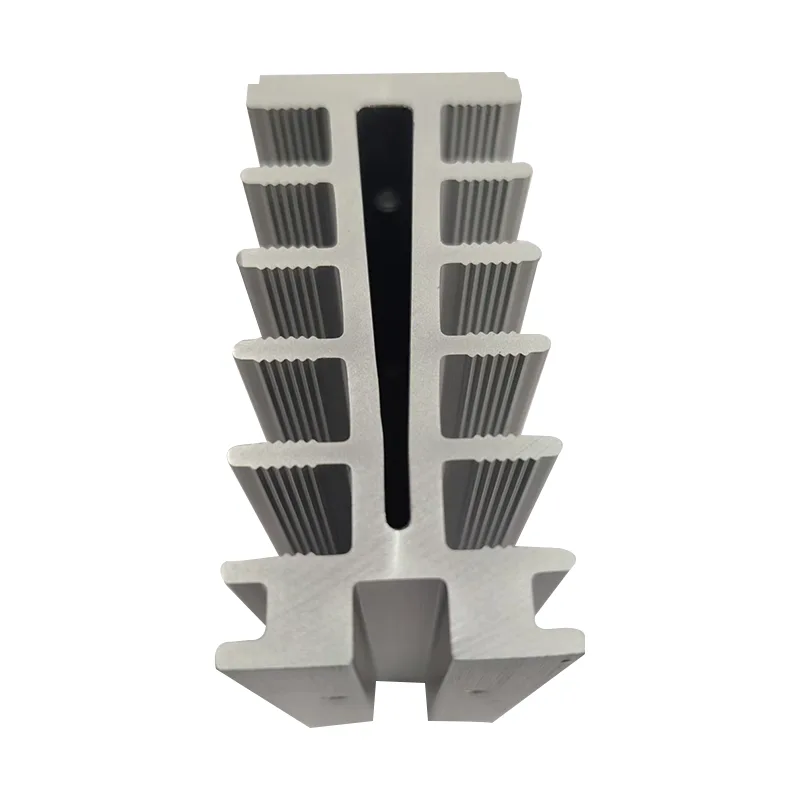
Understanding Thermal Conductivity in Extruded Profiles
Thermal conductivity measures a material's ability to conduct heat. In Heat Sink Extrusion, this property dictates how quickly and evenly heat spreads through the fins and base. Aluminum alloy 6063 is the industry standard for Heat Sink Extrusion because it offers an excellent balance of thermal conductivity (around 200 W/m·K), formability, and corrosion resistance. Selecting a material with higher conductivity allows designers to reduce the size of the heat sink while maintaining the same cooling capacity, which is critical for compact electronic assemblies.
Key Design Factors Influenced by Thermal Conductivity
| Design Factor | Impact of Thermal Conductivity | UET Engineering Approach |
|---|---|---|
| Fin Thickness | Higher conductivity allows for thinner fins without creating hot spots. | We optimize fin thickness to maximize surface area while maintaining structural integrity. |
| Base Plate Thickness | Ensures rapid heat spreading from the source to all fins. | Our designs calculate the minimum base thickness required for uniform heat distribution. |
| Material Selection | Determines the overall efficiency of the thermal path. | We recommend specific aluminum alloys based on the thermal budget of your application. |
| Interface Resistance | Poor conductivity at junctions creates thermal bottlenecks. | We design for seamless transitions to minimize resistance between the heat source and the sink. |
Optimizing Performance Through Material Choice
While copper offers higher thermal conductivity (approximately 400 W/m·K), its weight, cost, and difficulty in extrusion make aluminum the practical choice for most Heat Sink Extrusion projects. UET utilizes advanced simulation software to model how thermal conductivity interacts with airflow and fin geometry. This ensures that every cubic millimeter of material contributes to cooling, avoiding unnecessary weight and expense. By matching thermal conductivity to the specific wattage of your components, we create solutions that perform reliably under continuous load.
Frequently Asked Questions About Heat Sink Extrusion
Q: How does thermal conductivity affect the overall size of a Heat Sink Extrusion?
A: Thermal conductivity directly influences the required physical size of the heat sink. A material with higher thermal conductivity, such as specific aluminum alloys, spreads heat more efficiently. This allows engineers to design a Heat Sink Extrusion with a smaller footprint or lower profile because the heat is rapidly distributed to the fins, where convection can occur. If a material with low conductivity is used, the heat may concentrate near the source, requiring larger fins or a thicker base to compensate, ultimately increasing the size and weight of the assembly.
Q: Can I use any aluminum alloy for my Heat Sink Extrusion project?
A: No, not all aluminum alloys are suitable for extrusion or optimal for thermal management. While alloys like 1050 offer high conductivity, they are too soft for the extrusion process and lack structural strength. The most common and effective choice is Aluminum 6063, often called the "extrusion alloy." It provides a superior balance of thermal conductivity, mechanical strength, and corrosion resistance. At UET, we also work with alloys like 6060 for specific applications, but we always prioritize thermal performance to ensure your Heat Sink Extrusion meets its cooling targets.
Q: Why is the thermal interface material (TIM) important if my Heat Sink Extrusion has high conductivity?
A: Even the most conductive Heat Sink Extrusion is ineffective if it cannot efficiently draw heat away from the component. Microscopic air gaps between the heat source and the heat sink base act as insulators. A thermal interface material (TIM) fills these gaps, creating a continuous path for heat flow. The combined performance depends on both the TIM and the extrusion's bulk conductivity. UET considers the entire thermal stack—from the component through the TIM and into the extrusion—to ensure that the high thermal conductivity of the aluminum is fully utilized.
Partner with UET for Your Next Project
Effective thermal management begins with a deep understanding of material science and extrusion geometry. At UET, we combine decades of engineering experience with modern simulation tools to deliver Heat Sink Extrusion solutions that perform precisely as required. Whether you need a standard profile or a fully custom design, our team is ready to optimize for thermal conductivity, weight, and cost.
Contact Us today to discuss your thermal challenges and discover how UET can engineer the perfect solution for your application.
