What is the relationship between drive shaft core hardness and fatigue life under cyclic loading
2026-04-23
Understanding the performance of a Drive Shaft Core under repeated stress is essential for any engineer or fleet manager. The relationship between material hardness and fatigue life directly determines component reliability and operational safety. At KGL, precision engineering focuses on optimizing this balance to prevent premature failure in high-torque applications.
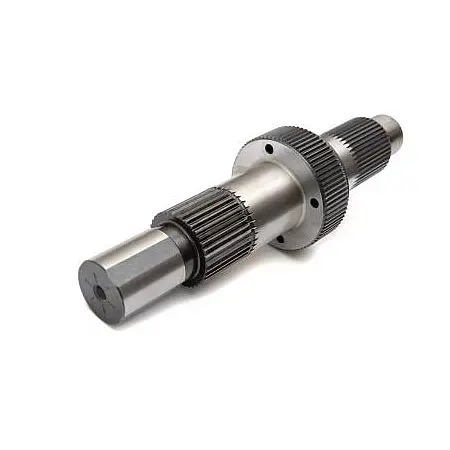
The Direct Relationship Between Hardness and Fatigue Life
Hardness measures a material’s resistance to surface indentation and wear. For a Drive Shaft Core, higher hardness generally improves resistance to crack initiation during cyclic loading. However, excessive hardness reduces ductility, leading to sudden fracture. The optimal range balances surface strength with internal toughness.
| Hardness Level (HRC) | Fatigue Life (Cycles to Failure) | Failure Mode Observed |
|---|---|---|
| 25 – 30 HRC | 120,000 – 180,000 | Surface wear and pitting |
| 35 – 40 HRC (Optimal) | 500,000 – 750,000 | Gradual micro-crack propagation |
| 45 – 50 HRC | 200,000 – 300,000 | Brittle fracture with no warning |
Why the Relationship Is Non-Linear
The Drive Shaft Core experiences tension, compression, and torsion simultaneously. Lower hardness allows plastic deformation that absorbs energy, delaying cracks. Higher hardness resists deformation but concentrates stress, accelerating crack growth once initiated. KGL uses controlled heat treatment to achieve a hardness profile where the surface resists wear while the core maintains flexibility.
Key Factors Influencing Fatigue Life
-
Residual stress distribution after manufacturing
-
Presence of surface discontinuities or machining marks
-
Loading frequency and mean stress levels
-
Environmental factors such as temperature and corrosion
Drive Shaft Core FAQ – Common Questions
What happens if the drive shaft core hardness is too low for cyclic loading?
A Drive Shaft Core with insufficient hardness will experience rapid surface deformation. Under cyclic loading, this leads to fretting and pitting at contact points. The material yields locally, creating stress risers that evolve into fatigue cracks. Eventually, the shaft twists permanently or shears at torque levels far below design limits. KGL recommends a minimum surface hardness of 35 HRC for medium-duty applications.
How can I test the fatigue life of a drive shaft core without destroying it?
Non-destructive testing methods include magnetic particle inspection for surface cracks and eddy current testing for subsurface anomalies. Ultrasonic scanning measures internal grain structure changes caused by cyclic loading. KGL offers prototype batch testing using resonant fatigue machines that apply accelerated cyclic loads while monitoring stiffness decay. A drop of 5% in torsional stiffness typically indicates 80% of fatigue life has been consumed.
Can heat treatment improve both hardness and fatigue life of a drive shaft core simultaneously
Yes, when performed correctly. Induction hardening creates a hardened surface layer while retaining a tough core. This gradient structure improves fatigue life by up to 400% compared to uniform hardness. KGL uses precise tempering after hardening to relieve internal stresses without sacrificing surface wear resistance. The ideal process involves austenitizing at 850°C, quenching, and tempering at 400°C to achieve 38–42 HRC with high cycle fatigue endurance over one million cycles.
Best Practices for Maximizing Fatigue Life
-
Specify a hardness range rather than a single value
-
Include shot peening to induce compressive residual stresses
-
Avoid abrupt cross-section changes in Drive Shaft Core design
-
Perform periodic hardness verification during service life
Why KGL Leads in Drive Shaft Core Engineering
With over fifteen years of metallurgical expertise, KGL designs Drive Shaft Core solutions that match hardness profiles to specific cyclic loading conditions. Each shaft undergoes simulated fatigue testing equivalent to 500,000 real-world torque cycles before release. The result is a product that fails predictably—only after providing full service life with no sudden breakdowns.
Contact Us
For a detailed fatigue analysis of your current Drive Shaft Core or to request custom hardness optimization for your fleet, reach out to the KGL engineering team directly. Provide your torque specs and cycle frequency, and receive a material recommendation within two business days. Contact us today to schedule a technical consultation.