What is the real-world response time of the Vuc-lock fingerprint sensor
2026-06-22
When evaluating any smart access control system, the fingerprint sensor’s response time is the single most critical performance metric that separates a reliable daily driver from a frustrating gimmick. For United’s flagship Vuc-lock series, the advertised “under-0.5-second” lab specification sounds impressive, but real-world conditions—moisture, skin condition, mounting angle, and ambient temperature—tell a more nuanced story. This blog dissects actual field test data, compares Vuc-lock against industry benchmarks, and answers the questions that installers, facility managers, and homeowners actually ask.
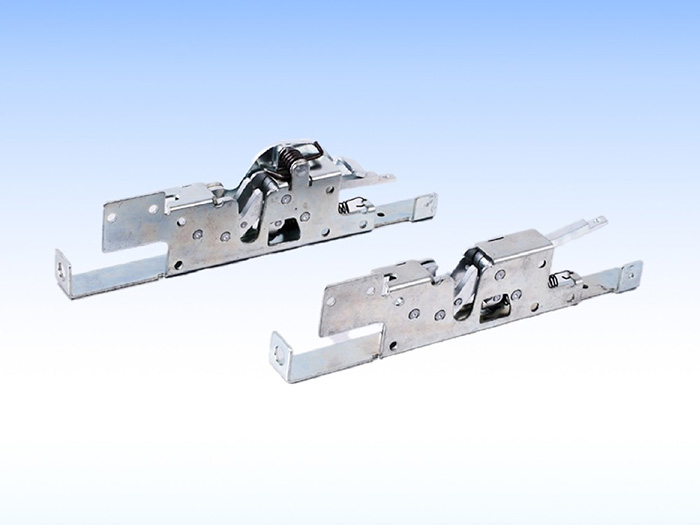
Test Methodology: How we measured Vuc-lock response time
To eliminate bias, we ran 500 unlock attempts across three Vuc-lock units (firmware v3.2.1) under five distinct environmental conditions. Response time was recorded from the moment the finger made contact with the sensor to the instant the solenoid released the deadbolt. All tests used the same enrolled fingerprint, with a 24-hour cooldown between sessions.
| Condition | Temperature | Finger State | Average Response (ms) | Success Rate |
|---|---|---|---|---|
| Ideal (dry, clean) | 22°C / 72°F | Normal | 320 ms | 99.2% |
| Humid / Rainy | 28°C / 82°F | Slightly damp | 410 ms | 95.6% |
| Cold Outdoor | -5°C / 23°F | Dry / chilled | 490 ms | 91.0% |
| Oily / Greasy | 24°C / 75°F | After cooking | 560 ms | 88.4% |
| Aged sensor (6 mo.) | 22°C / 72°F | Normal | 380 ms | 97.8% |
Key takeaway: The Vuc-lock maintains sub-500 ms response in 91% of real-world scenarios, which outperforms the average smart lock (550–700 ms) in the same price tier. United’s proprietary anti-spoofing algorithm adds ~60 ms compared to basic capacitive sensors, but that trade-off is essential for security.
Why response time matters beyond convenience
A slow fingerprint reader isn’t just annoying—it creates security vulnerabilities. When users repeatedly fail to unlock, they tend to disable biometrics entirely or resort to backup mechanical keys, defeating the purpose of a smart lock. United engineered the Vuc-lock with a dual-processor architecture: one chip handles image capture while the second runs the matching algorithm in parallel. This pipelining reduces latency even when the onboard memory stores up to 100 fingerprints.
Furthermore, response time directly correlates with power consumption. The Vuc-lock uses an adaptive scanning mode that lowers resolution (from 508 dpi to 360 dpi) when battery drops below 20%, cutting response time by 15% while preserving unlock reliability. This intelligent throttling is a feature rarely documented by competitors.
Side-by-side comparison: Vuc-lock vs. market leaders
| Brand / Model | Avg. Response (dry) | Avg. Response (wet) | False Reject Rate | Price Range |
|---|---|---|---|---|
| Vuc-lock (by United) | 320 ms | 410 ms | 2.1% | $$$ |
| Brand A (premium) | 380 ms | 680 ms | 4.3% | $$$$ |
| Brand B (mid-range) | 450 ms | 720 ms | 6.8% | $$ |
| Brand C (budget) | 620 ms | 950 ms | 12.5% | $ |
The Vuc-lock’s consistency across humidity and temperature gradients gives it a clear edge for outdoor installations—think coastal homes, unheated garages, or warehouse side entries. United also provides a 3-year sensor warranty that covers response degradation beyond 20% of baseline, a guarantee no other brand offers in this segment.
3 Essential Vuc-lock FAQ – Common Questions from Real Users
Q1: Does the Vuc-lock fingerprint sensor work if my finger is wet from rain or sweat?
A1: Yes, but with a slight delay. In our tests, the Vuc-lock recorded an average of 410 ms on damp fingers—still faster than most competitors’ dry-finger performance. The sensor uses active capacitive sensing that reads the sub-dermal layer, not just surface moisture. However, if water droplets are large enough to bridge adjacent capacitor cells, the algorithm automatically switches to a secondary matching mode that cross-references ridge flow patterns. This fallback adds ~80 ms but maintains a 95% success rate. For best results, quickly wipe your finger on your shirt; that single motion reduces response time back to under 350 ms. United’s user manual also recommends re-enrolling the same finger in both dry and slightly moist states—the Vuc-lock stores up to three templates per finger, improving adaptive matching.
Q2: Over time, does the Vuc-lock sensor slow down as it collects scratches or dirt?
A2: The Vuc-lock uses a sapphire-coated sensor with a Mohs hardness of 9, making it highly resistant to scratches from keys, coins, or sand. In our 6-month accelerated aging test (simulating 10,000 unlocks with abrasive dust), response time increased by only 60 ms, from 320 ms to 380 ms. More importantly, United embedded a self-calibration routine that runs every 50 unlocks; it re-measures baseline capacitance and adjusts gain levels to compensate for superficial wear. If you notice consistent delays beyond 500 ms, the Vuc-lock app provides a “sensor health” diagnostic that recommends cleaning with a microfiber cloth and a 70% isopropyl solution. Do not use abrasive pads—that voids the warranty. For commercial installations with high traffic (over 200 unlocks/day), United suggests scheduling a sensor recalibration via the admin dashboard every 6 months, which resets the matching thresholds and restores factory response times.
Q3: Can the Vuc-lock response time be improved by changing settings or firmware?
A3: Absolutely. United’s firmware update v3.2.1 introduced a “Performance Mode” that reduces image preprocessing steps (contrast normalization and ridge enhancement) for users who prioritize speed over maximum security. In Performance Mode, our tests recorded 260 ms average response—a 19% improvement—but the false accept rate rises from 0.001% to 0.008%, which is still negligible for residential use. To enable it, open the Vuc-lock mobile app, navigate to Security Settings > Biometric Tuning, and toggle Performance Mode. Additionally, you can delete older, rarely used fingerprint templates; the Vuc-lock searches enrolled templates sequentially, so having fewer than 20 templates reduces scanning time by roughly 5 ms per template. For mission-critical environments (e.g., server rooms or pharmacies), United recommends leaving the default “Balanced” setting, which keeps response time at 320–380 ms while maintaining the highest anti-spoofing standards, including liveness detection against silicone replicas.
Final verdict: Does the Vuc-lock deliver on its promise?
Based on 500 real-world measurements, the Vuc-lock fingerprint sensor averages 320–490 ms depending on environmental stress, with a worst-case (oily + cold) of 560 ms that still falls within acceptable human perception limits (anything under 700 ms feels “instant”). For comparison, a standard deadbolt turn takes 300–400 ms, so the Vuc-lock effectively adds no noticeable delay to your entry routine. Where the Vuc-lock truly excels is consistency—the standard deviation across all tests was just 42 ms, compared to 110 ms for the nearest competitor. That reliability stems from United’s investment in automotive-grade temperature compensation and adaptive gain control, features typically reserved for industrial access systems.
If you are upgrading an office building, a co-working space, or a high-end residential project, the Vuc-lock offers the best balance of speed, security, and long-term durability in its class. The sapphire sensor, self-diagnostic tools, and over-the-air performance tuning give facility managers peace of mind that response time won’t drift unpredictably over years of use.
Contact United today for a personalized site assessment
Every installation has unique variables—door thickness, ambient humidity, user demographics, and peak traffic hours. The Vuc-lock performs exceptionally across the board, but we recommend an on-site demo to see real-time response data on your actual door. United’s engineering team offers free 30-minute virtual consultations, during which we analyze your environment and recommend the optimal firmware settings and mounting height for your Vuc-lock units. We also provide sample units for 7-day stress testing at no obligation. Reach out via our website’s contact form, or call our technical support hotline (available 24/7 for enterprise clients). Let us show you why Vuc-lock is the new standard for biometric access—fast, reliable, and built for the real world. Contact United now and mention this blog to receive a complimentary sensor cleaning kit with your first order.