What Is the Maximum Sealing Pressure for a Cast Iron Square Penstock Gate
2026-06-18
When specifying flow control equipment for water treatment, flood defense, or industrial effluent systems, one question consistently rises to the top: What is the maximum sealing pressure for a Cast Iron Square Penstock Gate? This single parameter determines not only the gate’s suitability for your application but also its long-term reliability, actuator sizing, and overall project cost. At FYL, we engineer Cast Iron Square Penstock Gate solutions that balance structural integrity with precision sealing, and in this guide, we break down the pressure ratings, influencing factors, and real-world considerations you need to know.
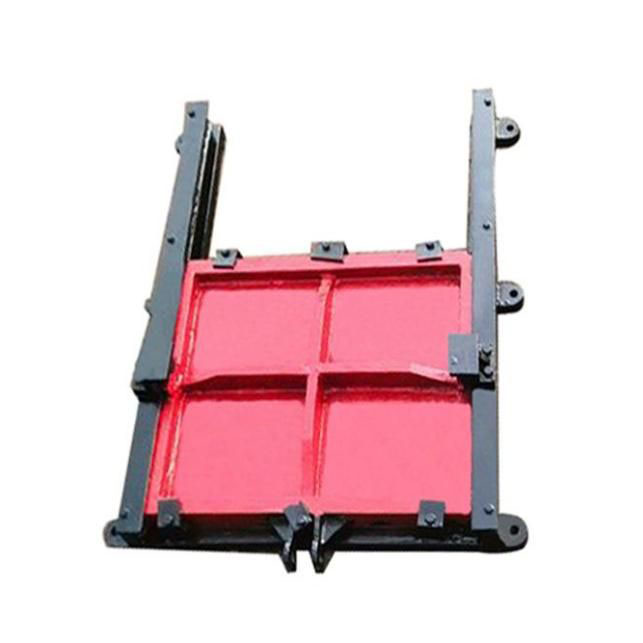
Understanding Sealing Pressure Ratings
The maximum sealing pressure for a Cast Iron Square Penstock Gate is not a fixed global number—it depends on the gate’s design, size, sealing configuration, and the direction of water pressure (seating vs. unseating). However, industry standards (AWWA C560, EN 1074, and BS 7775) provide clear benchmarks.
For most standard-duty Cast Iron Square Penstock Gate models, the maximum recommended seating head pressure is 20 feet (6 meters) of water column, equivalent to approximately 0.87 psi (0.06 bar) for unseating conditions. For heavy-duty or high-head designs, FYL offers gates rated up to 40 feet (12 meters) of head, or roughly 1.74 psi (0.12 bar), with specialized sealing systems that maintain bubble-tight shutoff up to 50 feet (15 meters) under controlled conditions.
The table below summarizes typical pressure ranges based on gate size and duty class:
| Gate Size (inches) | Duty Class | Max Seating Head (ft) | Max Unseating Head (ft) | Equivalent Sealing Pressure (psi) |
|---|---|---|---|---|
| 12 x 12 – 24 x 24 | Standard | 20 | 10 | 0.87 / 0.43 |
| 24 x 24 – 48 x 48 | Heavy-Duty | 30 | 15 | 1.30 / 0.65 |
| 48 x 48 – 72 x 72 | High-Head | 40 | 20 | 1.74 / 0.87 |
| Custom > 72" | FYL Engineered | 50 (with reinforced frame) | 25 | 2.17 / 1.08 |
Note: Seating pressure refers to closure against oncoming water; unseating pressure is opening against downstream water. FYL always recommends specifying both values for your hydraulic profile.
Factors That Influence Real-World Sealing Performance
Exceeding the rated maximum sealing pressure does not instantly cause failure, but it accelerates wear on the rubber seal, increases actuator torque requirements, and risks permanent distortion of the gate frame. For a Cast Iron Square Penstock Gate, the following elements are critical:
-
Seal Material & Profile: EPDM or Nitrile seals perform differently under compression. FYL uses a dovetail-profile seal that maintains consistent contact pressure even at the upper head limit.
-
Gate Orientation: Vertical installation handles higher seating heads than inclined or horizontal mounts due to gravity-assisted sealing.
-
Surface Finish: A smooth, machined sealing face (minimum 125 RMS) reduces friction and prevents micro-leakage at high pressures.
-
Frame Rigidity: Cast iron grade (ASTM A48 Class 30 vs. Class 40) directly affects deflection under load. FYL high-head models use Class 40 with integral stiffening ribs.
Frequently Asked Questions About Cast Iron Square Penstock Gate Sealing Pressure
Q1: Can a Cast Iron Square Penstock Gate withstand backflow pressure higher than its rated seating head?
A1: Not safely. The rated seating head is calculated for forward (closure) pressure against the upstream face. Backflow (reverse) pressure places tensile stress on the stem and hinge connections, which are not designed for the same load. If backflow is a possibility, FYL recommends a double-seated or bi-directional Cast Iron Square Penstock Gate with reinforced stem guides and a heavier-duty actuator. For standard unidirectional gates, operating above 50% of the unseating head will significantly shorten seal life and may cause stem buckling. Always provide the maximum upstream and downstream water levels to FYL during the selection phase.
Q2: How does gate size affect the maximum sealing pressure for a Cast Iron Square Penstock Gate?
A2: Inversely. Larger gates have greater surface area, meaning the total hydrostatic force increases exponentially with size even at the same head. For example, a 24" square gate at 20 ft head experiences about 4,800 lbs of total force, while a 60" square gate at the same head experiences over 30,000 lbs. This larger force requires a proportionally thicker frame, heavier seal compression, and more powerful actuation. FYL engineers each Cast Iron Square Penstock Gate with size-specific safety factors—our standard 20-ft rating applies to gates up to 48", but for 60" and above, we automatically de-rate to 15 ft unless you opt for our heavy-duty series with additional bracing and a dual-seal system.
Q3: What testing standard does FYL use to verify the maximum sealing pressure of a Cast Iron Square Penstock Gate?
A3: FYL conducts hydrostatic proof testing in accordance with AWWA C560-21, Section 5.3. Each Cast Iron Square Penstock Gate is shop-tested at 1.5 times the rated seating pressure for a minimum of 15 minutes, with leakage measured using a graduated cylinder. For bubble-tight certification, we apply a 0.5 psi air pressure under water immersion—visible bubbles indicate failure. Our standard acceptance criterion is less than 0.1 mL per minute per inch of perimeter. For custom high-head orders, we also perform cyclic pressure testing (500 open/close cycles at 90% of rated head) to validate seal durability. All test reports are stamped and archived per ISO 9001:2015, and we provide them with every shipment.
Practical Recommendations for Your Project
When calculating your required sealing pressure, always add a 20% safety margin above the calculated maximum operating head. This accounts for transient surges (water hammer), temperature fluctuations, and settling of the concrete structure. FYL offers a free hydraulic assessment service where our engineers review your site data and recommend the optimal Cast Iron Square Penstock Gate configuration—including seal type, stem diameter, and floor stand design.
Additionally, never overlook the actuator. A gate rated for 40 ft head requires roughly 2.5 times more operating torque than a 20-ft rated gate. Undersized actuators are the #1 cause of field failures, even when the gate itself is pressure-capable. FYL provides matched actuator-gate packages with torque calculations included in our submittal drawings.
Conclusion & Contact Us
Choosing the right Cast Iron Square Penstock Gate means looking beyond a single pressure number—you need to evaluate seal longevity, frame rigidity, test protocols, and site-specific hydraulic transients. FYL has supplied over 1,200 Cast Iron Square Penstock Gate units across municipal and industrial projects worldwide, with pressure ratings verified through third-party laboratory testing and decades of field data.
Contact us today to request a free pressure-rating worksheet and customized submittal drawing. Let FYL help you specify the exact Cast Iron Square Penstock Gate that meets your maximum sealing pressure requirements—without over-engineering or under-performing. We respond to all technical inquiries within 4 business hours.