

What Is The Load Capacity Of A Standard Timber Connector Strip Nail Plate
2026-01-22
When designing or engineering a timber structure, one critical question often arises: What is the load capacity of a standard Timber Connector Strip Nail Plate? This isn't a question with a single, universal answer, but rather a starting point for understanding the engineering principles behind these essential components. At S-SEN, we believe that informed decisions are the foundation of safe and durable construction. The capacity of a connector plate is not arbitrary; it is determined by a complex interplay of factors, all crucial for ensuring structural integrity.
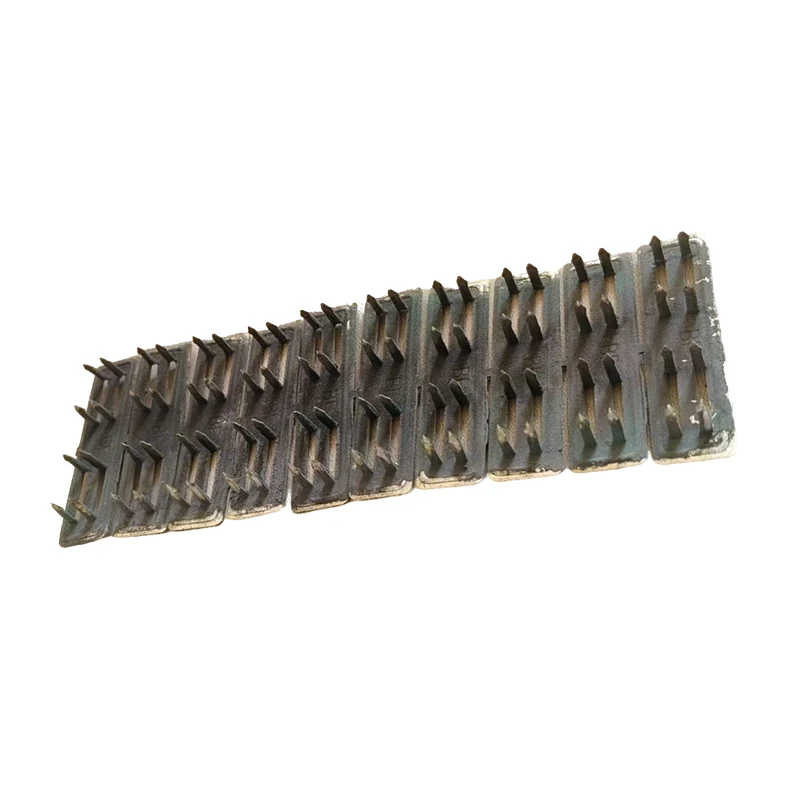
A standard Timber Connector Strip Nail Plate acts as a specialized fastener that transfers stress between wood members. Its load-bearing capability depends on several key variables:
-
Material and Galvanization: The thickness (gauge) of the steel and the type of protective coating (e.g., G60, G90 galvanization) directly impact strength and corrosion resistance.
-
Tooth Design: The pattern, density, and geometry of the teeth dictate how effectively the plate grips the wood fibers.
-
Timber Species and Grade: Harder woods like oak will allow for different load transfer than softer woods like pine.
-
Orientation of Load: Plates are engineered to withstand different forces, primarily:
-
Tension: Forces trying to pull the joint apart.
-
Compression: Forces pushing the joint together.
-
Shear: Forces causing parallel layers to slide past each other.
-
The most reliable source for load capacity is the manufacturer's Code-Approved Evaluation Report or technical literature. For example, a generic plate might have published values like the following, which are for illustrative purposes only:
| Load Direction | Typical Capacity Range (for a common gauge plate in pine) |
|---|---|
| Tension | 1.2 kN - 3.5 kN per plate end |
| Compression | 2.0 kN - 4.5 kN per plate end |
| Shear | 0.8 kN - 2.2 kN per plate side |
Timber Connector Strip Nail Plate FAQ
What factors most commonly reduce the stated load capacity of a plate?
The most common factors are incorrect installation—such as using a hammer instead of a press, which can damage the tooth-wood bond—and using the plate on timber with a moisture content outside the specified range, which can compromise long-term grip and lead to corrosion.
Can I use multiple Timber Connector Strip Nail Plates to increase a joint's strength?
Yes, but it is not a simple linear addition. Professional engineering calculation is required to account for load distribution, potential group action effects, and minimum spacing requirements between plates to prevent wood splitting and ensure the combined capacity is achieved safely.
How does S-SEN ensure the reliability of its Timber Connector Strip Nail Plate load ratings?
At S-SEN, every plate series undergoes rigorous independent laboratory testing in accordance with international building standards (such as ASTM or EN). We publish comprehensive technical datasheets that provide not only ultimate loads but also allowables with appropriate safety factors, giving engineers and builders trustworthy data for their specific project conditions.
Ultimately, the load capacity is a precise engineering value, not an estimate. Relying on generic assumptions can compromise safety. For your specific project, consulting the official technical documentation from a trusted manufacturer like S-SEN is non-negotiable. Our experts are ready to provide the certified data and support you need to ensure your structures are built to last. Contact us today with your project specifications for detailed product information and engineering guidance.
