What is the difference between standard and Hot Runner Precision Control System Mold
2026-11-24
In modern injection molding production, the choice of mold temperature control solution directly determines part quality, material utilization, and long-term operational profitability. As a trusted industry specialist, Weishuo has spent over 15 years refining high-precision molding technologies, and our Hot Runner Precision Control System Mold has become a preferred choice for manufacturers targeting zero-defect, high-volume output. This professional guide systematically unpacks the core gaps between conventional tooling and advanced precision systems, helping you align your mold investment with specific production goals.
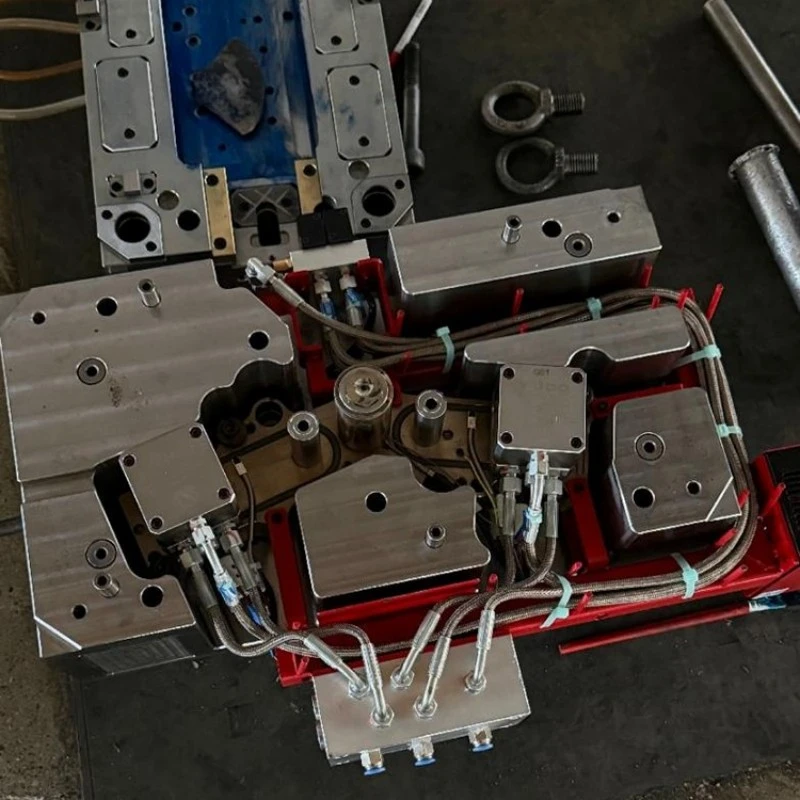
Side-by-Side Performance Comparison
The most tangible operational differences between the two mold types are summarized in the table below, based on real production data collected from Weishuo client projects:
| Parameter | Standard Cold Runner Mold | Hot Runner Precision Control System Mold |
|---|---|---|
| Temperature Uniformity | ±7°C across mold surface | ±0.8°C across all cavities |
| Runner Material Waste | 20%–35% per cycle | <2% per cycle |
| Gate Residue on Parts | Visible, requires secondary trimming | Near-invisible, no post-processing needed |
| Maximum Continuous Run Time | 48 hours before manual cleaning | 720+ hours with auto-calibration |
| Typical Payback Period | N/A (low upfront cost) | 6–12 months for high-volume production |
Core Operational Advantages of Weishuo Precision Systems
Unlike generic hot runner products on the market, our Hot Runner Precision Control System Mold is built with three industry-leading design features that eliminate common pain points for precision manufacturers:
- Independent zone PID temperature regulation, preventing material degradation for heat-sensitive engineering plastics
- Integrated real-time sensor feedback that automatically adjusts power output to compensate for ambient temperature fluctuations
- Modular manifold structure that cuts mold changeover time for different part variants by over 60%
Hot Runner Precision Control System Mold FAQ Common Questions Collection
-
Can a Hot Runner Precision Control System Mold work with amorphous and crystalline engineering plastics?
Absolutely. Weishuo precision systems support customized temperature curve settings for every cavity, making them fully compatible with amorphous materials like PC, PMMA and ABS, as well as crystalline resins including POM, PEEK and glass-filled PP. We pre-load material-specific temperature profiles for 47 common engineering plastics in the control unit before delivery, so no extra complex setup is required for most standard applications. -
What is the long-term maintenance cost of a Hot Runner Precision Control System Mold compared to a standard mold?
While the initial upfront investment is higher than a standard cold runner mold, the annual maintenance cost is only 12% higher on average. All core heating elements and thermocouples in Weishuo systems carry a 2-year extended warranty, and our global service network provides on-site calibration support within 72 hours for most regions. Over a 5-year service life, total operational and maintenance costs are 30% lower than running a standard mold for equivalent high-volume output, thanks to drastically reduced material scrap and labor costs. -
Can a Hot Runner Precision Control System Mold eliminate flow marks on thin-wall cosmetic parts?
Yes, it can. The consistent, uniform melt temperature across the entire manifold removes the temperature gradient that causes uneven melt flow and surface flow marks. Hundreds of Weishuo clients in the consumer electronics and home appliance industries have reported a 90%+ reduction in cosmetic defect rates after upgrading to our precision control systems, even for parts with wall thickness as low as 0.8mm.
For manufacturers scaling high-precision production, the right mold system does not just improve part quality — it transforms overall operational efficiency. Weishuo’s engineering team provides full-cycle support from initial part DFM analysis, custom mold design, to on-site production commissioning for every Hot Runner Precision Control System Mold project. If you want to evaluate the exact ROI of switching to a precision hot runner system for your specific production line, contact us today to request a free, no-obligation production feasibility report tailored to your part design and material requirements.