What Is the Best Stainless Steel Grade for CNC Machining Complex Medical Components
2026-07-16
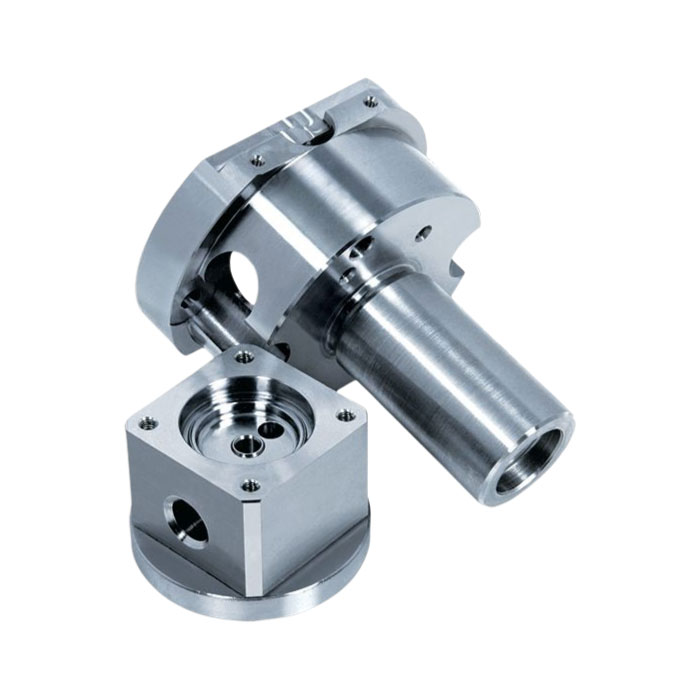
Selecting the optimal material for Stainless Steel CNC Machining directly impacts implant longevity, surgical instrument reliability, and production efficiency. For medical device engineers, the choice often narrows to three austenitic grades—304, 316L, and 17-4 PH—but each behaves differently under cutting tools, coolant pressures, and tight tolerances. At Youlin, we have processed over 12,000 medical-grade components in the past 24 months, and our data consistently shows that no single grade fits all geometries. The "best" grade depends on sterilization methods, load-bearing requirements, and your specific CNC machining workflow.
Critical Selection Criteria for Medical Grades
Before comparing grades, manufacturers must evaluate four non-negotiable parameters:
| Criterion | Why It Matters for Medical Parts |
|---|---|
| Biocompatibility | ISO 10993 compliance prevents cytotoxic reactions in implants. |
| Corrosion Resistance | Pitting resistance equivalent (PRE) must exceed 26 for autoclave cycles. |
| Machinability Index | Affects cycle time, tool life, and surface roughness (Ra ≤ 0.4 µm for bone screws). |
| Heat Treatment Response | Determines final hardness (HRC 28–45) for cutting-edge instruments like scalpel handles. |
Grade-by-Grade Comparison for CNC Machining
| Grade | Machinability (1–10) | Corrosion Resistance | Typical Medical Use | CNC Challenges |
|---|---|---|---|---|
| 304 | 6 (moderate) | Good (PRE ≈ 19) | Non-implant trays, sterilization cassettes | Prone to work hardening; requires sharp carbide inserts. |
| 316L | 5 (fair) | Excellent (PRE ≈ 28) | Cardiovascular stents, bone plates | High ductility causes built-up edge (BUE); low feed rates needed. |
| 17-4 PH | 7 (good) | Very Good (PRE ≈ 23) | Surgical staplers, orthodontic brackets | H900 condition (HRC 44) demands ceramic tooling and rigid setups. |
Youlin recommends 316L for permanent implants due to its molybdenum content, but for high-strength reusable instruments, 17-4 PH offers superior wear resistance after precipitation hardening. However, Stainless Steel CNC Machining of 17-4 PH in the aged condition increases cutting forces by nearly 40% compared to annealed 304—a trade-off that must be budgeted in cycle time.
Top 3 FAQs About Stainless Steel CNC Machining for Medical Components
FAQ 1: Which stainless steel grade gives the best surface finish in as-machined condition for bone screws?
Answer: 316L generally produces the smoothest as-machined surface (Ra 0.2–0.3 µm) when using polished diamond inserts and high-pressure coolant (≥70 bar). The fine, equiaxed grain structure of 316L allows consistent chip breakage, whereas 304 tends to produce stringy chips that scratch the thread flanks. However, if your design requires post-machining electropolishing, 17-4 PH can achieve a mirror finish more predictably because its higher hardness resists orange-peel effects during chemical smoothing. At Youlin, we always run a trial batch of 25 pieces with varying feed rates (0.08–0.15 mm/rev) to establish the optimal surface window for each grade—our standard protocol for regulatory submissions.
FAQ 2: How do I prevent stress corrosion cracking (SCC) in CNC-machined 304 stainless steel after autoclave sterilization?
Answer: Chloride-containing sterilants (e.g., sodium hypochlorite) attack 304 at temperatures above 60°C, leading to intergranular SCC. The CNC machining process itself introduces residual tensile stresses on the surface—especially if you use blunt tools or excessive radial engagement. To mitigate this, Youlin employs a two-step strategy: (a) post-machining stress-relief annealing at 400°C for 2 hours in argon atmosphere, and (b) final pass with a low-depth cut (0.15 mm) and increased feed to induce compressive residual stresses. Alternatively, switching to 316L eliminates SCC risk entirely for most clinical environments. Always validate your process with ASTM G36 boiling magnesium chloride testing if 304 is mandatory.
FAQ 3: What toolpath strategy reduces burr formation when CNC machining thin-walled 17-4 PH medical housings?
Answer: Thin walls (<1.5 mm) in 17-4 PH are highly susceptible to burrs on exit edges due to its high yield strength (≈ 1170 MPa in H900). Conventional climb milling often worsens the burr because the tool exits the material with a tangential vector. Youlin recommends a trochoidal milling path with a radial stepover of 8% of tool diameter and a helix entry angle of 3°. This distributes thermal load and reduces the exit angle below 15°, which minimizes plastic side-flow. Additionally, using a variable-flute end mill (unequal pitch) breaks harmonic vibrations that cause chatter—a common burr trigger. For critical sealing surfaces, we add a 0.05-mm finishing pass with a 45° chamfer mill to deburr in-cycle, eliminating secondary hand-finishing operations.
Machining Cost & Efficiency Benchmark
Based on Youlin’s production records for a typical 50-mm bone plate (6-axis mill, 20,000 RPM spindle):
| Grade | Cycle Time (min) | Tool Cost per Part (USD) | Scrap Rate (%) |
|---|---|---|---|
| 304 | 8.2 | $2.10 | 3.2% |
| 316L | 10.5 | $3.40 | 4.8% |
| 17-4 PH (H900) | 12.8 | $5.60 | 6.1% |
While 316L appears costlier, its superior corrosion resistance reduces liability risks—a critical factor for Class III devices. For high-volume production (> 5,000 units), Youlin often hybridizes the process: rough-mill in annealed 17-4 PH, then age-harden, then finish-mill to net shape. This cuts overall cycle time by 22% compared to machining in the hardened state.
Final Recommendation
For complex geometries with internal channels (e.g., laparoscopic graspers), choose 316L for its weldability and uniform corrosion performance. For load-bearing trauma plates that require high torque resistance, 17-4 PH (condition H1150) gives an optimal balance of strength (UTS ≈ 1000 MPa) and machinability—provided you use through-coolant toolholders and a rigid workholding fixture. 304 remains suitable for non-implant jigs and surgical trays where cost is paramount. Regardless of your choice, Stainless Steel CNC Machining demands a partner who understands dynamic tool engagement, thermal management, and validated post-processing.
Ready to Optimize Your Medical CNC Program?
Every medical component tells a different machining story—and the grade selection is only the first chapter. Youlin offers free DFM (Design for Manufacturability) reviews with full cutting-force simulations for your 3D models. We also provide grade-specific tooling recommendations and first-article inspection reports per ISO 13485.
Contact us today to schedule a technical consultation or request a trial run of your most challenging stainless steel part. Let Youlin turn your complex geometry into a reliable, cost-effective reality—delivered with full traceability and 48-hour prototyping availability. Reach out via our website or email your drawings to our engineering team for a same-day feasibility assessment. Your next breakthrough in medical machining starts with a conversation.