What Is a Pipe Fitting Tee?
2026-01-19
Abstract
A Pipe Fitting Tee is a fundamental component in fluid transmission systems, used to connect three sections of pipe and enable flow distribution or combination. Despite its simple appearance, selecting the correct tee fitting involves multiple technical considerations, including material compatibility, pressure rating, dimensional standards, and application environment. This article provides a structured and practical explanation of Pipe Fitting Tee products, addressing common customer concerns such as leakage risks, installation challenges, service life, and selection errors. By understanding specifications, types, and real-world applications, buyers and engineers can make informed decisions that improve system reliability and long-term performance.
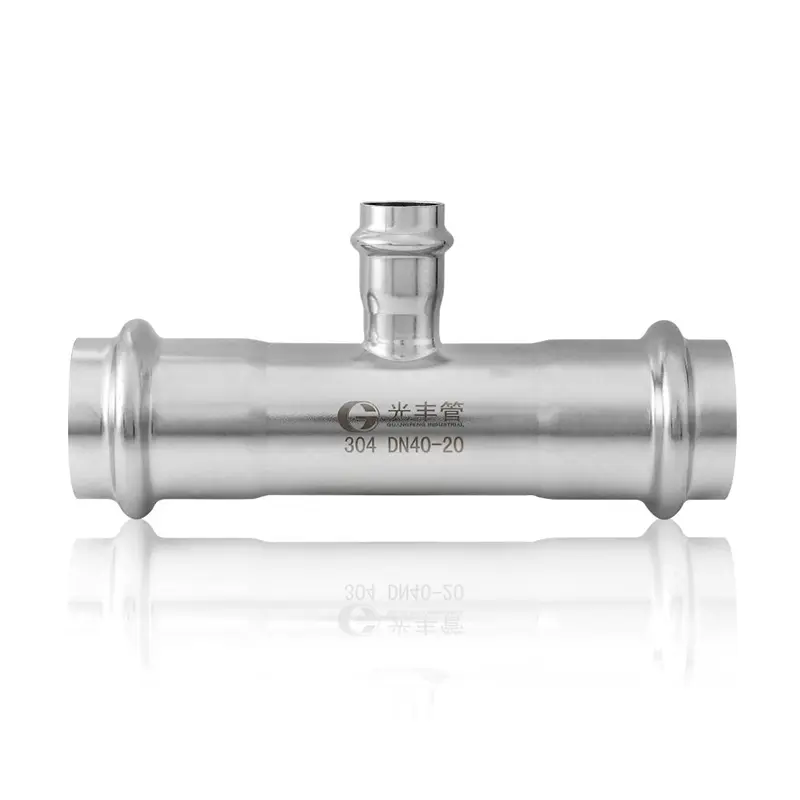
Table of Contents
- Understanding the Role of a Pipe Fitting Tee
- Common Problems Faced When Using Tee Fittings
- Main Types of Pipe Fitting Tee
- Materials and Manufacturing Considerations
- Dimensional Standards and Connection Methods
- Typical Application Scenarios
- How to Select the Right Pipe Fitting Tee
- Installation and Maintenance Recommendations
- Comparison Table of Common Tee Fittings
- Frequently Asked Questions
- Conclusion and Cooperation Opportunity
Understanding the Role of a Pipe Fitting Tee
A Pipe Fitting Tee is designed to create a branch line at a 90-degree angle from the main pipeline. It allows fluid, gas, or slurry to either split into two directions or merge from two lines into one. Tee fittings are widely used in industrial piping, building services, oil and gas transmission, chemical processing, and water supply systems.
The structural simplicity of a tee often leads to underestimation of its importance. In practice, improper tee selection can result in pressure loss, turbulence, corrosion, or even system failure. For this reason, understanding the functional purpose of a Pipe Fitting Tee is the first step toward building a stable piping network.
Common Problems Faced When Using Tee Fittings
Customers often encounter several challenges when sourcing or applying Pipe Fitting Tee products. These issues usually stem from mismatched specifications or unsuitable materials.
- Leakage caused by inconsistent wall thickness or poor welding quality
- Premature corrosion due to incorrect material selection
- Difficulty in installation because of non-standard dimensions
- Pressure drop at branch points affecting system efficiency
- Short service life in high-temperature or high-pressure environments
Addressing these concerns requires a systematic evaluation of operating conditions and product standards rather than relying solely on price or appearance.
Main Types of Pipe Fitting Tee
Pipe Fitting Tee products can be classified based on diameter configuration and structural form. Each type serves a specific operational purpose.
- Equal Tee – All three outlets have the same diameter, commonly used for balanced flow distribution.
- Reducing Tee – One branch has a smaller diameter, suitable for controlled flow diversion.
- Straight Tee – Designed for direct branching without altering the main flow direction.
Choosing the correct type directly affects flow behavior, pressure stability, and system efficiency.
Materials and Manufacturing Considerations
The performance of a Pipe Fitting Tee largely depends on its material composition and manufacturing process. Different industries demand different material properties.
- Carbon steel for general industrial and structural applications
- Stainless steel for corrosion resistance and hygienic environments
- Alloy steel for high-temperature and high-pressure systems
- Specialized steels for chemical or marine conditions
Manufacturing methods such as hot forming, cold forming, and welding influence internal surface smoothness and dimensional accuracy. Companies like Guangfeng focus on controlled production processes to ensure consistent quality across batches.
Dimensional Standards and Connection Methods
Pipe Fitting Tee products are manufactured according to internationally recognized dimensional standards to ensure compatibility with piping systems.
- Butt-weld connections for permanent and high-strength joints
- Threaded connections for low-pressure and maintenance-friendly systems
- Socket-weld connections for compact and leak-resistant assemblies
Selecting the correct connection method helps reduce installation time while improving long-term sealing performance.
Typical Application Scenarios
Pipe Fitting Tee components are used across a wide range of industries, each with specific operational requirements.
- Oil and gas pipelines for flow diversion and measurement points
- Water treatment plants for distribution networks
- Chemical facilities for controlled mixing and transfer
- Building systems for heating, cooling, and fire protection
- Power plants for steam and condensate routing
In each scenario, durability and dimensional accuracy directly influence system safety and efficiency.
How to Select the Right Pipe Fitting Tee
Selecting a suitable Pipe Fitting Tee requires a structured evaluation rather than a one-size-fits-all approach.
- Confirm operating pressure and temperature ranges
- Match material grade with the conveyed medium
- Verify dimensional standards with existing pipelines
- Consider long-term maintenance and replacement costs
- Assess supplier production capability and consistency
By following these steps, buyers can significantly reduce operational risks and unplanned downtime.
Installation and Maintenance Recommendations
Proper installation ensures that a Pipe Fitting Tee performs as intended throughout its service life.
- Inspect internal and external surfaces before installation
- Ensure accurate alignment to prevent stress concentration
- Use appropriate welding or sealing techniques
- Conduct pressure testing after installation
- Schedule regular inspections in corrosive environments
Preventive maintenance helps identify early signs of wear and avoids costly system failures.
Comparison Table of Common Tee Fittings
| Type | Branch Size | Main Application | Flow Characteristics |
|---|---|---|---|
| Equal Tee | Same as main pipe | Balanced distribution | Uniform flow split |
| Reducing Tee | Smaller branch | Controlled diversion | Adjusted flow rate |
| Straight Tee | Same or reduced | Direct branching | Stable main flow |
Frequently Asked Questions
How does a Pipe Fitting Tee affect system pressure?
A properly sized tee minimizes pressure loss, while incorrect sizing may cause turbulence and efficiency reduction.
Can one tee fitting be used for different media?
This depends on material compatibility. Media characteristics such as corrosion potential and temperature must be evaluated.
What determines the service life of a Pipe Fitting Tee?
Material quality, operating conditions, installation accuracy, and maintenance frequency all influence service life.
Conclusion and Cooperation Opportunity
A Pipe Fitting Tee may appear to be a simple component, but its role in pipeline safety and efficiency is critical. Understanding product types, materials, standards, and application requirements allows for more reliable system design and operation. Guangfeng continues to support global customers by providing stable, well-manufactured pipe fitting solutions tailored to diverse industrial needs.
If you are evaluating Pipe Fitting Tee options or planning a new piping project, professional guidance can help avoid costly mistakes. For detailed specifications, technical support, or customized solutions, contact us to discuss how the right fitting choice can support your system’s long-term performance.