What Industries Rely Most Heavily on Precision Stamping Parts for Mission Critical Applications
2026-03-24
When performance, safety, and reliability are non‑negotiable, precision stamping parts become the backbone of manufacturing. From aerospace systems to medical devices, these components enable complex functions with repeatable accuracy. At Nuote, we specialize in delivering precision stamping parts that meet the most demanding industry standards, ensuring that mission‑critical applications perform flawlessly under pressure.
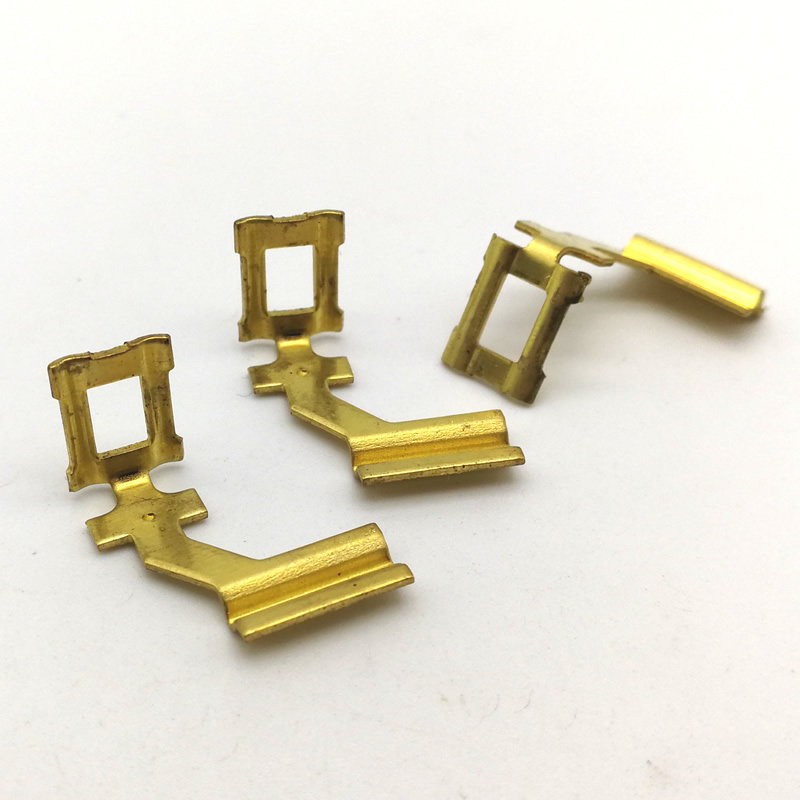
Industries That Depend on Precision Stamping Parts
| Industry | Application Examples | Why Precision Stamping Parts Are Critical |
|---|---|---|
| Aerospace & Defense | Connectors, brackets, shielding components | Extreme tolerances, vibration resistance, and strict regulatory compliance (AS9100) |
| Medical Devices | Surgical instruments, implantable device housings, diagnostic equipment | Biocompatibility, sterilization compatibility, and zero-defect quality requirements |
| Automotive | Fuel injection systems, safety mechanisms, battery terminals for EVs | High-volume consistency, crash safety performance, and thermal stability |
| Electronics | Micro connectors, EMI shields, lead frames | Miniaturization, electrical conductivity, and high-speed signal integrity |
| Telecommunications | RF components, antenna contacts, base station hardware | Durability in outdoor environments, precision in high-frequency applications |
Why Mission‑Critical Applications Demand Excellence
In sectors where failure is not an option, precision stamping parts must deliver on three fronts: material integrity, dimensional accuracy, and process traceability. Nuote adheres to strict quality management systems, including IATF 16949 for automotive and ISO 13485 for medical manufacturing. Each component is engineered to perform in extreme conditions—whether enduring high G‑forces, repeated sterilization cycles, or continuous electrical loads.
Our advanced tooling capabilities allow us to produce precision stamping parts with tolerances as tight as ±0.01 mm, ensuring that even the most complex assemblies function without compromise.
Precision Stamping Parts FAQ
What materials are best suited for precision stamping parts in medical applications?
Materials for medical‑grade precision stamping parts must meet biocompatibility standards such as ISO 10993. Stainless steel grades like 304 and 316L are commonly used for their corrosion resistance and ability to withstand sterilization methods including autoclaving and gamma radiation. For implantable applications, titanium and certain cobalt‑chromium alloys are preferred. Nuote works closely with material suppliers to ensure full traceability and compliance with FDA and EU MDR requirements, providing validation packages for each production lot.
How do manufacturers ensure consistency in high‑volume precision stamping parts?
Consistency begins with in‑house tool design and progressive die development, where each station performs a controlled operation on the strip. Nuote employs real‑time process monitoring systems that measure dimensional characteristics at speeds exceeding 800 strokes per minute. Statistical process control (SPC) is applied throughout production, with automated optical inspection (AOI) systems detecting deviations before they result in non‑conforming parts. First article inspection reports (FAIRs) are provided to verify that all critical dimensions meet customer specifications before full‑scale production commences.
What quality certifications should a supplier of precision stamping parts hold for aerospace and defense work?
For aerospace and defense applications, suppliers should maintain AS9100 certification, which encompasses all ISO 9001 requirements while adding stricter risk management, traceability, and safety standards. Nuote holds AS9100D certification and adheres to Nadcap standards for special processes such as heat treating and finishing when required. Additionally, we support ITAR‑compliant programs and provide full material certifications, first article inspection per AS9102, and source inspection readiness to meet prime contractor expectations.
How Nuote Delivers Excellence in Precision Stamping Parts
Choosing the right partner for precision stamping parts directly impacts product reliability and time‑to‑market. Nuote combines decades of engineering experience with modern manufacturing infrastructure:
-
In‑house tooling reduces lead times and ensures design intent is preserved from prototype to production.
-
Multi‑stage quality gates include 100% automated inspection on critical dimensions for high‑risk components.
-
Supply chain integration offers value‑added services such as cleaning, heat treating, plating, and assembly—all managed under one roof.
Our engineering team collaborates with clients during the design phase to optimize part geometry for manufacturability, reducing costs while maintaining the structural and functional requirements of mission‑critical systems.
Contact Us
When your application demands the highest level of precision, reliability, and regulatory compliance, Nuote delivers precision stamping parts engineered for performance. Contact our engineering team today to discuss your project requirements and discover how we can support your mission‑critical supply chain with precision, consistency, and accountability.