What Factors Determine the Output Quality of a Wax Processing Machine?
2026-01-12
Process stability is one of the most decisive elements affecting output quality in industrial wax production. In practical manufacturing environments across North America and Europe, buyers often associate stable processing with predictable viscosity, uniform color, and repeatable batch performance. When operating a wax processing machine, fluctuations in temperature, pressure, or feed rate can immediately result in uneven melting or crystallization, leading to inconsistent product grades.
At Jar Hing Products Co., Ltd., our engineering team focuses on maintaining thermal balance throughout the entire production cycle. Our factory integrates multi-zone heating control that allows molten wax to remain within a precise temperature window, minimizing thermal shock. This design philosophy reflects how local manufacturers prioritize reliability over short-term output gains. By stabilizing internal processing variables, our production systems support long-term operational efficiency and consistent downstream packaging results.
From an operator’s perspective, stable processing also reduces manual intervention. Our experience shows that automated monitoring significantly lowers defect rates and improves batch-to-batch uniformity, especially for paraffin and microcrystalline wax applications.
How Do Material Handling and Feed Precision Affect Output Uniformity?
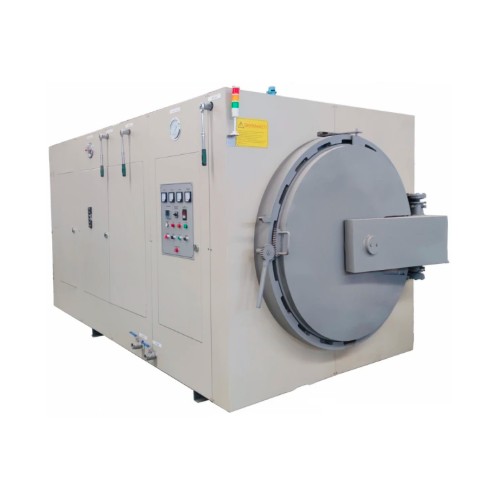
Material handling is often underestimated when evaluating wax production quality. In reality, inconsistent raw material feeding directly affects melting behavior and final texture. Industrial buyers in the US market frequently demand precise feed control to meet compliance and labeling requirements. A well-calibrated Wax Processing Machine ensures that raw wax blocks or granules enter the melting chamber at a controlled rate, avoiding localized overheating.
Our systems are engineered with adjustable feed mechanisms designed to accommodate varying wax densities and melting points. This adaptability allows our factory to support diverse customer formulations without compromising consistency. By combining controlled feeding with synchronized melting, our production lines maintain homogeneity across large batches.
Accurate material handling also reduces waste. Our internal tests show that optimized feed precision lowers residual buildup inside processing chambers, extending service intervals and improving operational uptime for our clients.
Which Technical Parameters Define Industrial-Grade Wax Output?
Technical specifications play a critical role in determining whether a machine meets industrial-grade expectations. Buyers typically assess output quality through parameters such as temperature range, throughput capacity, and control accuracy. A modern Wax Processing Machine must deliver stable performance under continuous operation while maintaining tight tolerances.
| Processing Capacity | 300 to 2000 kg per hour |
| Temperature Control Range | 60°C to 180°C |
| Temperature Accuracy | ±1°C |
| Heating Method | Electric or thermal oil system |
| Control Interface | PLC with touch panel |
These parameters reflect what industrial users expect for consistent wax output. Our design approach emphasizes balance rather than maximum capacity alone. By optimizing each technical factor, our solutions deliver uniform melting and controlled cooling, ensuring reliable physical properties in the final product.
Why Does Equipment Design Impact Long-Term Wax Quality?
Equipment design influences not only immediate output but also long-term quality retention. In many local manufacturing facilities, poorly designed internal surfaces cause wax residue accumulation, which gradually contaminates subsequent batches. A professionally engineered Wax Processing Machine incorporates smooth flow paths and corrosion-resistant materials to prevent such issues.
At Jar Hing Products Co.,Ltd., our factory adopts stainless steel contact surfaces with precision welding standards commonly required by European buyers. This structural approach ensures easy cleaning and reduces cross-batch contamination. Our engineers also emphasize modular construction, allowing maintenance without disrupting the entire production line.
Over time, well-designed equipment preserves wax purity and color stability. Our operational data confirms that thoughtful structural design directly correlates with lower defect rates and higher customer satisfaction.
How Do Automation and Control Systems Shape Production Reliability?
Automation is no longer optional in competitive wax manufacturing. Advanced control systems significantly influence output consistency and operational reliability. A digitally controlled Wax Processing Machine allows real-time monitoring of temperature, flow rate, and processing time, all of which are essential for meeting modern quality benchmarks.
Our control architecture integrates alarm systems and data logging features commonly requested by North American operators. These functions help our factory clients identify deviations before defects occur. By relying on automated feedback loops, our production solutions minimize human error and enhance reproducibility across shifts.
Automation also supports scalability. Our experience shows that facilities using advanced control systems can increase output volume without sacrificing quality, a critical advantage for growing manufacturers.
How Can Standardized Specifications Improve Buyer Confidence?
| Voltage Options | 380V or customized regional standards |
| Control System | Industrial PLC with safety interlock |
| Construction Material | Food-grade stainless steel |
| Operating Mode | Continuous or batch processing |
Standardized specifications simplify procurement decisions. Buyers can quickly verify compatibility with existing infrastructure while ensuring compliance with regional manufacturing norms. Our documentation practices support transparent communication and reduce pre-sale technical uncertainty.
High-quality wax output is never the result of a single component but rather the interaction of stable processing, precise material handling, robust engineering, and intelligent control systems. Jar Hing Products Co., Ltd. continues to refine these elements through hands-on manufacturing experience and close collaboration with global clients. Our factory remains committed to delivering equipment solutions that meet real-world production demands while supporting consistent quality standards. If you are evaluating production upgrades or planning a new wax processing line, our technical team is ready to provide detailed specifications and tailored recommendations. Contact us today to discuss your project requirements and explore how our solutions can support your production goals.
Frequently Asked Questions
Q1: How does temperature accuracy influence the final quality of processed wax?
Temperature accuracy determines whether wax melts evenly and cools consistently. Precise control prevents overheating, which can degrade wax structure, and avoids underheating that causes incomplete melting. Stable temperature management ensures uniform viscosity, color clarity, and predictable performance in downstream applications.
Q2: Why is material feeding consistency important for maintaining wax output standards?
Consistent material feeding allows wax to enter the processing chamber at a controlled rate, ensuring balanced heat distribution. Irregular feeding can lead to localized overheating or incomplete melting, which directly affects texture uniformity and batch stability during large-scale production.
Q3: What role does automation play in long-term wax quality control?
Automation enables continuous monitoring and real-time adjustment of processing variables. By reducing manual intervention, automated systems help maintain repeatable conditions across shifts, minimize human error, and ensure consistent output quality during extended production cycles.