What factors affect the accuracy of a liquid float level switch
2026-04-16
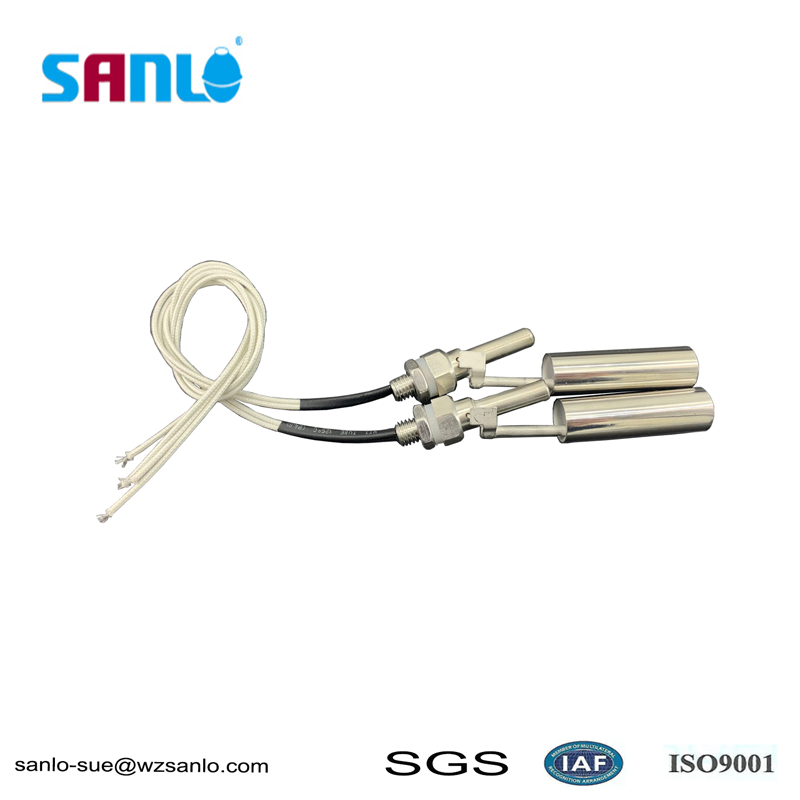
When monitoring liquid levels in industrial tanks, the Liquid Float Level Switch is a trusted solution for its simplicity and reliability. However, its accuracy is not unconditional. At Sanlo, we have observed that several environmental and mechanical variables can influence how precisely a Liquid Float Level Switch triggers an alarm or control action. Understanding these factors is essential for maintaining process integrity.
Key factors influencing accuracy
| Factor | Effect on accuracy | Recommended action by Sanlo |
|---|---|---|
| Liquid density | A float designed for water may sink too deep in lighter fluids, delaying or missing the switch point. | Verify fluid specific gravity against the float’s calibration. |
| Viscosity | Thick liquids (e.g., oil, syrup) slow float movement, causing response lag. | Use a larger buoyancy element or a non-invasive alternative. |
| Turbulence or waves | Surface agitation makes the float bob, leading to false or repeated switching. | Install a stilling well or a guide tube. |
| Mounting angle | Off-vertical installation changes the physical trip point of the internal magnet or microswitch. | Ensure vertical mounting within ±5 degrees. |
| Debris buildup | Coating on the float or stem adds weight and friction, reducing repeatability. | Schedule regular cleaning or select a self-scraping design. |
| Temperature extremes | High heat can soften float materials or alter reed switch characteristics. | Choose Sanlo high-temperature models rated for your process. |
Why material compatibility matters
The table above shows that most accuracy issues stem from a mismatch between the Liquid Float Level Switch and the application environment. For example, a standard polypropylene float works well with water but fails in acetone. Sanlo offers floats in stainless steel, PTFE, and NBR to match different chemicals and temperatures.
Liquid Float Level Switch FAQ
Question 1: How does liquid density affect the set point of a Liquid Float Level Switch?
Answer: A Liquid Float Level Switch relies on buoyancy to lift the float to the actuation point. If the actual liquid density is lower than the design value, the float will not rise enough to trigger the switch. If density is higher, the float may activate early. For example, a switch calibrated for water (specific gravity 1.0) will fail to operate in diesel (SG ~0.85) unless you select a larger float or a lighter switch mechanism. Always confirm the minimum specific gravity with your supplier.
Question 2: Can a Liquid Float Level Switch maintain accuracy in a turbulent tank with an agitator?
Answer: Turbulence introduces rapid up-and-down motion, which can cause the Liquid Float Level Switch to chatter – opening and closing repeatedly. This not only reduces measurement reliability but also damages relay contacts over time. To preserve accuracy, Sanlo recommends installing the float inside a stilling well or a perforated tube that dampens waves. Alternatively, use a delayed-action switch module that ignores pulses shorter than 0.5 seconds.
Question 3: How often should I recalibrate or inspect my Liquid Float Level Switch to ensure accuracy?
Answer: Unlike electronic sensors, a mechanical Liquid Float Level Switch does not require regular recalibration. However, accuracy can drift due to physical wear, coating, or spring fatigue. Sanlo advises a visual and functional check every six months for non-corrosive services and monthly for dirty or sticky fluids. During inspection, manually lift the float to confirm the switch actuates at the same liquid level. Clean the float stem and housing with a soft brush – never use abrasive tools.
Conclusion
Accuracy in a Liquid Float Level Switch is not a given – it is a result of proper sizing, installation, and maintenance. From fluid density to mounting angle, each factor plays a measurable role. Sanlo engineers each Liquid Float Level Switch to withstand demanding conditions, but field success depends on selecting the right model for your specific liquid properties.
Contact us today to discuss your level application. The Sanlo team will help you choose or customize the ideal Liquid Float Level Switch for accurate, repeatable performance. Reach out via our website or email to request a compatibility review and quotation.