What Cooling and Thermal Considerations Matter for a Frameless Torque Motor Servo Drive
2026-11-18
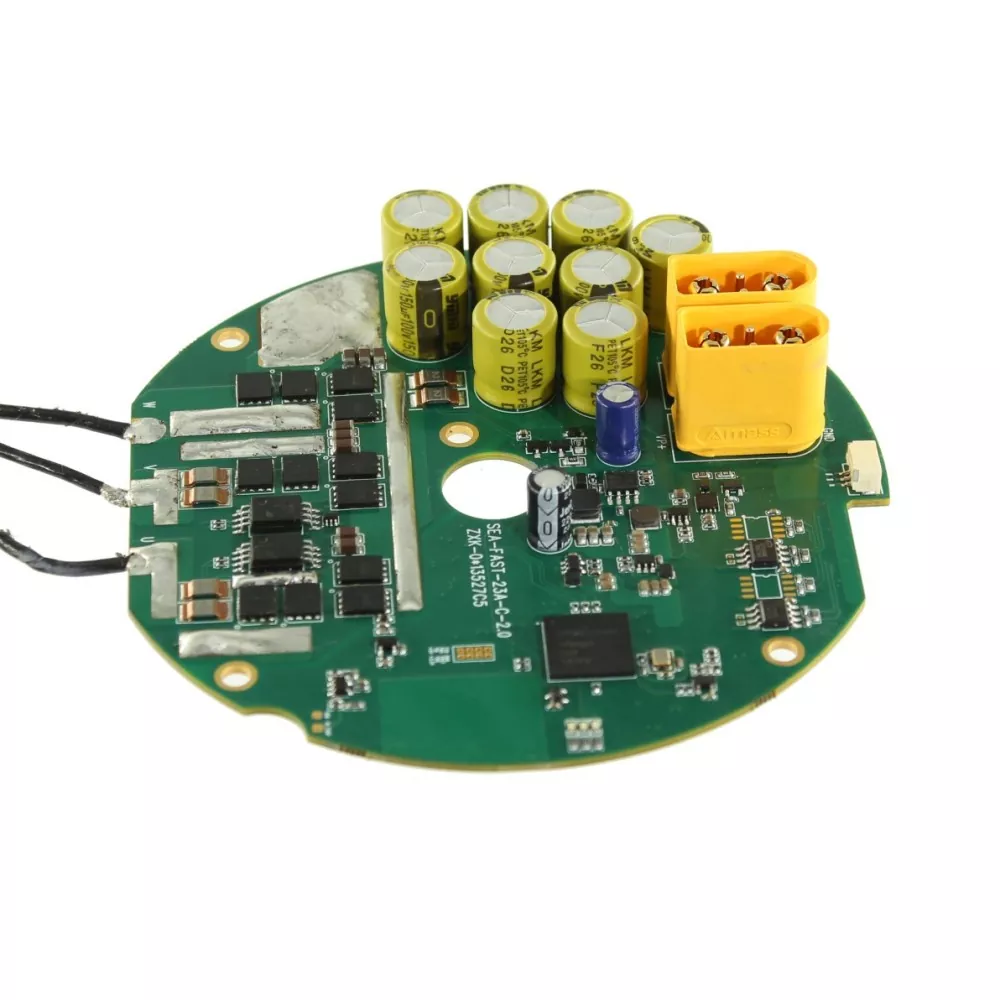
Thermal management is one of the most decisive factors in the performance and lifetime of a direct-drive axis. SEA MOTION has supported numerous OEM projects where a Frameless Torque Motor Servo Drive was selected specifically because it could be integrated close to the motor with tight thermal coupling and flexible cooling options. Understanding how heat is generated, where it flows, and how the drive responds under rising temperatures is essential for engineers specifying a Frameless Torque Motor Servo Drive in high-torque, low-speed applications.
Why Thermal Behavior Differs in Direct-Drive Systems
A Frameless Torque Motor Servo Drive operates without a gearbox, so torque is produced directly at the load. This eliminates backlash and mechanical losses, but it also means the motor and drive absorb the full thermal load of the application. Copper losses in the windings, iron losses in the stator, and switching losses in the drive all contribute to temperature rise. Because frameless motors are often embedded into machine structures, heat paths are less predictable than in a conventional housed servo motor.
Key thermal factors to evaluate:
-
Continuous vs. peak torque duty cycle
-
Winding resistance and current density
-
Stator-to-housing thermal resistance
-
Drive switching frequency and conduction losses
-
Ambient temperature and enclosure airflow
-
Duty cycle and rest periods in the motion profile
Cooling Methods Compared
| Cooling Method | Typical Use Case | Advantages | Limitations |
|---|---|---|---|
| Natural convection | Low-duty, intermittent motion | No hardware, simple integration | Limited continuous torque |
| Forced air | Medium-duty rotary axes | Low cost, easy retrofit | Dust ingress, acoustic noise |
| Liquid cooling | High continuous torque, enclosed machines | High heat removal, compact | Complexity, leak risk, maintenance |
| Heat sink / cold plate | Embedded frameless motors | Good thermal coupling | Requires structural design |
| Thermal potting | Compact stator integration | Improved conduction path | Difficult rework |
Selecting the right approach depends on the continuous torque requirement and the surrounding machine structure. A Frameless Torque Motor Servo Drive paired with a cold plate often delivers the best balance of compactness and thermal stability.
Drive-Side Thermal Considerations
The servo drive itself must be protected from overheating. SEA MOTION recommends reviewing the following:
-
Current derating curves – continuous current must be derated as ambient temperature rises.
-
Switching frequency – higher PWM frequencies increase drive losses; balance acoustic and ripple requirements.
-
Mounting orientation – vertical mounting can improve convection cooling.
-
Thermal sensors – use motor PTC/KTY and drive temperature monitoring for protection.
-
Duty cycle modeling – RMS current calculation is more accurate than peak current alone.
Temperature Monitoring and Protection
| Parameter | Recommended Practice |
|---|---|
| Winding temperature | PTC or KTY sensor embedded in stator |
| Drive heatsink temperature | Continuous monitoring with warning thresholds |
| Ambient temperature | Logged for derating verification |
| Thermal time constant | Used to model transient overload capacity |
FAQ
Q: How do I calculate the continuous torque capability of a Frameless Torque Motor Servo Drive under high ambient temperature?
A: Start with the motor's published continuous torque at 25°C, then apply the winding derating factor for the actual ambient temperature. Next, confirm that the Frameless Torque Motor Servo Drive can supply the required RMS current at that temperature by checking its current derating curve. Finally, validate the thermal path from stator to housing and cooling medium, because poor conduction can reduce achievable torque even when the drive has sufficient current capacity.
Q: What cooling method is best for a Frameless Torque Motor Servo Drive in a sealed machine enclosure?
A: In a sealed enclosure, liquid cooling or a cold plate is usually the most effective choice because it removes heat without exchanging air with the environment. A Frameless Torque Motor Servo Drive mounted on a cooled plate can maintain continuous torque while keeping internal air temperature stable. If liquid cooling is not feasible, forced air with a heat exchanger can be used, but the thermal design must account for the total heat load of both motor and drive.
Q: How can I prevent overheating in a Frameless Torque Motor Servo Drive during high-duty rotary indexing?
A: Model the RMS current over the complete indexing cycle rather than using peak torque alone. Confirm that the Frameless Torque Motor Servo Drive current rating covers the RMS value with margin, and verify that the motor's thermal time constant supports the cycle frequency. Add winding and drive temperature monitoring, and consider liquid cooling or thermal potting if the duty cycle approaches continuous operation.
Contact Us
Thermal design decisions directly affect reliability, torque density, and service life. SEA MOTION provides application engineering support for Frameless Torque Motor Servo Drive selection, cooling strategy, and thermal validation. Contact us today to discuss your motion project and receive a tailored thermal assessment.