What Causes Corrosion on a Diesel Engine Timing Case Cover
2026-09-15
Corrosion on a Diesel Engine Timing Case Cover is one of the most overlooked yet costly problems in diesel engine maintenance. At Maisheng, we have seen how a seemingly minor surface reaction can escalate into pitting, coolant contamination, and structural failure that threatens the entire timing gear train. Understanding why corrosion develops is the first step toward preventing premature replacement and protecting your engine's longevity.
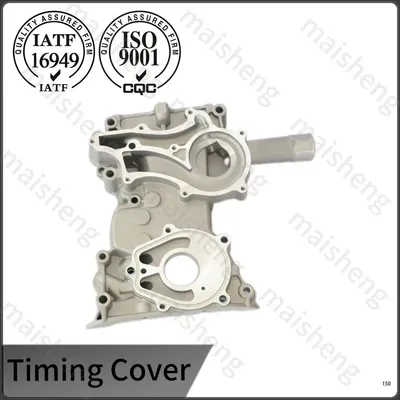
The Core Mechanism of Corrosion
A Diesel Engine Timing Case Cover is constantly exposed to heat cycles, coolant residue, road salt, moisture, and vibration. When the protective coating or sealant barrier breaks down, the base metal becomes anodic and begins to lose electrons. This electrochemical process accelerates wherever electrolyte-rich fluid sits undisturbed.
Primary Causes of Corrosion
| Cause | How It Develops | Typical Warning Sign |
|---|---|---|
| Coolant Leakage | Failed gasket or O-ring allows glycol-based coolant to pool on the cover surface | White or green crust around the sealing edge |
| Road Salt Exposure | Winter driving deposits chloride ions that attack aluminum and steel | Chalky white deposits on the exterior |
| Galvanic Coupling | Dissimilar metals (aluminum cover, steel bolts) create a galvanic cell | Pitting near fastener holes |
| Erosion-Corrosion | High-velocity coolant or oil flow strips the oxide layer | Smooth, scooped-out surface areas |
| Acidic Oil Contamination | Combustion blow-by lowers oil pH and attacks the cover interior | Dark sludge and etched internal walls |
| Poor Surface Preparation | Incomplete cleaning before painting or sealing leaves contaminants | Blistering and flaking coating |
Material-Specific Behavior
Aluminum covers corrode through pitting and crevice attack, while cast iron covers tend to develop uniform surface rust. Maisheng engineers recommend verifying the alloy specification before selecting a replacement, because the wrong material can accelerate galvanic reaction with the engine block.
Prevention and Maintenance Checklist
-
Inspect the Diesel Engine Timing Case Cover at every coolant service interval.
-
Replace gaskets and seals before they harden or crack.
-
Use phosphate-free coolant and maintain proper pH balance.
-
Apply a high-quality corrosion inhibitor to exterior surfaces.
-
Torque fasteners to specification to avoid stress cracks.
-
Clean road salt residue promptly during winter months.
FAQ
Q: How can I tell if my Diesel Engine Timing Case Cover is corroded or just dirty?
A: Corrosion presents as pitting, flaking, or chalky white and green deposits that cannot be wiped away, while simple dirt or oil film cleans off with solvent and a rag; if the surface feels rough or shows metal loss, corrosion is present.
Q: Can a corroded Diesel Engine Timing Case Cover be repaired, or must it be replaced?
A: Light surface corrosion can sometimes be cleaned and resealed, but pitting deeper than 0.5 mm, cracks, or distortion at the sealing flange requires replacement because repaired areas rarely hold torque and may leak under heat cycling.
Q: Does corrosion on a Diesel Engine Timing Case Cover affect engine timing or performance?
A: Yes, advanced corrosion can distort the cover, disturb the camshaft or injection pump mounting, allow coolant into the oil, and cause timing drift, rough running, or catastrophic gear damage if not addressed promptly.
Conclusion
Protecting your Diesel Engine Timing Case Cover from corrosion is a matter of disciplined inspection, correct materials, and prompt repair. Maisheng supplies corrosion-resistant covers and sealing solutions engineered for heavy-duty diesel applications.
Contact us today to request a material compatibility review or to order a replacement Diesel Engine Timing Case Cover tailored to your engine model.