What Are Yoke Type Track Rollers and How Do They Work in Linear Motion Systems
2026-11-16
Yoke Type Track Rollers are bearing-based rolling elements mounted on a yoke (a fork-shaped bracket) rather than on a stud. In linear motion systems, they guide, support, and position moving carriages, cam plates, and conveyor chains by rolling along a track or profile rail. At BMT, we design and manufacture Yoke Type Track Rollers for OEMs that need reliable, re-lubricable, and easily replaceable rolling solutions in demanding machinery.
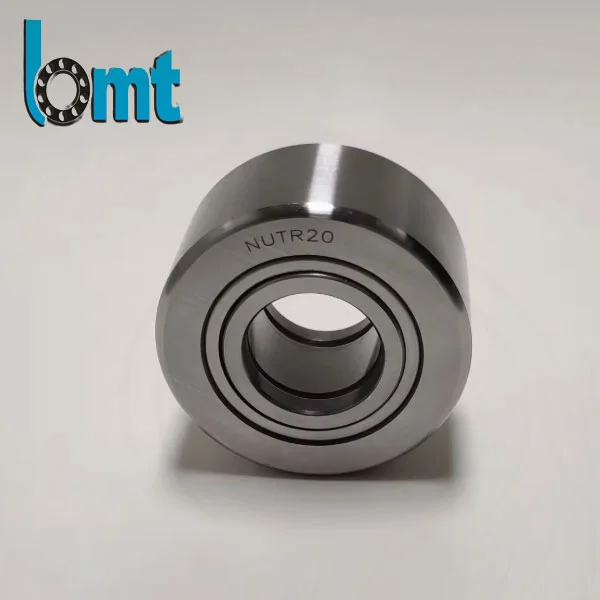
How Yoke Type Track Rollers Work
A Yoke Type Track Roller consists of an outer ring (the running surface), an inner ring, a rolling element set (balls or cylindrical rollers), and seals. The roller is held between the two arms of a yoke via a pin or shaft. Because the yoke supports both sides of the roller, the load is distributed symmetrically, which reduces bending stress on the pin and allows higher radial and axial load capacity than a comparable stud-type roller.
In a linear motion system, the outer ring rolls along a track, converting sliding friction into rolling friction. The yoke mounts to the moving carriage, while the track is fixed to the machine frame. Preload, tolerance, and surface finish of the track directly influence positioning accuracy, noise, and service life.
Key Design and Performance Factors
| Factor | Why It Matters | BMT Design Approach |
|---|---|---|
| Load capacity | Determines safe working load | Symmetrical yoke support for high radial/axial loads |
| Sealing | Protects against contaminants | Integrated labyrinth and contact seals |
| Lubrication | Extends service life | Re-lubricable designs with grease ports |
| Mounting | Affects alignment and preload | Precision-ground pin bores and hardened outer rings |
| Speed rating | Limits heat and wear | Optimized internal geometry and cage design |
Advantages in Linear Motion Systems
-
Symmetric load distribution reduces pin bending and improves rigidity.
-
Easy replacement — the yoke design allows the roller to be swapped without disassembling the carriage.
-
High stiffness for accurate positioning in cam-driven and profile-rail systems.
-
Re-lubrication extends maintenance intervals in dirty or high-load environments.
-
Compatibility with profile rails, flat tracks, and custom cam profiles.
Typical Applications
Yoke Type Track Rollers are used in conveyor systems, cam followers, packaging machinery, machine tool carriages, automated storage and retrieval systems, and heavy-duty linear guides. In each case, the yoke mounting simplifies installation and improves serviceability.
FAQ
Q: What is the difference between a yoke type track roller and a stud type track roller?
A: A Yoke Type Track Roller is mounted on a pin supported at both ends by a fork, distributing load symmetrically; a stud type track roller is cantilever-mounted on a threaded stud, which introduces bending stress and limits load capacity.
Q: How do I choose the right yoke type track roller for my linear motion system?
A: Match the roller's dynamic and static load ratings to your application, verify the track profile and hardness, confirm the pin diameter and yoke dimensions, and select the appropriate sealing and lubrication option for your environment.
Q: How often should yoke type track rollers be lubricated?
A: Lubrication intervals depend on speed, load, temperature, and contamination; in clean conditions, re-lubricate at scheduled maintenance intervals, while in dirty or high-load applications, shorten intervals and inspect seals regularly.
Conclusion
Yoke Type Track Rollers deliver symmetric load distribution, easy replacement, and reliable performance in linear motion systems. BMT provides application-specific Yoke Type Track Rollers with precision sealing, re-lubrication options, and consistent quality for OEM and MRO requirements.
Contact us today to discuss your Yoke Type Track Rollers requirements, request a technical datasheet, or receive a tailored selection recommendation from the BMT engineering team.