What Are the Primary Failure Mechanisms in Aerospace Turbine Blades and How Can They Be Mitigated
2026-03-20
Aerospace turbine blades operate at the extreme limits of material science, enduring temperatures beyond the melting point of their base alloys, rotational stresses that exceed tens of thousands of G‑forces, and corrosive combustion environments. For industry leaders such as KGL, understanding the failure mechanisms of these critical components is not merely a matter of engineering—it is the foundation of reliability, safety, and performance in modern aviation. This article examines the primary failure modes affecting aerospace turbine blades and outlines the mitigation strategies employed to extend component life and ensure operational integrity.
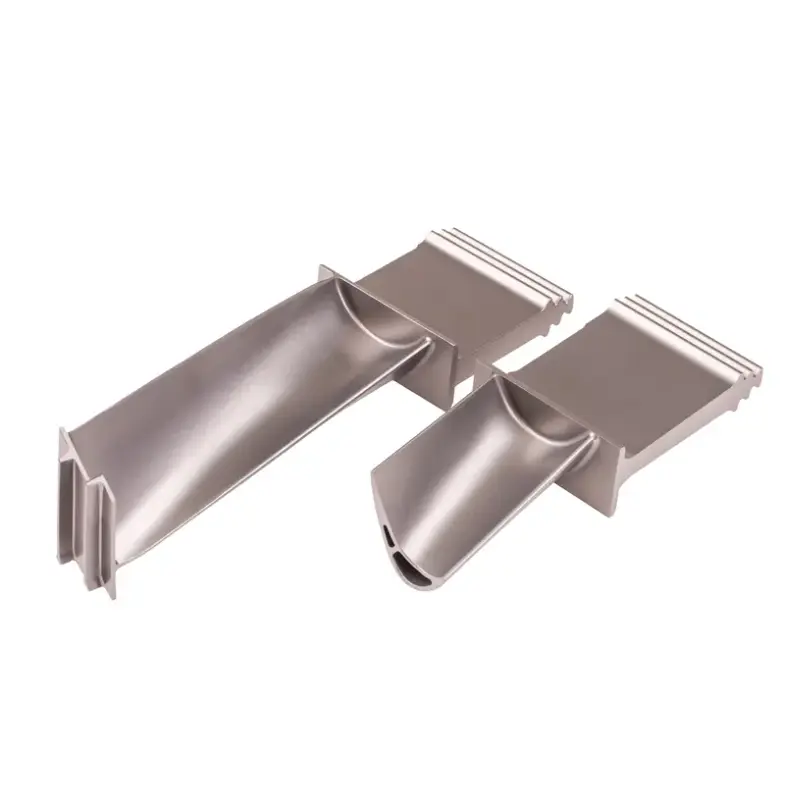
Primary Failure Mechanisms
The table below summarizes the most prevalent failure mechanisms observed in aerospace turbine blades, their root causes, and the typical consequences when these mechanisms go unaddressed.
| Failure Mechanism | Root Cause | Consequence |
|---|---|---|
| Creep | Prolonged exposure to high temperatures and centrifugal stress | Progressive plastic deformation, blade elongation, tip rubbing against the casing |
| High‑Cycle Fatigue (HCF) | Vibrational resonance caused by aerodynamic excitation | Sub‑surface crack initiation leading to sudden fracture |
| Low‑Cycle Fatigue (LCF) | Repeated thermal cycling during engine start‑up and shut‑down | Crack growth at stress concentration zones such as cooling holes or root attachments |
| Thermal Mechanical Fatigue (TMF) | Combined thermal transients and mechanical strain | Surface cracking, oxidation along grain boundaries, loss of structural integrity |
| Oxidation & Hot Corrosion | Reactive environmental species (sulfur, oxygen) at elevated temperatures | Material degradation, coating spallation, reduced cooling efficiency |
| Foreign Object Damage (FOD) | Ingestion of debris, sand, or ice particles | Leading edge deformation, stress concentrators, accelerated crack initiation |
Mitigation Strategies
Mitigating these failures requires a multi‑disciplinary approach that integrates advanced materials, precision manufacturing, and rigorous operational management. KGL applies the following methodologies to enhance the resilience of aerospace turbine blades.
-
Advanced Materials & Coatings
Nickel‑based superalloys with directional solidification and single‑crystal structures eliminate grain boundaries—primary sites for creep and fatigue. Thermal barrier coatings (TBCs) applied via electron‑beam physical vapor deposition reduce base metal temperatures by up to 200 °C, directly mitigating oxidation and thermal fatigue. -
Design & Cooling Optimization
Modern aerospace turbine blades incorporate complex internal cooling geometries—such as serpentine passages and film cooling holes—that maintain metal temperatures within acceptable limits. Computational fluid dynamics (CFD) simulations enable designs that minimize thermal gradients and reduce TMF susceptibility. -
Vibration Damping & Frequency Control
Intentional blade design adjustments, including the use of friction dampers and shroud interfaces, shift natural frequencies away from engine order excitations. This approach significantly reduces the risk of high‑cycle fatigue. -
Non‑Destructive Testing (NDT) & Life Management
Routine inspections employing fluorescent penetrant inspection (FPI), eddy current, and advanced thermography allow early detection of micro‑cracks. KGL integrates condition‑based monitoring protocols to retire blades before failure, aligning with the principles of damage tolerance rather than simple life limits.
Aerospace Turbine Blades FAQ
What is the most common cause of premature failure in aerospace turbine blades?
High‑cycle fatigue (HCF) is frequently cited as the most common cause of premature failure, primarily due to resonant vibrations induced by aerodynamic forces. When the blade’s natural frequency aligns with engine operating excitations, cyclic stresses accumulate rapidly, leading to crack initiation even within nominal temperature and load parameters. Mitigation focuses on precise frequency tuning, the use of damping mechanisms, and rigorous validation testing during engine development.
How do thermal barrier coatings extend the service life of aerospace turbine blades?
Thermal barrier coatings (TBCs) act as an insulating layer, typically composed of yttria‑stabilized zirconia, applied over a metallic bond coat. By reducing the temperature gradient experienced by the underlying superalloy, TBCs slow oxidation kinetics, minimize creep strain accumulation, and delay the onset of thermal mechanical fatigue. The effectiveness of a TBC system depends on coating integrity, adhesion strength, and resistance to spallation, all of which are quality‑controlled through advanced processing techniques employed by KGL.
What role does single‑crystal casting play in preventing blade failures?
Single‑crystal casting eliminates grain boundaries, which are preferential sites for creep void formation and fatigue crack propagation. In conventionally cast blades, grain boundaries act as diffusion paths for oxygen and sulfur, accelerating oxidation and hot corrosion. By producing aerospace turbine blades with a continuous, defect‑free crystalline structure, single‑crystal technology dramatically improves both high‑temperature strength and fatigue resistance, making it the industry standard for high‑pressure turbine stages.
Conclusion
The reliable performance of aerospace turbine blades hinges on a comprehensive understanding of failure mechanisms and the disciplined application of mitigation strategies. From advanced single‑crystal superalloys to precision cooling designs and proactive inspection protocols, each element contributes to the safety and efficiency of modern turbine engines. KGL remains dedicated to delivering engineering excellence across the entire lifecycle of these mission‑critical components.
For tailored solutions, technical consultation, or service support regarding aerospace turbine blades, contact us today to discuss how our expertise can strengthen your operations.