What are the most common causes of tool vibration in CNC lathe machining and how can they be reduced
2026-05-15
In precision manufacturing, CNC Lathe Machining demands stability to achieve tight tolerances and superior surface finishes. Tool vibration, often called chatter, is a persistent enemy that compromises quality and accelerates tool wear. At Youlin, we have analyzed thousands of machining hours to help manufacturers eliminate these costly instabilities.
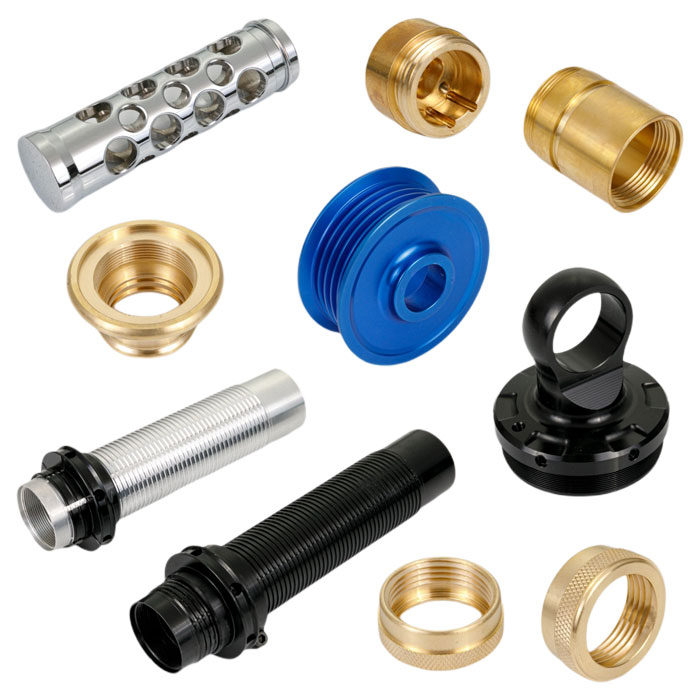
Primary Causes of Tool Vibration in CNC Lathe Machining
| Cause Category | Specific Trigger | Impact Level |
|---|---|---|
| Workpiece Geometry | Long, slender parts with low rigidity | High |
| Tooling Setup | Excessive tool overhang or improper insert nose radius | Critical |
| Cutting Parameters | Unsuitable spindle speed and depth of cut mismatch | Medium to High |
| Machine Condition | Worn spindle bearings or loose guide ways | Medium |
| Material Hardness | Inconsistent material causing interrupted cuts | Medium |
How to Reduce Tool Vibration
To stabilize CNC Lathe Machining operations, Youlin recommends the following proven strategies:
-
Optimize Tool Holding: Use the shortest possible tool overhang (ideally less than 1.5x tool height). Precision collet chucks from Youlin provide superior clamping force compared to standard screw holders.
-
Adjust Cutting Parameters: Reduce the depth of cut while increasing feed rate moderately. Variable spindle speed programming disrupts harmonic resonance cycles.
-
Enhance Workpiece Support: Employ steady rests or tailstocks for long shafts. For complex parts, consider live centers with higher load ratings.
-
Select Appropriate Insert Geometry: Use positive rake inserts with smaller nose radii (0.2mm to 0.4mm) to reduce cutting forces in CNC Lathe Machining.
CNC Lathe Machining FAQ Common Questions
Question 1: Can tool vibration permanently damage my CNC lathe's spindle system?
Answer: Yes, chronic vibration generates excessive radial and axial forces that gradually degrade spindle bearings, encoder accuracy, and turret alignment. Over 6-12 months of uncorrected chatter, runout errors can increase by 0.02mm to 0.05mm. Youlin recommends quarterly vibration analysis and using balanced tool holders to protect your machine investment.
Question 2: How do I distinguish between forced vibration and self-excited chatter in real-time production?
Answer: Forced vibration maintains a constant frequency that matches machine rotation (e.g., unbalanced chuck), while self-excited chatter suddenly appears at a resonant frequency when cutting depth exceeds a threshold. To test: pause the feed instantly. If vibration stops immediately, it is forced vibration (fix the rotating part). If vibration decays slowly, it is self-excited chatter (adjust speed or tool geometry). Youlin engineers provide diagnostic charts for rapid on-floor identification.
Question 3: What is the maximum tool overhang allowed for stable CNC Lathe Machining of stainless steel 304?
Answer: For stainless steel 304, the maximum stable tool overhang is 4 times the tool shank diameter when using standard holders. With Youlin anti-vibration boring bars featuring internal damping systems, you can safely reach 6 to 7 times diameter. Example: a 20mm shank boring bar – standard limit is 80mm overhang; Youlin solutions allow 120mm-140mm while maintaining Ra 1.6µm finish. Exceeding these values without damping technology will produce severe chatter within 2 seconds of cutting.
Conclusion
Tool vibration directly reduces productivity, damages cutting edges, and creates scrap parts. By identifying the root cause and applying targeted solutions—from parameter tuning to advanced tool holding—your CNC Lathe Machining processes can achieve stable, high-efficiency production. Youlin supplies a full range of anti-vibration tooling systems, precision holders, and technical consultation tailored to your specific lathe models.
Contact us today to schedule a free vibration audit for your shop floor. Let Youlin help you transform noisy, unstable cuts into smooth, profitable CNC Lathe Machining operations. Reach out via our website or email for a customized solution within 24 hours.