

What are the key design considerations for parts made with Low Pressure Die Casting
2026-01-20
At BSD, we often guide our clients through the fundamental design principles that unlock the full potential of the Low Pressure Die Casting process. This method excels at producing high-integrity, complex components, but its success is heavily dependent on thoughtful upfront design. By adhering to key considerations, engineers can optimize part quality, manufacturability, and cost-efficiency from the very first sketch.
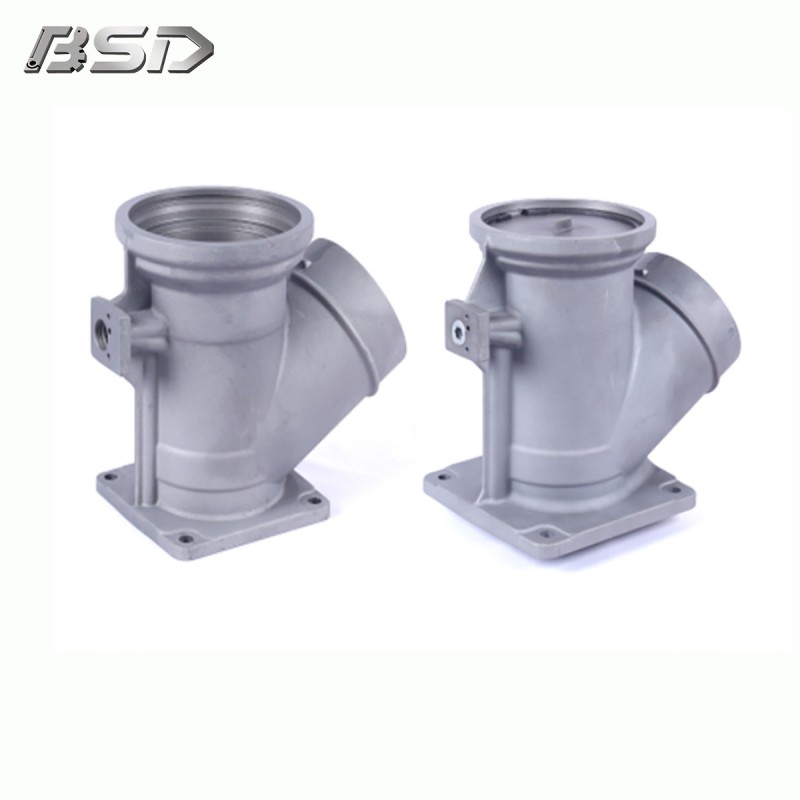
Successful part design for Low Pressure Die Casting hinges on several core pillars:
-
Uniform Wall Thickness: This is paramount. Maintaining consistent walls ensures even metal flow and solidification, minimizing defects like shrinkage porosity or warping.
-
Generous Radii and Fillets: Sharp corners create stress concentrations and impede metal flow. Incorporating generous radii promotes structural integrity and improves fill.
-
Strategic Rib Design: Ribs are excellent for adding strength without adding mass, but they must be designed thinner than the main wall (typically 50-80%) to avoid creating shrinkage issues.
-
Thoughtful Draft Angles: Allowing adequate draft (typically 1-3 degrees) on surfaces perpendicular to the die opening is essential for smooth, damage-free part ejection.
-
Controlled Tolerances: While Low Pressure Die Casting offers good dimensional accuracy, specifying unnecessarily tight tolerances can increase cost. Defining critical vs. non-critical areas is key.
The following table summarizes the impact of these design choices:
| Design Feature | Good Practice | Reason & Benefit |
|---|---|---|
| Wall Thickness | Uniform, typically 3-6mm | Promotes directional solidification, reducing porosity and ensuring consistent mechanical properties. |
| Corner Radii | Minimum 1-3mm internal radius | Reduces stress concentration, improves metal flow, and enhances die life. |
| Draft Angle | Minimum 1° (external), 2-3° (internal) | Ensures reliable part ejection and prevents drag marks on the casting surface. |
Low Pressure Die Casting FAQ
What is the main advantage of Low Pressure Die Casting for part design?
The primary advantage is the ability to produce complex, thin-walled castings with excellent metallurgical quality and reduced porosity compared to traditional methods, allowing for lighter and stronger components.
Can Low Pressure Die Casting integrate cores and inserts?
Yes, the process is well-suited for both sand and metal cores, enabling complex internal features. Pre-placed metal inserts for thread reinforcement or bearing surfaces are also commonly used in BSD projects.
What are the typical surface finish and post-casting requirements?
Low Pressure Die Casting typically yields a smooth surface finish straight from the die (around 2.5-6.3 μm Ra). While it requires less machining than sand castings, critical sealing or mating surfaces often undergo light machining for precision.
Mastering these design considerations is crucial for creating parts that are not only functional but also optimized for manufacturability and performance. The team at BSD leverages decades of expertise to collaborate with engineers during the design phase, ensuring your Low Pressure Die Casting project achieves the optimal balance of quality, strength, and value.
Have a component in mind? Contact us today for a design review and quote to see how BSD can bring your precision casting to life.
