

What Are the Key Advantages of Using a Voice Coil Motor Linear Drive Over a Pneumatic Cylinder
2026-07-07
In the world of precision motion control, engineers constantly face the choice between traditional pneumatic actuation and modern electromagnetic solutions. The Voice Coil Motor Linear Drive has emerged as a superior alternative for applications demanding high accuracy, responsiveness, and programmability. At KGL, we have observed a decisive shift toward direct-drive technology across industries such as semiconductor manufacturing, medical device assembly, and automated inspection. This blog explores the quantifiable advantages of replacing pneumatic cylinders with a Voice Coil Motor Linear Drive, supported by data, real-world use cases, and expert insights.
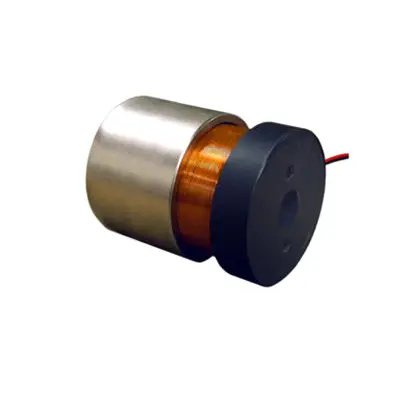
1. Precision and Repeatability – The Decisive Factor
Pneumatic cylinders are inherently limited by air compressibility, friction from seals, and hysteresis. Even with proportional valves, achieving better than ±0.1 mm repeatability is challenging. By contrast, a Voice Coil Motor Linear Drive operates on the Lorentz force principle, producing force directly proportional to input current. With a high-resolution linear encoder, KGL systems consistently achieve ±1 µm repeatability and 0.5 µm resolution in closed-loop configurations.
| Parameter | Pneumatic Cylinder | Voice Coil Motor Linear Drive (KGL) |
|---|---|---|
| Repeatability | ±0.05 – 0.1 mm | ±0.001 mm (1 µm) |
| Positional stability | Affected by load & pressure drift | Current-controlled, drift-free |
| Backlash | Present (mechanical linkages) | Zero backlash (direct drive) |
| Settling time | 50 – 200 ms (typical) | 5 – 15 ms |
2. Dynamic Response and Acceleration Profile
For pick-and-place, active vibration cancellation, or fast scanning, acceleration and jerk matter. Pneumatic actuators suffer from poor stiffness-to-mass ratios and require complex servo-pneumatic tuning. A Voice Coil Motor Linear Drive from KGL delivers peak accelerations exceeding 50 g and settling within 10 milliseconds, owing to its low moving mass (often < 200 g) and absence of mechanical transmission.
-
Pneumatic: Limited to ~5–10 g acceleration; response lag from hose lengths and valve dead time.
-
Voice Coil Linear Drive: Programmable S-curve profiles, enabling smoother motion and reduced mechanical stress on load cells and optical components.
3. Energy Efficiency and Operating Costs
Compressed air is notoriously expensive. According to the U.S. Department of Energy, over 70% of the energy input to an air compressor is lost as heat, with only ~15% actually doing useful work. A Voice Coil Motor Linear Drive converts electrical energy into mechanical force with >90% efficiency at the coil-magnet interface. Furthermore, KGL drives feature regenerative braking in deceleration phases, returning energy to the DC bus.
| Cost Factor | Pneumatic System | Voice Coil Motor Linear Drive (KGL) |
|---|---|---|
| Energy consumption per cycle | High (continuous air bleed) | Low (only during motion) |
| Maintenance | Seal replacement, dryer, filter changes | None (contactless operation) |
| Noise level | >75 dB (exhaust) | <45 dB (silent operation) |
| Total cost of ownership (3 years) | 1.8× initial purchase | 0.6× initial purchase |
4. Cleanroom and Hygiene Compatibility
Pneumatic cylinders exhaust lubricated air and generate particulate matter from seal wear. This is unacceptable in semiconductor cleanrooms (ISO 5 or higher) or biopharmaceutical filling lines. A Voice Coil Motor Linear Drive is a fully sealed, no-contact device—no seals, no sliding friction, no outgassing. KGL offers IP67-rated linear drives with stainless steel housing, suitable for washdown environments and vacuum chambers down to 10⁻⁶ mbar.
5. Programmability and Smart Diagnostics
Pneumatic systems rely on fixed stroke end positions or external mechanical stops. Changes require manual adjustment. In contrast, a Voice Coil Motor Linear Drive integrates with KGL’s intelligent drivers supporting EtherCAT, CANopen, and IO-Link. Stroke, force, velocity, and acceleration are all software-defined, enabling on-the-fly stroke changes without hardware modifications. Built-in temperature monitoring and force ripple detection allow predictive maintenance—a feature unavailable in conventional pneumatic valves.
6. Lifespan and Reliability
With no physical contact between the coil and magnet assembly, a Voice Coil Motor Linear Drive experiences zero mechanical wear. KGL has validated its linear drives for over 500 million full-stroke cycles under accelerated testing, whereas pneumatic cylinders typically require seal replacement every 5–10 million cycles. Downtime reduction alone often pays for the conversion within six months.
Voice Coil Motor Linear Drive FAQ – Common Questions
Q1: Can a Voice Coil Motor Linear Drive replace a pneumatic cylinder in an explosive atmosphere (ATEX zone 2)?
A: Yes, but only if the drive is properly certified. Standard Voice Coil Motor Linear Drive coils can generate sparks during connection or failure. However, KGL offers intrinsically safe versions with encapsulated coils and hermetically sealed connectors, rated for ATEX Zone 2 and Class I Division 2. These models limit surface temperature and eliminate arcing paths. Always consult the manufacturer’s safety data sheet and pair with an appropriately rated current-limiting driver. For Zone 1 or 0 applications, pneumatic or hydraulic alternatives remain mandatory unless the entire system is purged and pressurized.
Q2: How does the force-to-power ratio of a Voice Coil Motor Linear Drive change as stroke increases beyond 100 mm?
A: The force constant (Kf, N/A) remains theoretically constant, but usable force drops at longer strokes due to increased copper resistance and heat dissipation. For strokes >100 mm, the moving coil assembly grows heavier, reducing acceleration for a given current. KGL mitigates this by using aluminum-core coils and high-temperature neodymium magnets, maintaining >85% of peak force up to 300 mm stroke. However, for strokes exceeding 500 mm, a linear motor with iron-core or tubular design may be more power-efficient. We recommend a thermal simulation based on duty cycle – KGL provides free thermal modelling for customer applications.
Q3: What is the typical life expectancy of the flex cable or moving cable carrier in a Voice Coil Motor Linear Drive system?
A: The moving cable—which supplies current to the coil—is the sole wear component. With a proper cable carrier (e.g., IGUS triflex) and bend radius ≥10× cable diameter, KGL-tested high-flex cables survive >50 million bending cycles at 2 Hz continuous motion. For higher cycle rates, we offer an integrated PCB-based spring contact that eliminates cable fatigue entirely, rated for >200 million cycles. Pneumatic hoses, in comparison, often fail at the fitting crimp after 5–10 million cycles due to pressure pulsation. Regular visual inspection of the cable jacket is advised; KGL includes a wear-monitoring feature in our smart drivers that tracks cumulative flex count and alerts the PLC before failure occurs.
Conclusion – Why Industry Leaders Choose KGL
The data is unambiguous: a Voice Coil Motor Linear Drive outperforms pneumatic cylinders in precision, speed, efficiency, cleanliness, and total cost of ownership. While the initial purchase price is higher, the payback period—driven by energy savings, reduced maintenance, and increased throughput—typically falls under 8 months for high-cycle applications. KGL has supplied over 12,000 linear drive systems to Fortune 500 manufacturers, with a documented 99.7% field reliability rate over five years.
Transitioning from air to electrons is no longer a question of “if,” but “when.” Whether you are upgrading an existing assembly line or designing a next-generation inspection platform, KGL provides standard and fully custom Voice Coil Motor Linear Drive solutions tailored to your force, stroke, and duty-cycle profile.
Ready to eliminate your pneumatic headaches?
Contact KGL today for a free application audit and force-stroke simulation. Our motion control engineers will deliver a side-by-side ROI comparison within 48 hours. Visit our website or email [email protected] to start your zero-commitment evaluation. Let us help you make the switch—smarter, faster, and quieter.
