What Are the Different Types of Sheet Metal Fabrication Processes
2025-12-30
Sheet metal fabrication is a versatile and essential manufacturing discipline that transforms flat metal sheets into functional parts and structures. At BSD, we master a comprehensive suite of processes, each selected to meet precise design specifications, material properties, and application demands. Understanding these core methods is key to optimizing your project for performance, cost, and lead time.
The primary sheet metal fabrication techniques can be categorized into three main groups: cutting, forming, and assembly.
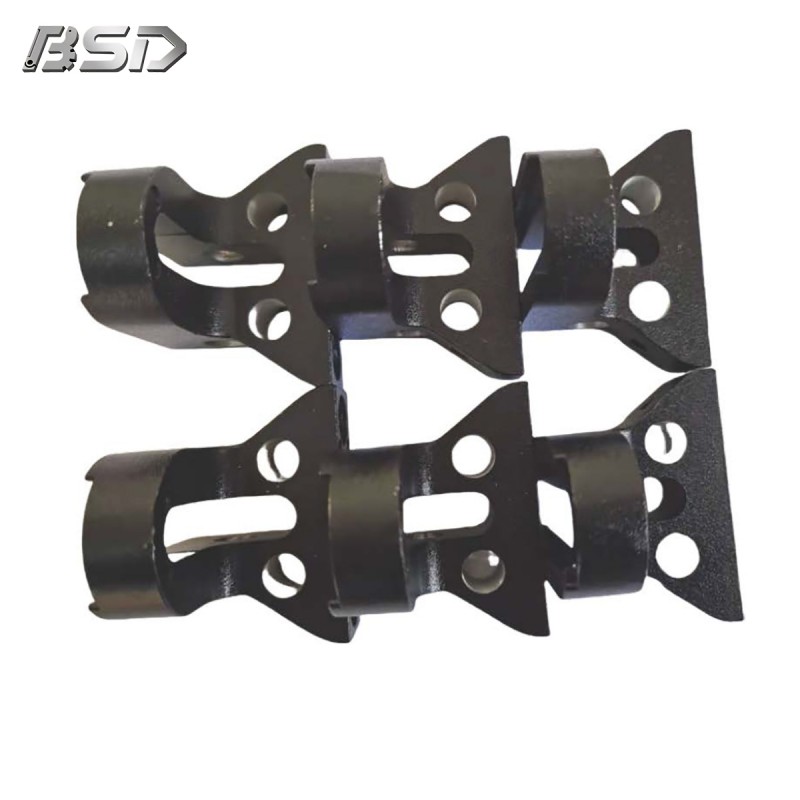
Key Fabrication Processes:
-
Cutting: Dividing sheet metal into smaller pieces or specific shapes.
-
Forming: Shaping the cut metal without adding or removing material.
-
Assembly: Joining separate fabricated components into a final product.
Here is a comparative overview of some fundamental processes:
| Process Category | Process Name | Brief Description | Common Application |
|---|---|---|---|
| Cutting | Laser Cutting | Uses a high-power laser for precise, computer-controlled cuts. | Complex contours, intricate parts. |
| Cutting | Punching | A punch and die create holes or shapes via mechanical force. | High-volume hole patterns, standard shapes. |
| Forming | Bending | Metal is deformed along a straight axis using a press brake. | Enclosures, brackets, chassis. |
| Forming | Stamping | A die stamps shapes, bends, or embosses in a single stroke. | Automotive panels, appliance components. |
| Assembly | Welding | Uses heat to fuse metal pieces together permanently. | Structural frames, heavy-duty assemblies. |
| Assembly | Riveting | Joins parts using mechanical fasteners (rivets). | Aerospace, electronics where heat is a concern. |
Sheet Metal Fabrication FAQ
Q: What factors determine the best fabrication process for my project?
A: The optimal process depends on material type and thickness, part complexity, required precision, production volume, and budget. A BSD engineer can analyze your design to recommend the most efficient and cost-effective combination of processes.
Q: How do you ensure precision in sheet metal fabrication?
A: Precision is ensured through CNC (Computer Numerical Control) technology, which automates tools like lasers and press brakes for repeatable accuracy. At BSD, we combine advanced CNC machinery with rigorous quality control checks at every production stage.
Q: Can you handle both prototyping and full production runs?
A: Absolutely. Modern sheet metal fabrication is highly adaptable. We utilize rapid prototyping techniques like CNC laser cutting for quick-turn prototypes, and seamlessly scale to high-volume production using automated stamping or punching lines, ensuring consistency from the first part to the thousandth.
Choosing the right partner for your sheet metal fabrication needs is critical. BSD brings expertise, state-of-the-art technology, and a commitment to quality to every project, from simple brackets to complex welded assemblies.
Ready to transform your design into a precision metal reality? Contact us today for a detailed quote and expert manufacturing consultation.