

What are the common failure modes of a medium-voltage indoor disconnector switch
2026-01-28
Ensuring the reliability of your electrical distribution system hinges on the performance of critical components like the Medium-voltage Indoor Disconnector Switch. As a cornerstone of safe isolation and maintenance operations, its failure can lead to costly downtime and serious safety hazards. At Wzonpa, we combine engineering excellence with deep industry knowledge to help you mitigate these risks. Proactive identification of common failure modes is the first step toward enhanced system integrity.
The most prevalent issues with a Medium-voltage Indoor Disconnector Switch often stem from mechanical, electrical, and environmental factors. Regular inspection for these failure modes is essential.
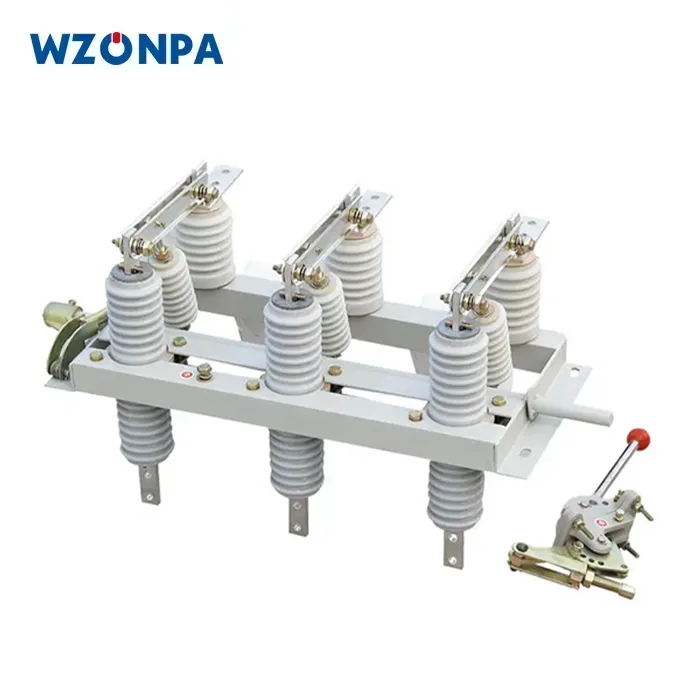
Primary Failure Modes and Causes:
-
Contact Degradation: This includes overheating due to loose connections, contact erosion from arcing during operation, and surface contamination leading to increased resistance.
-
Mechanical Binding or Jamming: Caused by worn linkages, corrosion of moving parts, misalignment from improper installation, or a lack of routine lubrication.
-
Insulation Breakdown: Resulting from surface tracking due to moisture and pollution, thermal aging over time, or physical damage to insulating components.
-
Operational Failure: Manifests as the inability to open or close fully, often due to issues with the interlock mechanisms, control circuitry problems, or spring-charging mechanism faults.
A comparison of symptoms versus potential root causes aids in diagnostics:
| Observed Symptom | Potential Root Cause |
|---|---|
| Unusual Heating at Contacts | Loose Terminals, Worn Contacts, High Contact Resistance |
| Difficult or Noisy Operation | Mechanical Wear, Corrosion, Lack of Lubrication |
| Visible Arcing During Use | Damaged Arcing Horns, Slow Contact Speed, Insufficient Maintenance |
| Incomplete Isolation Feeling | Mechanical Misalignment, Interlock System Fault |
Medium-voltage Indoor Disconnector Switch FAQ
Q: How often should a Medium-voltage Indoor Disconnector Switch be maintained?
A: Maintenance intervals depend on operational frequency and environment. A general guideline is a thorough inspection annually or after every 2,000 operations. Always consult the manufacturer's manual, such as the one provided by Wzonpa, and adhere to local regulatory standards.
Q: Can a disconnector switch be used to interrupt load current?
A: Absolutely not. A Medium-voltage Indoor Disconnector Switch is designed solely for isolation on a de-energized circuit. Attempting to interrupt load current will cause severe arcing, damage the contacts, and create an extreme safety hazard. Always use a dedicated circuit breaker for current interruption.
Q: What is the most critical check during a routine inspection?
A: Verifying the integrity of the contacts and the cleanliness of the insulation are paramount. Check for signs of overheating, erosion, or contamination. Ensuring smooth, full-range mechanical operation without binding is equally critical for safe and reliable performance.
Understanding these failure modes empowers you to implement a predictive maintenance strategy, avoiding unplanned outages. For a system as critical as your Medium-voltage Indoor Disconnector Switch, relying on robust design and expert support is key.
Contact us at Wzonpa today to schedule a professional assessment of your switchgear or to learn about our durable, precision-engineered Wzonpa disconnector switches designed for maximum safety and longevity.
