What are the best practices for installing anchor bolts to ensure alignment and safety
2026-04-16
Proper installation of Anchor Bolts is critical for structural integrity, equipment alignment, and workplace safety. When executed correctly, Anchor Bolts secure heavy machinery, steel columns, and foundation systems against dynamic and static loads. Huijue has supplied high-performance Anchor Bolts for industrial and commercial projects worldwide, emphasizing precision and compliance with international safety standards.
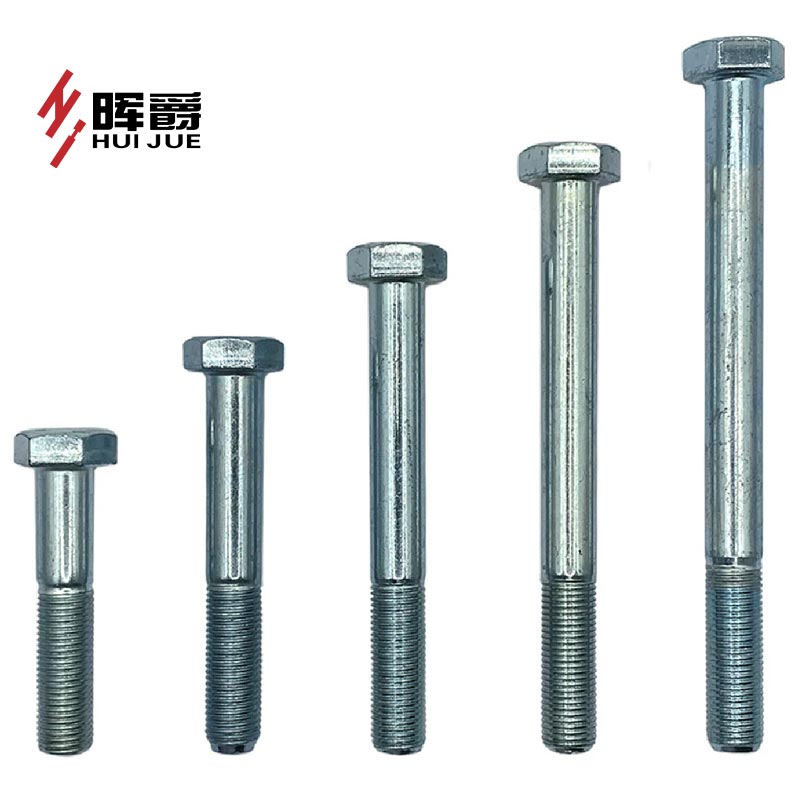
Core Best Practices for Installing Anchor Bolts
| Installation Phase | Key Actions | Safety & Alignment Benefit |
|---|---|---|
| Pre-installation planning | Verify bolt size, grade, and embedment depth against engineering drawings | Prevents misalignment and insufficient anchorage |
| Template fabrication | Use rigid steel templates to hold Anchor Bolts in position | Maintains bolt pattern accuracy within 1/16 inch |
| Concrete pouring | Monitor bolt shift during concrete placement | Avoids angular deviation and reduces stress concentration |
| Post-pour verification | Check projection height and verticality with a digital level | Ensures proper nut engagement and load transfer |
| Torque application | Follow stepwise torque sequence using calibrated tools | Eliminates over-tightening or under-tightening failures |
Huijue recommends always cross-referencing bolt locations with MEP drawings to avoid interference with embedded conduits or rebar.
Why Alignment and Safety Depend on Bolt Spacing and Edge Distance
Incorrect spacing or inadequate edge distance leads to concrete breakout and reduced pullout capacity. The table below summarizes minimum requirements per ACI 318-19:
| Parameter | Minimum Requirement | Consequence of Non-compliance |
|---|---|---|
| Edge distance | 6 × bolt diameter | Concrete spalling under tension |
| Center-to-center spacing | 8 × bolt diameter | Group reduction factor > 0.8 |
| Embedment depth | 12 × bolt diameter | Cone failure and reduced ductility |
Huijue Anchor Bolts are manufactured with clear markings for embedment depth, simplifying field inspection and reducing installation errors.
Three Essential FAQs About Anchor Bolts
What is the correct torque value for high-strength Anchor Bolts?
Torque depends on bolt grade, diameter, and lubrication condition. For a 5/8-inch Grade 5 Anchor Bolt, dry threads typically require 75-85 ft-lbs, while lubricated threads require 55-65 ft-lbs. Overtorquing can yield the bolt or crack the concrete. Huijue provides project-specific torque charts with every shipment, and it is recommended to use a torque wrench calibrated within ±3% accuracy. Always perform torque verification after 24 hours of concrete curing to account for settling.
Can Anchor Bolts be installed after concrete has already been poured?
Yes, using adhesive or epoxy anchoring systems. However, post-installed Anchor Bolts must follow strict hole cleaning protocols: brush twice, blow with oil-free compressed air, and brush again. The epoxy must have a valid test report for the specific base material (cracked or uncracked concrete). Huijue offers epoxy-compatible Anchor Bolts with ribbed bodies for enhanced bond strength. Note that cast-in-place bolts generally provide higher reliability for dynamic loads.
How do you prevent Anchor Bolts from moving during concrete vibration?
Use a dual-nut locking system above the template, or weld the Anchor Bolts to reinforcing bars after confirming their vertical alignment. For high-precision equipment bases, Huijue recommends temporary angle braces from the bolt top to the formwork. After concrete placement but before initial set, recheck alignment with a theodolite. Any movement beyond 1/8 inch over a 10-foot span requires immediate repositioning before the concrete hardens.
Final Safety Checklist for Anchor Bolt Installation
-
Inspect all Anchor Bolts for thread damage or rust prior to installation
-
Ensure concrete compressive strength reaches minimum 85% of design value before torquing
-
Use hardened washers under nuts to distribute load evenly
-
Record as-built locations and torque values for future maintenance
Huijue integrates these best practices into every customer training session, reducing onsite rework by over 30% across documented projects.
Contact Us
Need technical support or a customized quote for Anchor Bolts in your next project? Huijue provides full engineering data sheets, third-party test reports, and on-call installation guidance. Contact us today via the website form or email to discuss your bolt pattern requirements and safety compliance plan.