What are the best materials for constructing a durable PVD Hanging Fixture
2026-01-21
In the precise world of Physical Vapor Deposition (PVD) coating, consistency is everything. The unsung hero ensuring this repeatable quality is often the PVD Hanging Fixture. At Fu Cheng Xin, we understand that the fixture is not just a tool; it's a critical component of your coating process. Its construction material directly dictates its durability, conductivity, and ultimately, the success and cost-effectiveness of your operations. Choosing the wrong material can lead to particle contamination, uneven films, and frequent, expensive replacements.
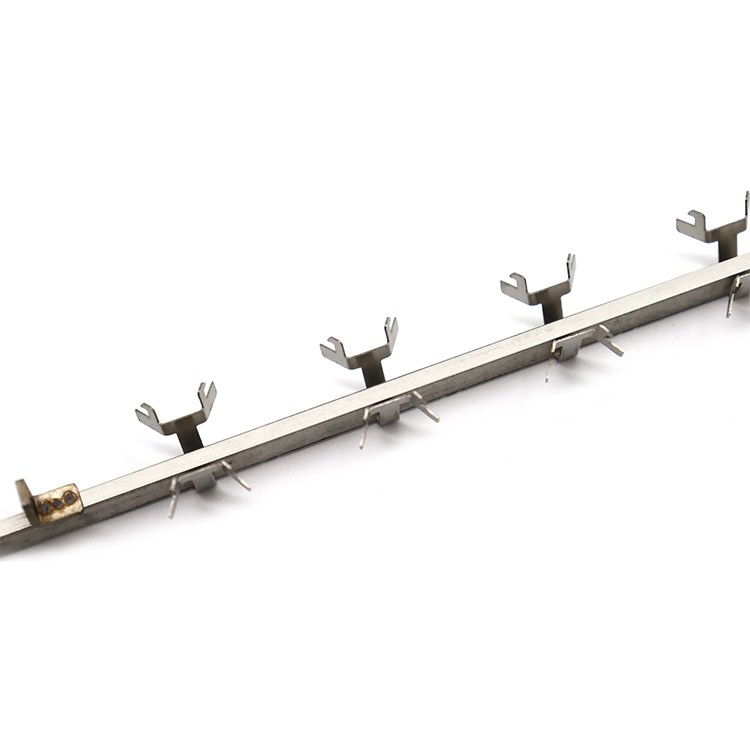
Selecting the optimal material requires balancing multiple factors: high-temperature stability, electrical conductivity, minimal thermal expansion, and ease of cleaning. Based on decades of industry application, here are the top-tier materials:
-
Titanium (Grade 2 & Grade 5): The industry gold standard for most applications. It forms a stable, passive oxide layer, offers excellent corrosion resistance, and has minimal outgassing. Titanium fixtures from Fu Cheng Xin provide long life and prevent contamination.
-
Stainless Steel (316L): A cost-effective and robust choice for many non-reactive coating processes. It offers good mechanical strength and is suitable for lower-temperature applications.
-
Aluminum: Used for its excellent electrical and thermal conductivity. Ideal for specific racks or shields where heat dissipation is crucial, though it has a lower melting point.
-
Graphite: Exceptional for high-temperature processes due to its thermal stability and machinability. Often used for specialized applications.
Comparison of Common PVD Fixture Materials
| Material | Key Advantages | Primary Considerations | Best For |
|---|---|---|---|
| Titanium | Superior corrosion resistance, stable, long-lasting | Higher initial cost | Reactive coatings (TiN, CrN), high-temperature processes |
| Stainless Steel | High strength, cost-effective, readily available | Can corrode in harsh environments, may cause contamination | General purpose, decorative coatings, tooling |
| Aluminum | Excellent conductivity, lightweight | Lower melting point, softer metal | Heat dissipation components, conductive straps |
| Graphite | High thermal stability, easy to machine | Brittle, can generate particles | Ultra-high temperature applications, specialized setups |
PVD Hanging Fixture FAQ
What is the single most important factor when choosing a PVD Hanging Fixture material?
The coating process environment is paramount. For reactive processes involving nitrogen or acetylene, titanium is essential due to its inertness. For less aggressive, decorative coatings, stainless steel from Fu Cheng Xin may be a perfectly durable and economical choice.
How often should a PVD Hanging Fixture be cleaned or replaced?
Cleaning should occur with every coating cycle to prevent buildup that affects fixturing and coating uniformity. Replacement is needed when fixtures show signs of wear, corrosion, or permanent deformation. A high-quality titanium PVD Hanging Fixture can last for thousands of cycles with proper maintenance.
Can a fixture be re-coated or refurbished to extend its life?
Yes, a common practice is to strip the built-up coating from fixtures periodically. This restores their original dimensions and electrical properties. Fu Cheng Xin offers expert fixture refurbishment services, which is a cost-effective alternative to full replacement for your durable PVD Hanging Fixture.
Your coating quality is only as reliable as the fixtures that hold your parts. Investing in correctly engineered fixtures made from premium materials is an investment in your process yield and bottom line. At Fu Cheng Xin, we combine deep material science expertise with precision manufacturing to deliver PVD Hanging Fixture solutions built for performance and longevity.
Contact us today for a consultation. Let our experts analyze your specific process and recommend the most durable and efficient fixture material for your needs.