Is Your Ball Screw Quietly Limiting the True Potential of Your Machine?
2026-02-25
When I first began sourcing precision transmission components for demanding automation projects, I quickly realized how critical the right Ball Screw is to overall system stability. Over time, I saw how manufacturers such as Suzhou Maitu Screw Rod Manufacturing Co., Ltd. gradually integrated advanced machining centers, precision grinding equipment, and stricter quality inspection standards to meet rising global expectations. That evolution reflects a broader truth in our industry: if the motion control core is unstable, no level of electronics or software can compensate.
In this article, I want to share what I have learned from working closely with production engineers, procurement teams, and end users. If you are struggling with positioning errors, premature wear, or inconsistent motion, this deep dive into Ball Screw technology may help you avoid costly mistakes.
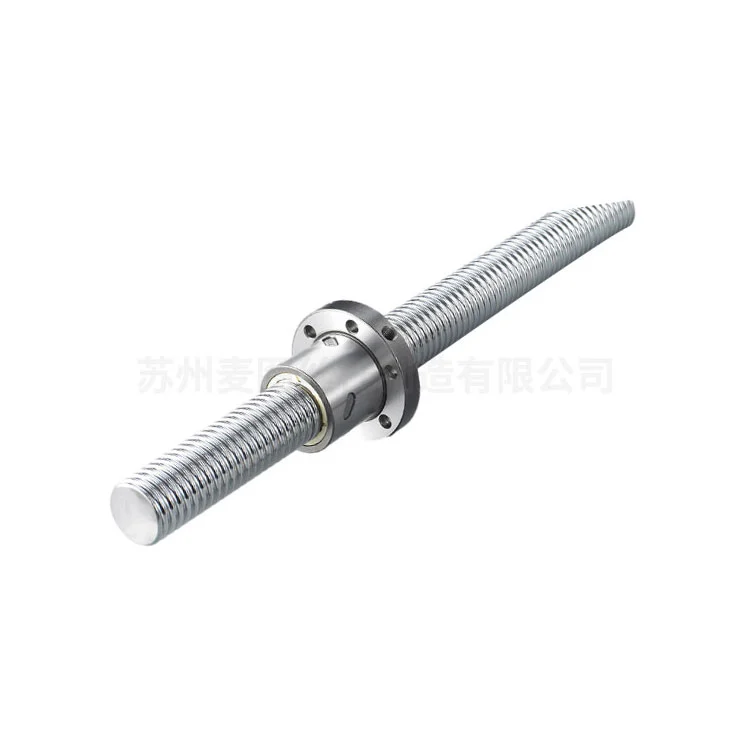
Why Do So Many Machines Fail Due to the Wrong Ball Screw Selection?
From CNC machining centers to semiconductor equipment, I have seen projects delayed simply because the transmission component was selected based on price instead of performance requirements. A poorly matched Ball Screw often leads to:
- Backlash that reduces positioning accuracy
- Excessive heat generation under high-speed operation
- Short service life due to improper preload or lubrication
- Vibration that compromises surface finish quality
- Unexpected downtime and maintenance costs
In high-precision industries, even a few microns of deviation can translate into rejected parts or lost contracts. That is why I always evaluate load rating, lead accuracy, rigidity, and material treatment before confirming specifications.
How Does a High-Quality Ball Screw Improve Precision and Efficiency?
When engineered correctly, a Ball Screw converts rotary motion into linear motion with remarkably high efficiency, often exceeding 90%. Compared with conventional lead screws, the rolling contact between balls and raceways drastically reduces friction.
Here is what I typically look for when assessing product performance:
| Performance Factor | Why It Matters in Real Applications |
| Lead Accuracy | Determines positioning precision for CNC and automation systems |
| Preload Design | Reduces backlash and improves rigidity under dynamic loads |
| Surface Hardness | Enhances wear resistance and extends service life |
| Dynamic Load Rating | Indicates how long the component can operate under continuous stress |
| Lubrication Structure | Prevents overheating and ensures stable high-speed motion |
In my experience, investing in a precision-ground Ball Screw for high-end applications often reduces long-term operational costs. Fewer breakdowns and more consistent motion translate directly into better productivity.
What Should You Consider Before Ordering a Ball Screw for Your Project?
Every application is different. I never recommend selecting a model based solely on catalog dimensions. Instead, I ask a series of practical questions:
- What is the maximum axial load and working cycle?
- Is the system operating in a high-speed or high-temperature environment?
- Do you require zero-backlash performance?
- What level of positioning accuracy is expected?
- How critical is noise control for your equipment?
For example, in medical imaging devices, smooth and quiet motion is often more important than extreme load capacity. In contrast, industrial machining centers demand rigidity and long-term stability under heavy cutting forces.
By aligning technical parameters with real working conditions, I can prevent overspending on unnecessary features while avoiding underperformance risks.
Why Does Manufacturing Process Control Matter More Than Marketing Claims?
I have visited production workshops where tolerances were loosely managed, and I have also seen facilities that rely on advanced grinding machines and laser measurement systems to maintain micron-level precision. The difference in finished product quality is immediately visible.
A reliable Ball Screw depends on:
- Strict heat treatment to ensure uniform hardness
- Precision grinding to achieve accurate lead and smooth raceways
- Controlled assembly to maintain consistent preload
- Comprehensive testing before shipment
When manufacturers invest in process control instead of flashy brochures, I feel more confident integrating their products into critical systems. Stability over time is what truly protects my customers’ operations.
How Can the Right Supplier Reduce Your Total Cost of Ownership?
Many buyers focus on initial pricing, but I always calculate total cost of ownership. A slightly higher-quality Ball Screw often delivers measurable savings through:
- Reduced maintenance intervals
- Lower replacement frequency
- Improved machine uptime
- Higher product yield in precision manufacturing
When downtime can cost thousands of dollars per hour, reliability becomes far more valuable than minor upfront savings. I prefer to work with partners who understand long-term performance rather than short-term transactions.
Are You Ready to Upgrade Your Motion Control System?
If you are experiencing positioning errors, excessive vibration, or inconsistent linear motion, it may be time to re-evaluate your current Ball Screw solution. I have seen firsthand how upgrading to a properly engineered component transforms machine stability and production output.
Choosing the right specification is not just a technical decision; it is a strategic one. If you would like professional guidance tailored to your application, I encourage you to contact us and share your working conditions, load requirements, and precision expectations. Our team is ready to provide customized recommendations and help you move forward with confidence. Reach out today and let us discuss how the right Ball Screw can elevate your equipment performance.