Is a Grooved Collector Commutator Always Ruined in Home Appliances
2026-08-14
When you pull apart a noisy washing machine or a sluggish food processor, the first component that catches the eye is often the Household Appliance Collector Commutator. That copper surface, scored with dark grooves, immediately raises alarms. At Nide, we have inspected thousands of these motor parts across workshops and factory floors. The honest answer? A grooved surface is not an automatic death sentence, but it does demand a careful, diagnostic approach. Understanding the difference between harmless wear and fatal damage can save you from unnecessary replacement costs and extended downtime.
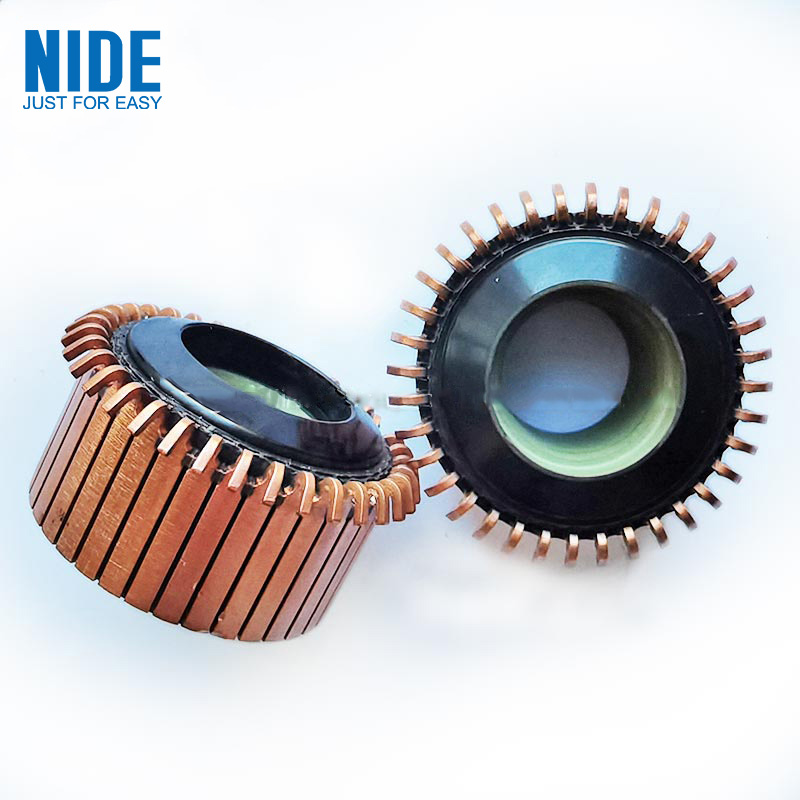
What the Grooves Actually Tell You
Every Household Appliance Collector Commutator operates under friction. Carbon brushes slide against the copper segments, and over time, microscopic debris and electrical arcing leave their mark. Shallow, uniform grooves—often less than 0.2 mm deep—are considered normal wear patterns in devices that have completed over 1,000 operating hours. These marks indicate that the commutator has properly bedded in with the brushes. However, deep, irregular grooves with sharp edges or copper displacement point to brush misalignment, spring tension issues, or overcurrent conditions. Such damage is progressive. If left unaddressed, it will overheat the motor windings and lead to catastrophic failure.
The Diagnostic Checklist (When to Repair vs. Replace)
We recommend a structured inspection before making any decision. The following table outlines the critical parameters used by Nide service engineers:
| Condition | Groove Depth | Surface Color | Brush Contact Pattern | Verdict |
|---|---|---|---|---|
| Normal wear | ≤ 0.2 mm, even | Light brown/golden | Full width, even | Serviceable – skim cut recommended |
| Moderate wear | 0.2 – 0.5 mm, stepped | Dark brown with mild burn marks | Partial, uneven | Repairable – turn on a lathe and undercut mica |
| Severe damage | > 0.5 mm, jagged | Black/blue discoloration | Point contact only | Replace – risk of segment loosening |
| Copper projection | Raised edges between segments | Silver streaks | Chattering marks | Replace – brush life will drop by 70%+ |
The decision is rarely binary. A Household Appliance Collector Commutator with grooves in the moderate category often performs better than a new one after a professional resurfacing job, because the copper work-hardens over time, increasing its wear resistance.
Three Critical Tests Before You Decide
Beyond visual inspection, Nide engineers always perform these three quick tests:
-
Bar-to-bar resistance check – A variance above 15% between adjacent segments indicates a shorted winding, which makes the commutator grooves irrelevant; the motor is already compromised.
-
Runout measurement – Place a dial gauge on the commutator surface. A total indicated runout (TIR) exceeding 0.05 mm means the grooves are a symptom of bearing wear, not the root cause.
-
Brush spark observation – Under load, if the sparking is blue and continuous, the grooves are causing poor contact. If it is orange and intermittent, the issue is likely electrical (capacitor or supply voltage).
Common Misconceptions in Home Repair Forums
Many DIY guides suggest sanding down a grooved Household Appliance Collector Commutator with fine emery paper. This is a high-risk practice. Sandpaper embeds abrasive particles into the soft copper, accelerating brush wear. At Nide, we only recommend lathe turning with a diamond-tipped tool, followed by mica undercutting—a process that restores the insulation between segments to prevent flashover. Moreover, replacing the commutator alone without addressing the brush holder alignment is futile; the new surface will groove again within 50 hours of operation.
FAQ – Household Appliance Collector Commutator Common Questions
Q1: Can I continue using my appliance if the collector commutator has visible grooves but the motor still runs smoothly?
A1: Yes, but only under strict supervision. If the grooves are uniform and shallow (under 0.2 mm) and you do not hear abnormal grinding noises or see excessive sparking through the ventilation slots, you can continue using the appliance while monitoring performance. However, you must measure the groove depth monthly. Once the depth approaches 0.4 mm, the risk of brush bounce and arcing increases exponentially, which can damage the electronic speed controller. Nide advises scheduling a professional inspection at this stage rather than waiting for a complete stall.
Q2: What is the cost-effective solution for a moderately grooved commutator in a stand mixer or drill?
A2: The most economical route is a commutator skim-cutting service, which typically costs 30% to 40% of a new motor assembly. This involves removing a 0.1 – 0.15 mm layer from the copper surface to restore cylindrical concentricity, followed by undercutting the mica insulators by 0.5 – 0.8 mm. This procedure extends the commutator’s life by another 600 – 800 running hours. At Nide, we offer this as a standard repair for all household motor types, and we guarantee that the resurfaced commutator will perform within 95% of original specifications. Pair this with new carbon brushes, and your appliance will feel like new.
Q3: How do I distinguish between harmless commutator discoloration and thermal damage that means replacement?
A3: Color is a powerful indicator. A uniform chocolate-brown or golden hue is a healthy oxide layer that actually reduces friction. Dark purple or deep blue patches are signs of localized overheating—often caused by a loose connection or a stalled rotor. The definitive test is the "acetone wipe": gently rub the dark area with a cotton swab dipped in acetone. If the color wipes off, it is surface contamination from brush dust; if it remains, it is oxidized copper due to heat. For oxidized areas that cover more than 15% of the commutator circumference, Nide recommends immediate replacement because the copper hardness has been permanently altered, leading to accelerated brush wear and potential segment ejection at high speeds.
Final Verdict from Nide Engineering
A grooved Household Appliance Collector Commutator is not always ruined, but it is always a warning signal. The key lies in precise measurement, correct diagnostic testing, and understanding the operating history of the appliance. Devices used in intermittent duty (like drills) tolerate grooves much better than continuous-duty machines (like vacuum cleaners or refrigerators). In all cases, ignore the groove at your own peril—but do not condemn it prematurely, either.
Nide has built its reputation on providing reliable motor component guidance and high-quality replacement parts for both consumers and service centers. We believe that informed decisions save money, reduce electronic waste, and keep your household running smoothly.
Ready to diagnose your motor? Contact our Nide support team today with your commutator photos and groove measurements. We will give you a free preliminary assessment and a clear repair-or-replace recommendation within 24 hours. Reach out via our website contact form or call our technical helpline—your appliance deserves expert care, not guesswork.