How to Select the Right Material for Clevises with Rotating Shaft in Corrosive Environments
2026-06-15
When engineering linkages for marine, chemical, or outdoor applications, selecting the right material for Clevises with Rotating Shaft is critical. At Dongzhou Transmission, we understand that corrosion not only accelerates wear but also compromises the rotational freedom of the shaft, leading to joint seizure or failure. This guide follows proven engineering principles to help you make a data-driven choice.
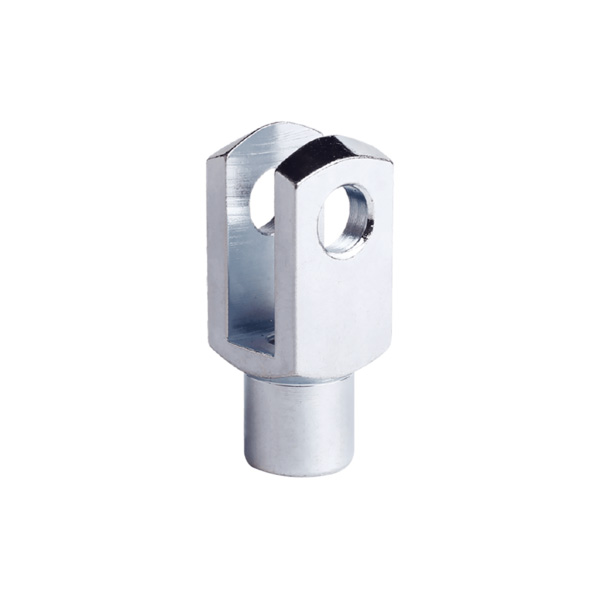
Why Material Selection Matters
Corrosive environments—salt spray, acidic vapors, or high humidity—attack the clevis body and the rotating shaft interface. Unlike standard clevis pins, Clevises with Rotating Shaft rely on low-friction movement. Once corrosion pits the shaft surface, friction increases, and the entire linkage fails. The right material extends service life by 5-10 times.
Material Comparison for Corrosive Conditions
| Material Grade | Corrosion Resistance | Load Capacity | Relative Cost | Best Application |
|---|---|---|---|---|
| 316 Stainless Steel | Excellent (saltwater) | High | $$$ | Marine rigging, dockside cranes |
| Duplex 2205 | Superior (chloride stress cracking) | Very High | $$$$ | Chemical plants, offshore platforms |
| Nickel-Aluminum Bronze | Very Good (seawater, acids) | Medium-High | $$$ | Propeller linkages, valve actuators |
| Coated Carbon Steel (Zinc/Nickel) | Moderate (scratches expose steel) | High | $ | Indoor humid areas (not submerged) |
| Super Duplex (UNS S32760) | Exceptional (sour gas, high Cl-) | Highest | $$$$$ | Subsea equipment, desalination plants |
Key Engineering Criteria
Three factors dominate your decision:
-
Pitting Resistance Equivalent Number (PREN) – For saltwater, choose PREN > 40. 316L has PREN ~25; Duplex 2205 has PREN ~35.
-
Galvanic Compatibility – Avoid pairing a stainless steel Clevis with Rotating Shaft with aluminum structures directly; use insulating washers.
-
Surface Finish – A smoother shaft surface (Ra < 0.4 µm) reduces crevice corrosion initiation points.
Clevises with Rotating Shaft FAQ
Q1: Can I use standard zinc-plated carbon steel Clevises with Rotating Shaft in a salt spray environment for outdoor crane linkages?
A1: No. Zinc plating provides only 100-200 hours of salt spray protection (ASTM B117) before red rust appears. In a daily outdoor crane linkage near the coast, failure often occurs within 6 months. The rotating action accelerates plating wear at contact points, exposing bare steel. For such environments, Dongzhou Transmission recommends at least 316 stainless steel, which offers 1,000+ hours of salt spray resistance. The additional upfront cost is quickly recovered by avoiding bi-annual replacement and unplanned downtime.
Q2: How do I prevent galling when using stainless steel Clevises with Rotating Shaft in a rotating motion under high cyclic loads?
A2: Galling (cold welding) is a common risk with austenitic stainless steels like 316 or 304 under high pressure and rotation. To prevent it, specify a nitrided surface treatment on the shaft portion of the Clevises with Rotating Shaft, or switch to a duplex stainless steel (e.g., 2205) which has higher initial hardness. Alternatively, Dongzhou Transmission offers a PTFE-coated sleeve between the shaft and the clevis eye. This eliminates metal-to-metal contact while maintaining rotation freedom. Regular grease lubrication with a high-pressure, corrosion-inhibiting grease (e.g., lithium complex with EP additives) is mandatory for any uncoated stainless steel rotating assembly.
Q3: What is the most cost-effective material for Clevises with Rotating Shaft in a chemical dosing pump linkage exposed to 10% sulfuric acid at 50°C?
A3: In 10% sulfuric acid at moderate temperature, both standard 316 stainless steel and aluminum bronze will eventually fail due to active corrosion or de-alloying. The most cost-effective solution is Hastelloy C-276, despite its higher unit price. However, for a balance between cost and performance, super duplex stainless steel (UNS S32760) is the optimal choice for Dongzhou Transmission products. It offers 10 times the corrosion resistance of 316 in reducing acids. A less obvious option: PTFE-lined Clevises with Rotating Shaft with a titanium rotating shaft. This combination has a longer service life (8+ years) than cheaper stainless grades (often <1 year), minimizing pump system shutdown costs which typically exceed material savings.
Practical Selection Workflow
-
Identify the corrodent – Chlorides? Acids? Humidity only?
-
Calculate required load – Include shock and rotation-induced fatigue.
-
Apply safety factor – Corrosion weakens materials over time (use 2.5x).
-
Check availability – Dongzhou Transmission stocks 316, Duplex 2205, and coated alloy steel Clevises with Rotating Shaft for rapid delivery.
Final Engineering Verdict
For 90% of corrosive environments—including seawater splash, chemical mist, and high-humidity zones—316 stainless steel offers the best balance of cost and performance for Clevises with Rotating Shaft. For submerged or acid-laden service, upgrade to Duplex 2205 or a surface-treated super duplex. Always prioritize pitting resistance over initial purchase price.
Contact Us today at Dongzhou Transmission to discuss your specific corrosive environment. Our engineers will match the exact Clevises with Rotating Shaft material to your application—whether it’s offshore, chemical, or food processing. Request a corrosion life calculation and a free sample for testing. Email or call us; we respond within 4 hours.