How to Select and Install Slip On Flange for Reliable Piping Connections?
2026-06-29
Article Summary: This article explains everything you need to know about Slip On Flange, including its structure, working principle, selection criteria, installation steps, advantages, limitations, and common troubleshooting methods. It is designed to help engineers, procurement managers, and maintenance teams make informed decisions for industrial piping systems.
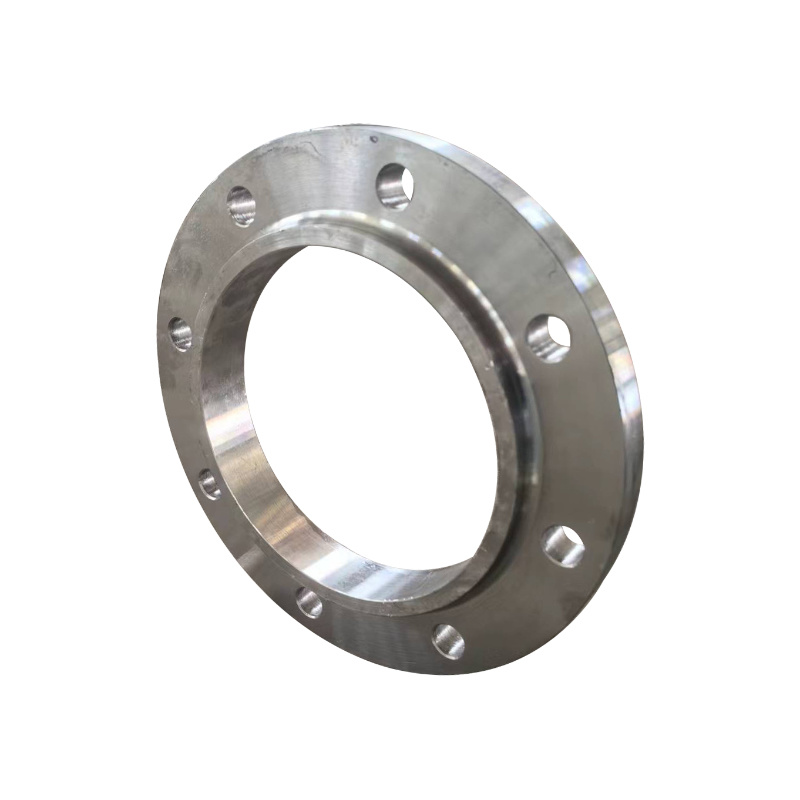
Table of Contents
- 1. Overview of Slip On Flange
- 2. Structural Design and Working Principle
- 3. Industrial Applications
- 4. How to Choose the Right Slip On Flange
- 5. Installation Guidelines
- 6. Advantages and Limitations
- 7. Slip On Flange vs Other Flanges
- 8. Common Problems and Solutions
- 9. FAQ
1. Overview of Slip On Flange
A Slip On Flange is a widely used pipe flange that is designed to “slip” over the end of a pipe and then be welded both inside and outside to ensure secure positioning. It is popular in low-pressure and non-critical applications due to its cost-effectiveness and ease of installation.
Unlike welded neck flanges, Slip On Flanges do not require precise pipe cutting length calculations, making them highly practical in field installations where time and flexibility are important.
2. Structural Design and Working Principle
The Slip On Flange consists of a flat ring with an inner diameter slightly larger than the pipe outer diameter. During installation, the pipe is inserted into the flange, and fillet welds are applied on both sides.
- Flat face or raised face: Provides sealing surface for gasket compression.
- Hub-less design: Allows easy sliding over pipe ends.
- Dual welding points: Inner and outer welds improve stability.
The working principle is based on gasket compression between two flange faces, creating a leak-proof seal when bolted together.
3. Industrial Applications
Slip On Flanges are widely used in multiple industries due to their versatility and cost efficiency.
- Water supply and drainage systems
- Low-pressure chemical pipelines
- HVAC systems
- Oil and gas auxiliary pipelines
- Fire protection systems
In many industrial environments, companies such as Shuangneng provide reliable Slip On Flange solutions designed for long-term durability and performance stability.
4. How to Choose the Right Slip On Flange
Selecting the correct Slip On Flange requires careful evaluation of several technical parameters.
| Selection Factor | Description | Key Consideration |
|---|---|---|
| Pressure Rating | Defines maximum allowable pressure | Match with pipeline design class |
| Material Type | Carbon steel, stainless steel, alloy steel | Corrosion resistance requirement |
| Pipe Size | Must match pipe outer diameter | Ensure proper slip fit |
| Temperature Range | Operational heat conditions | Avoid material deformation |
Incorrect selection may lead to leakage, flange deformation, or premature system failure, so engineering validation is critical.
5. Installation Guidelines
Proper installation is essential for ensuring long service life and leak-free operation.
- Step 1: Inspect flange and pipe surface for defects
- Step 2: Slide flange onto pipe end
- Step 3: Align pipe correctly with flange face
- Step 4: Perform inner fillet welding
- Step 5: Complete outer fillet welding
- Step 6: Install gasket and bolt connection
- Step 7: Conduct pressure testing
During welding, overheating must be avoided to prevent material distortion and sealing surface damage.
6. Advantages and Limitations
Advantages:
- Lower installation cost compared to weld neck flanges
- Easier alignment during assembly
- Reduced pipe cutting precision requirements
- Suitable for large diameter pipelines
Limitations:
- Lower fatigue strength under high-pressure cycling
- Not ideal for extreme temperature systems
- Requires double welding, increasing potential leak points
7. Slip On Flange vs Other Flanges
| Type | Strength | Installation Complexity | Cost |
|---|---|---|---|
| Slip On Flange | Medium | Easy | Low |
| Weld Neck Flange | High | Difficult | High |
| Blind Flange | High sealing | Moderate | Medium |
Compared with other flange types, Slip On Flange provides a balanced solution between cost efficiency and functional reliability.
8. Common Problems and Solutions
- Leakage at flange joint: Check gasket alignment and bolt torque
- Weld cracking: Use appropriate welding materials and preheating methods
- Flange misalignment: Re-adjust pipe positioning before final tightening
- Corrosion issues: Apply protective coatings or choose stainless steel variants
Regular inspection and preventive maintenance significantly extend system lifespan.
9. FAQ
Q1: What is the main purpose of a Slip On Flange?
It is used to connect pipes, valves, and fittings in low to medium pressure systems.
Q2: Is Slip On Flange suitable for high-pressure systems?
Generally, it is not recommended for high-pressure applications due to lower structural strength compared to weld neck flanges.
Q3: Why choose Slip On Flange over other types?
Because it offers easier installation, lower cost, and flexibility in alignment.
Q4: What industries commonly use Slip On Flanges?
Water treatment, HVAC, chemical processing, and fire protection systems.
Q5: How can I ensure long-term performance?
Proper installation, correct material selection, and regular maintenance are essential.
Conclusion
Slip On Flanges remain one of the most practical solutions in modern piping systems due to their balance of cost, simplicity, and functional reliability. However, proper selection and installation are critical to ensure safe and efficient operation.
Manufacturers like Shuangneng provide high-quality Slip On Flange products engineered to meet demanding industrial requirements and ensure long-term system stability.
For professional consultation, product specifications, or bulk procurement support, please contact us today to get expert assistance from Shuangneng’s engineering team.