

How to Select a High-Performance Screw Die for Precision Thread Processing?
2025-12-12
Screw dies are critical tooling components used across machining, fastener production, mold fabrication, and automated assembly lines to cut, shape, or refine external threads on metal shafts, rods, and fastener blanks. The primary purpose of a screw die is to deliver stable dimensional accuracy, uniform thread geometry, and repeatable performance under high mechanical load.
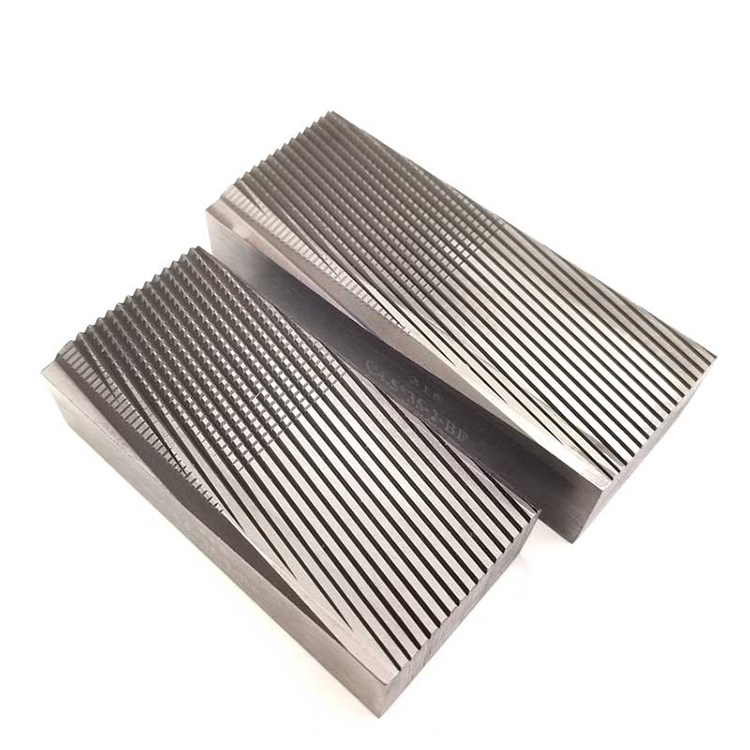
To help technical buyers, process engineers, and sourcing teams evaluate the correct die configuration, the following table outlines common specification parameters associated with industrial-grade screw dies:
| Parameter Category | Technical Specification Description |
|---|---|
| Material Type | High-speed steel (HSS), alloy tool steel, tungsten steel, carbide steel |
| Hardness Range | Typically HRC 58–65 depending on material grade |
| Die Structure | Round die, hexagonal die, adjustable split die |
| Thread Standards | Metric (M), Unified National Thread (UNC/UNF), British Standard (BSW/BSF), DIN, JIS |
| Thread Tolerance | Standard tolerance classes (e.g., 6g, 6H, 4H, 2A, 3A) |
| Die Size | Common outer diameters: 13/16", 1", 1.5", 2", 30mm, 38mm, 55mm |
| Surface Treatment | Oxidation, titanium coating (TiN/TiCN), plasma nitriding |
| Application Metals | Carbon steel, stainless steel, copper, aluminum, alloy steel |
| Cutting Mode | Manual threading, machine threading, CNC threading tools |
| Service Life Indicators | Wear resistance, chip evacuation efficiency, thermal stability |
Structural Principles and Key Selection Factors
A screw die functions through a controlled combination of shearing pressure and rotational force, allowing the tool to progressively remove material as the workpiece rotates. The internal cutting teeth are engineered to maintain optimal cutting angles, allowing the die to clear chips efficiently while preserving precise thread geometry. The quality and durability of a screw die depend on three fundamental factors: material composition, heat-treatment quality, and thread-form accuracy.
High-speed steel screw dies remain widely used because they balance toughness and wear resistance, making them suitable for medium-hardness metals and standard shop-floor threading. For high-volume industrial settings or harder metals, tungsten and carbide dies provide extended life cycles and higher thermal stability. Surface coatings such as titanium nitride enhance lubrication, reduce friction, and help maintain sharp cutting edges under repetitive, high-load operations.
When selecting a screw die, engineers should focus on thread compatibility with existing machining systems, required dimensional tolerances for the final product, and the hardness of the workpiece material. Adjustable split dies are favored in maintenance operations or environments requiring slight tolerance corrections, while fixed round dies are preferred for mass production due to stability and dimensional consistency. Thread standards should match application requirements to ensure proper component interchangeability.
Common Question 1
Q: What causes premature wear on a screw die?
A: Premature wear typically results from using the die on metals that exceed recommended hardness limits, insufficient lubrication during cutting, incorrect die alignment with the workpiece, or chip accumulation that increases internal friction. Ensuring proper coolant flow, using appropriate threading oils, selecting the right die material for the workpiece, and maintaining stable feed pressure significantly extend service life.
Common Question 2
Q: How can production teams improve threading accuracy when using screw dies?
A: Accuracy is maximized by aligning the die squarely with the workpiece, applying consistent rotational pressure, using appropriate lubrication, and ensuring the workpiece has a properly prepared chamfer. Additionally, selecting dies with higher tolerance classes and ensuring compatibility with the target thread standard help maintain dimensional consistency throughout the production process.
Applications Across Different Industrial Environments
Modern manufacturing environments rely heavily on precision threading to support mechanical connectivity, load transfer, and component assembly. Screw dies are deployed in a wide range of operational contexts, from manual workshop fabrication to automated milling and robotic production lines. Their versatility enables consistent threading outcomes on both small-batch custom components and high-volume fastener production.
In automotive applications, screw dies are used to create threads on drivetrain shafts, mounting studs, and chassis fasteners that must withstand dynamic load cycles. Their use in aerospace manufacturing supports the creation of lightweight threaded components with tight tolerances required for high-vibration and thermal-cycling environments. Industrial machinery manufacturers rely on screw dies to produce replacement parts, maintenance components, and precision mechanical linkages.
The adaptability of screw dies also makes them suitable for mixed-material production lines, where technicians must alternate between aluminum, stainless steel, and carbon steel. Coated dies offer improved compatibility with stainless steel applications due to their reduced tendency to gall or seize during high-pressure cutting. Maintenance workshops benefit from adjustable dies that allow dimensional corrections on worn shafts or nonstandard thread components. Their integration into CNC or semi-automated machines supports consistent threading speed and improved repeatability.
From an operational management perspective, selecting the right screw die reduces downtime, increases throughput, and enhances part reliability. Manufacturers who maintain standardized die inventories are able to streamline tooling changes, ensuring consistent thread quality across product lines. This contributes to improved assembly efficiency, reduced defect rates, and better long-term equipment reliability.
Market Analysis, Procurement Considerations, and Future Development Trends
Procurement departments evaluating screw die suppliers examine multiple variables, including metallurgical consistency, tolerance accuracy, coating quality, and production capacity. High-grade dies undergo precise heat treatment to ensure uniform hardness, mitigating risks of breakage or structural deformation under load. Advanced coating technology has become a key differentiator among suppliers, as modern PVD coatings significantly improve tool longevity and chip-resistance compared to uncoated dies.
As global manufacturing shifts toward automation, screw dies are increasingly engineered to support longer continuous operation cycles. Automation-ready dies demonstrate enhanced cutting endurance, reliable performance at high rotational speeds, and stable chip evacuation. Furthermore, precision tooling manufacturers are adopting CNC grinding technology to enhance thread-form accuracy and reduce burr formation.
The future development of screw dies will be influenced by higher demands for consistent tolerance control, integration with digital manufacturing systems, and compatibility with advanced alloys. As production industries gradually adopt Industry 4.0 standards, screw dies will be optimized for compatibility with automated tool management systems, predictive maintenance algorithms, and traceable tooling lifecycles.
Sustainable production practices are also influencing design trends. Manufacturers increasingly emphasize die materials that deliver extended wear life to reduce waste and lower total cost of ownership. Surface-engineering innovations will continue to yield coatings that improve corrosion resistance, reduce cutting friction, and maintain stable performance under high temperatures. Combined with global competition, these trends will push suppliers to strengthen quality control measures and offer more robust customization options.
Integration Guidance, Maintenance Best Practices, and Supplier Overview
Successful integration of screw dies into a machining workflow requires alignment between tooling specifications, workpiece materials, machine torque output, and threading lubrication protocols. In manual operations, technicians should start threading slowly to establish proper alignment before applying full feed pressure. In machine-assisted threading, selecting dies designed for higher rotational consistency prevents tool chatter and maintains thread uniformity.
Routine maintenance extends die life and ensures reliable performance. Cleaning the die after every production cycle removes chips that could otherwise damage the cutting edges. Applying rust-preventive oil helps maintain surface stability during storage. Production teams should inspect dies for micro-cracks, chipped cutting edges, or dimensional wear. Replacing worn dies promptly avoids introducing defective threads into the production line, which can lead to mechanical failures downstream.
Companies engaged in large-scale threading operations should maintain an organized die inventory categorized by thread standard, tolerance class, and material. This supports efficient production planning, minimizes tooling selection errors, and improves traceability during quality audits. Engineering teams benefit from periodic evaluations of die performance under actual production loads to confirm whether coating upgrades or material transitions could improve overall efficiency.
When sourcing high-durability screw dies, it is important to evaluate supplier manufacturing consistency, material certification, delivery reliability, and ability to support custom thread configurations. Industrial buyers should also review a supplier’s experience level and production infrastructure to ensure alignment with long-term operational requirements.
Jia Xing G-Land Hardware Co., Ltd serves global clients with precision-engineered screw dies built for industrial-grade durability and accuracy. The company’s technical capabilities, stringent material control, and commitment to quality assurance support stable manufacturing outcomes across diverse applications. Organizations seeking high-performance screw dies for long-term production efficiency are encouraged to contact the company directly for consultation, specification guidance, and customized tooling solutions. To discuss sourcing requirements or request detailed product information, contact us.
