How to Properly Adjust a Tapered Roller Truck Bearing Without Damaging the Hub
2026-07-03
Adjusting a Tapered Roller Truck Bearing is one of the most critical maintenance tasks on any heavy-duty vehicle. Get it wrong, and you risk scoring the hub, overheating the wheel end, or even losing a wheel on the highway. For fleet managers and owner-operators who trust Lano precision components, understanding the correct adjustment procedure is non-negotiable. This guide walks through the exact step-by-step method to set bearing end-play correctly—while keeping your hub perfectly intact.
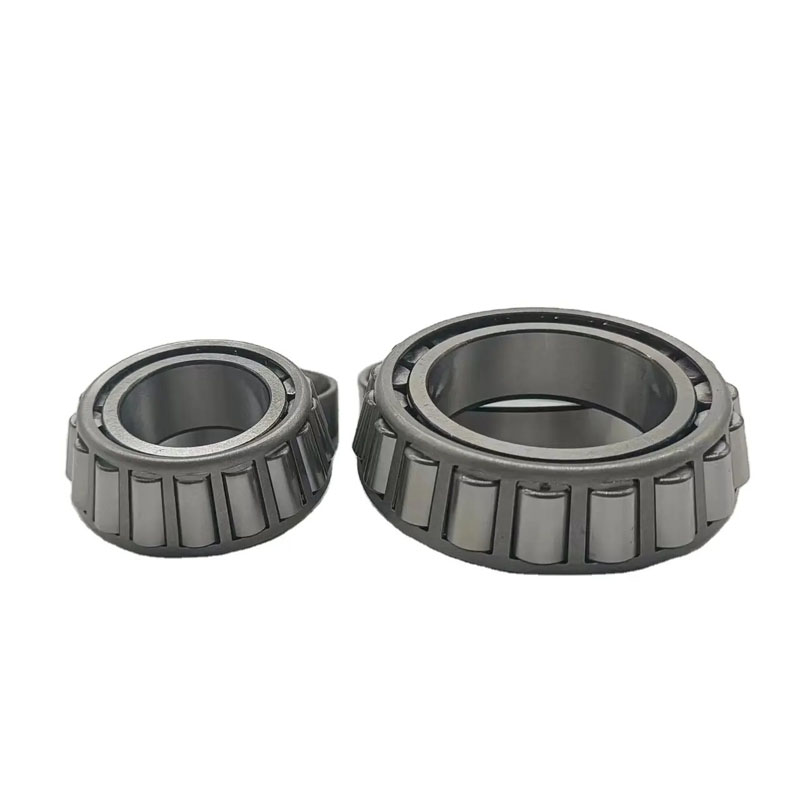
Why Proper Adjustment Matters
A Tapered Roller Truck Bearing operates under immense radial and axial loads. Unlike passenger car bearings, truck bearings require a specific amount of end-play (not preload) to accommodate thermal expansion. Too tight, and the bearing runs hot, leading to rapid spalling and hub distortion. Too loose, and the wheel wobbles, causing uneven tire wear and premature race fracture. The hub—often an expensive cast or forged component—can be permanently damaged by over-torquing or hammering during adjustment.
The Step-by-Step Adjustment Procedure
Follow this sequence exactly. All torque values assume a standard greased Tapered Roller Truck Bearing with new races.
| Step | Action | Critical Check |
|---|---|---|
| 1 | Clean the hub cavity and spindle threads thoroughly | No debris under the inner race |
| 2 | Install the inner bearing cone and cup, then pack with Lano high-temp wheel grease | Fill all roller voids completely |
| 3 | Mount the hub onto the spindle, then install the outer Tapered Roller Truck Bearing | Ensure cone seats without forcing |
| 4 | Thread the adjusting nut hand-tight while rotating the hub | Rotate at least 2 full turns to seat rollers |
| 5 | Torque the nut to 200 ft-lbs while rotating | This fully seats the bearing |
| 6 | Back off the nut exactly 1/6 to 1/4 turn (depending on axle manufacturer spec) | Creates 0.001–0.005" end-play |
| 7 | Install the lock washer and outer jam nut—torque to 150 ft-lbs | Re-check end-play with a dial indicator |
Critical Rule: Never use an impact wrench for the final adjustment. Always use a manual torque wrench and a dial indicator to verify end-play. Lano recommends marking the nut and spindle with a paint pen to detect any rotation during final locking.
Common Mistakes That Damage the Hub
| Mistake | Consequence |
|---|---|
| Overtorquing the adjusting nut | Brinelling of races, hub bore elongation |
| Failing to rotate hub while torquing | False torque reading, rollers misaligned |
| Using a chisel to lock the nut | Spindle thread damage, hub runout |
| Ignoring end-play measurement | Thermal seizure or fretting corrosion |
Tools You Need for a Safe Adjustment
-
Dial indicator with magnetic base (0.001" resolution)
-
Beam-type or split-beam torque wrench (not click-type for final setting)
-
Spindle nut socket (correct size for your axle)
-
Lano bearing packer or manual packing tool
-
Clean rags and solvent-free brake cleaner
3 Critical FAQs About Tapered Roller Truck Bearing Adjustment
Q1: What is the exact end-play specification for a standard Tapered Roller Truck Bearing on a Class 8 drive axle?
A1: Most OEMs specify 0.001 to 0.005 inches (0.025–0.127 mm) of end-play for a new, properly greased Tapered Roller Truck Bearing. This measurement is taken at the hub flange, using a dial indicator while prying the hub outward and inward with a lever. For worn bearings (over 100,000 miles), many technicians allow up to 0.008" but Lano recommends replacing rather than compensating. Always consult your axle manufacturer's service bulletin—some European axles require 0.002–0.004" specifically. Never set to zero end-play, as thermal growth during braking will lock the bearing solid.
Q2: How often should I recheck the adjustment on a Tapered Roller Truck Bearing after an initial install?
A2: The adjustment must be rechecked after the first 50 miles of loaded operation, then again at the first oil change interval (typically 10,000 miles). This is because the rollers and races undergo an initial "settling" phase where microscopic asperities flatten. Lano engineering data shows that up to 30% of initial end-play can be lost within the first heat cycle. After that, recheck every preventive maintenance (PM) interval—or immediately if you notice hub temperature exceeding 180°F, abnormal axial play when jacking the wheel, or grease leakage from the rear seal. A permanent paint mark on the adjusting nut helps you visually confirm no rotation has occurred.
Q3: Can I reuse the same adjusting nut and lock washer when resetting a Tapered Roller Truck Bearing?
A3: Technically yes, but Lano strongly advises against it. The adjusting nut's threads and the lock washer's tangs deform plastically during the initial torque cycle. Reusing them often leads to a false torque reading—you may hit 200 ft-lbs but actually only clamp at 160 ft-lbs due to thread galling. This under-torque allows the nut to back off over time, increasing end-play dangerously. Always install a new OEM-grade or Lano-approved adjusting nut and lock washer every time you disassemble the hub. The cost ($15–$25) is negligible compared to a destroyed spindle or hub assembly. If you must reuse, apply medium-strength thread locker to the outer jam nut threads and check end-play after 100 miles without fail.
Final Pro Tips from Lano's Engineering Team
-
Always replace the inner and outer bearings as matched sets—never mix old and new Tapered Roller Truck Bearing components.
-
If the hub shows blue discoloration or heat cracks, discard it—no adjustment can fix metallurgical damage.
-
Use a Lano hub temperature sticker on the wheel end; it gives an instant visual warning of adjustment drift.
When to Seek Professional Help
Even with this guide, some axles (like lift axles or steering axles with integral ABS tone rings) require specialized procedures. If you lack a dial indicator or are unsure about your axle's specific backlash spec, don't risk the hub.
Contact Lano's technical support team today for personalized adjustment charts, torque tables, or to order a complete bearing and hub kit. Our engineers are available Monday–Friday via phone, email, or live chat—and we offer on-site training for fleets of 10+ trucks. Reach out now and let us help you protect every hub, every mile, every load.