How to Choose the Right Supplier for Stamping Parts Processing
2026-11-16
Selecting a reliable partner for Stamping Parts Processing is one of the most consequential decisions in any manufacturing supply chain. A capable supplier directly affects part quality, delivery schedules, and total landed cost, while a poor choice can trigger line stoppages, rework, and reputational damage. At Qiren, we have supported OEMs across automotive, electronics, and industrial equipment for years, and we have seen firsthand how supplier selection separates successful programs from troubled ones. This guide distills the criteria that matter most when evaluating candidates for Stamping Parts Processing.
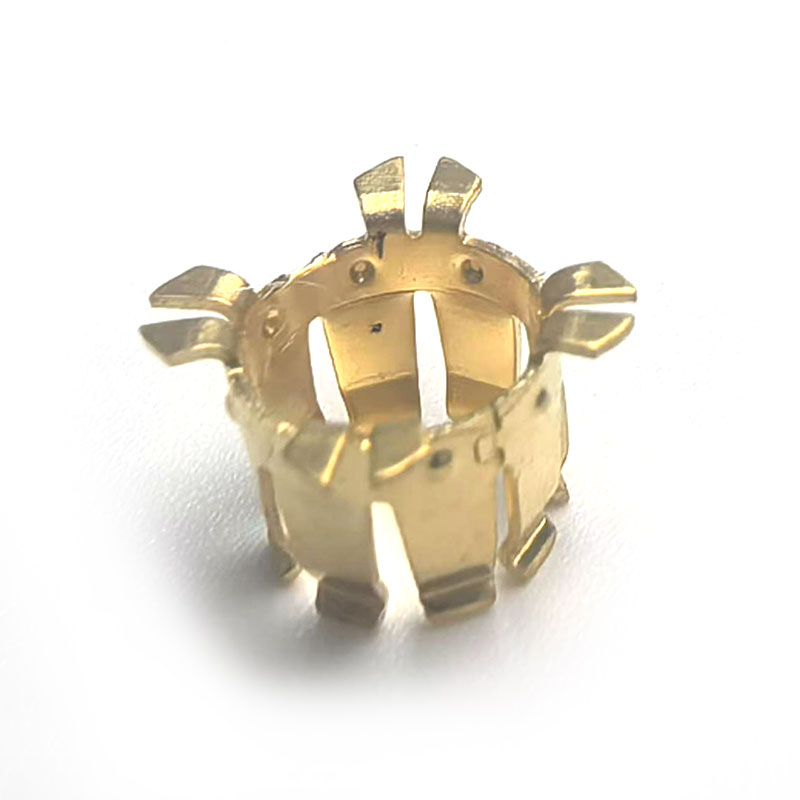
Core Evaluation Criteria
Before requesting quotes, define the technical and commercial requirements that will drive your comparison. The checklist below reflects the dimensions Qiren recommends assessing in every supplier audit.
| Evaluation Area | What to Verify | Why It Matters |
|---|---|---|
| Process capability | Press tonnage range, stroke rates, die handling capacity | Confirms the supplier can match your part size and volume |
| Tooling expertise | In-house die design, maintenance, and repair capability | Reduces lead time and tooling lifecycle risk |
| Quality systems | ISO 9001 / IATF 16949 certification, PPAP readiness | Demonstrates disciplined process control |
| Material handling | Traceability, coil storage, and inventory management | Prevents mix-ups and material degradation |
| Inspection equipment | CMM, vision systems, functional gauges | Ensures dimensional and functional conformity |
| Delivery performance | On-time delivery metrics, capacity buffer | Protects your production schedule |
A Step-by-Step Selection Process
-
Define specifications clearly. Document material grade, thickness, tolerance bands, surface finish, and annual volume. Ambiguity at this stage invites inconsistent quotes.
-
Screen for technical fit. Shortlist suppliers whose press capacity and tooling capability align with your part complexity. A supplier optimized for high-volume automotive brackets may not suit low-volume precision enclosures.
-
Audit quality systems. Request certificates, recent PPAP examples, and corrective action records. Verify that inspection is embedded in the process, not bolted on at final shipment.
-
Evaluate tooling ownership and maintenance. Clarify who owns the dies, how maintenance intervals are scheduled, and what happens to tooling if the relationship ends.
-
Request sample runs. Production-representative samples reveal far more than a catalog. Measure capability indices and review first-article inspection reports.
-
Compare total cost of ownership. Unit price is only one input. Factor in freight, inventory carrying cost, defect rates, and engineering support.
-
Confirm communication and responsiveness. A supplier that answers technical questions promptly during evaluation is likely to respond well during production.
Red Flags to Watch For
-
Vague or evasive answers about tooling ownership and maintenance records
-
No documented traceability from raw coil to finished shipment
-
Quoted tolerances that exceed the supplier's stated equipment capability
-
Reluctance to share quality data or permit an on-site audit
-
Unrealistic lead times that suggest capacity is being overstated
Frequently Asked Questions
Q: What certifications should a stamping supplier hold?
A: At minimum, look for ISO 9001 as a baseline quality system. For automotive work, IATF 16949 is expected, and suppliers should be prepared to support PPAP submissions. Aerospace programs typically require AS9100. Certifications alone are not sufficient, so pair them with an on-site audit and a review of recent corrective action history.
Q: How do I evaluate a supplier's tooling capability?
A: Ask whether die design, fabrication, and maintenance are handled in-house or outsourced, and request examples of comparable parts. Review die maintenance schedules and spare-part inventories. A supplier that tracks die life and plans refurbishment proactively will deliver more consistent parts over the program lifecycle.
Q: How should I compare quotes for Stamping Parts Processing?
A: Normalize every quote against the same specification, volume, and Incoterms. Separate tooling cost from piece price, and request a cost breakdown covering material, labor, overhead, and margin. Then model total cost of ownership by adding freight, inspection, and expected defect rates so the comparison reflects real program economics.
Conclusion
Choosing the right supplier for Stamping Parts Processing rewards preparation and disciplined evaluation. Define requirements precisely, audit quality and tooling systems, validate with sample runs, and compare total cost rather than unit price alone. Qiren applies these same standards internally and welcomes the scrutiny. Contact us today to discuss your project requirements and request a tailored quotation for your Stamping Parts Processing program.