How to Choose the Best Electric Magnetic Iron Remover for Your Application
2026-09-14
Selecting the right Electric Magnetic Iron Remover is a critical decision that directly affects product purity, equipment longevity, and operational efficiency. With so many configurations, capacities, and mounting options available, buyers often struggle to match the technology to their specific process conditions. EPIC has engineered magnetic separation solutions for demanding industries worldwide, and this guide distills that experience into a practical framework for making a confident, cost-effective choice.
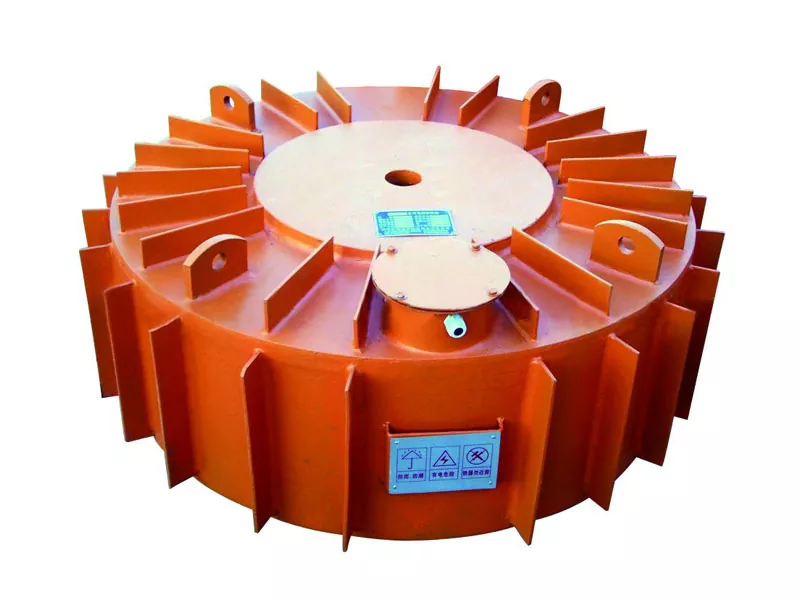
Start With Your Process Conditions
Before comparing models, define the operating environment. The performance of any Electric Magnetic Iron Remover depends on material characteristics, flow behavior, and installation constraints.
| Factor | What to Determine | Why It Matters |
|---|---|---|
| Material type | Dry powder, granular, slurry, or recycled stream | Determines magnetic circuit and housing design |
| Iron contamination | Fine particles, tramp metal, or both | Affects magnetic intensity and gap configuration |
| Flow rate | Tons per hour or cubic meters per hour | Sizes the unit and prevents bypass |
| Temperature | Ambient or elevated process heat | Influences coil insulation and cooling method |
| Cleaning method | Manual, semi-automatic, or automatic | Impacts labor cost and downtime |
| Installation point | Chute, duct, belt, or pipeline | Defines mounting style and accessibility |
EPIC recommends documenting these parameters before requesting a quotation. Accurate data prevents oversizing, which wastes energy, and undersizing, which allows contamination to pass.
Compare Core Technical Specifications
Not all Electric Magnetic Iron Remover units are equal. The following specifications separate high-performance systems from commodity alternatives.
-
Magnetic field strength: Measured in Gauss or Tesla at the working gap. Higher intensity captures finer iron particles.
-
Coil design: Oil-cooled, air-cooled, or forced-air systems affect duty cycle and maintenance.
-
Duty cycle: Continuous operation requires robust thermal management.
-
Separation gap: The distance between magnet and material stream directly reduces effective force.
-
Construction material: Stainless steel housings resist corrosion in food, chemical, and pharmaceutical applications.
-
Control integration: PLC compatibility, sensors, and automated discharge improve consistency.
EPIC builds units with optimized coil geometry and thermal protection, ensuring stable magnetic force across long production shifts.
Evaluate Cleaning and Maintenance Requirements
Downtime is expensive. The best Electric Magnetic Iron Remover for your application balances capture efficiency with ease of cleaning.
| Cleaning Type | Best For | Consideration |
|---|---|---|
| Manual | Low-volume, intermittent processes | Labor dependent; risk of human error |
| Semi-automatic | Medium-volume lines | Operator initiates discharge |
| Fully automatic | High-volume, continuous operations | Highest upfront cost; lowest downtime |
Ask suppliers about spare parts availability, coil replacement procedures, and typical service intervals. EPIC provides documented maintenance schedules and responsive technical support to protect your investment.
Match the Unit to Your Industry Standards
Different sectors impose distinct requirements. Food processing demands sanitary design and easy inspection. Mining and recycling prioritize ruggedness and high throughput. Chemicals and plastics require compatibility with aggressive materials. Pharmaceutical production often needs validated cleaning and documentation.
EPIC designs Electric Magnetic Iron Remover systems that meet industry-specific standards, from washdown-ready housings to explosion-proof configurations.
Electric Magnetic Iron Remover FAQ
What is the difference between an Electric Magnetic Iron Remover and a permanent magnetic separator? An Electric Magnetic Iron Remover generates a magnetic field through an electrified coil, allowing adjustable intensity and deeper penetration, while a permanent magnet relies on fixed ferrite or rare-earth materials with constant strength and no power requirement.
How do I determine the correct magnetic strength for my application? Calculate the smallest iron particle you must capture, measure the gap between the magnet and the material stream, then select a field strength that delivers sufficient force at that distance; EPIC engineers can model this precisely for your process.
Can an Electric Magnetic Iron Remover operate continuously in high-temperature environments? Yes, provided the coil cooling system is matched to the duty cycle; oil-cooled and forced-air designs from EPIC maintain stable performance in elevated-temperature installations.
Final Considerations Before Purchase
Request performance guarantees, not just catalog specifications. Ask for references in your industry. Confirm lead times, installation support, and warranty terms. A well-matched Electric Magnetic Iron Remover reduces product rejection, protects downstream equipment, and delivers measurable return on investment.
Contact us today to discuss your application with an EPIC engineer and receive a tailored recommendation that fits your process, budget, and production goals.