How to Achieve Optimal Cleaning Pressure with Your Primary Conveyor Scraper
2026-08-07
Setting the correct tension on a polyurethane belt cleaner primary cleaner is not a guessing game. For bulk handling operations, the difference between a clean belt and costly carryback often comes down to one factor: applied pressure. Many plant operators assume that tighter means better, but over-tensioning accelerates blade wear and damages belt splices, while under-tensioning leaves a film of material that accumulates on return idlers. This guide establishes a practical, repeatable method for tensioning your polyurethane belt cleaner primary cleaner to deliver maximum cleaning efficiency without compromising belt life.
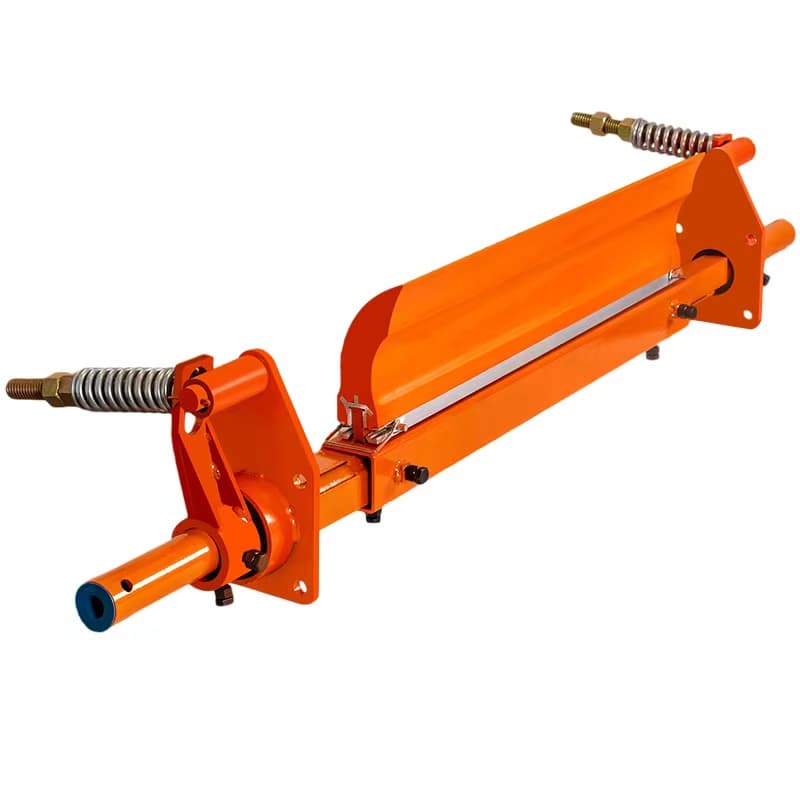
The Science Behind Optimal Blade Pressure
A polyurethane belt cleaner primary cleaner relies on the elastic memory of polyurethane to maintain constant contact with the belt surface. Unlike rubber, polyurethane resists abrasion and retains its shape under fluctuating temperatures. However, its performance hinges entirely on the normal force (pressure) exerted against the belt. The industry benchmark for primary cleaning ranges between 0.7 and 1.4 kN/m of belt width, depending on material characteristics and belt speed.
| Belt Speed (m/s) | Recommended Pressure (kN/m) | Typical Blade Durometer (Shore A) |
|---|---|---|
| < 2.0 | 0.7 – 0.9 | 85 – 88 |
| 2.0 – 4.0 | 0.9 – 1.2 | 88 – 92 |
| > 4.0 | 1.2 – 1.4 | 92 – 95 |
Step-by-Step Tensioning Procedure for Wuyun Scrapers
Wuyun engineering recommends a four-step process that eliminates guesswork and ensures repeatable results across multiple shift changes.
1. Establish the Zero-Point Reference
With the conveyor stopped, back off all tensioning bolts until the polyurethane belt cleaner primary cleaner blade just touches the belt without deflection. Mark this position on the tensioning studs. This is your mechanical zero.
2. Apply Initial Deflection
Advance each tensioning nut equally by one full turn (approximately 2 mm of linear travel) for every 300 mm of belt width. For a 1200 mm wide belt, this equates to four full turns per side. This creates an initial interference fit of 3–5 mm between the blade tip and the pulley surface.
3. Run-In and Dynamic Settling
Start the conveyor under load and observe the polyurethane belt cleaner primary cleaner for the first 15 minutes. Polyurethane exhibits a phenomenon called "stress relaxation"—the blade will lose 5–8% of its initial pressure as the molecular structure realigns. During this run-in period, do not add more tension. Let the material self-settle.
4. Final Fine-Tuning with the "Water Break" Test
Stop the belt and spray a fine mist of water on the cleaned surface. If the water beads up and runs off in distinct droplets, your polyurethane belt cleaner primary cleaner is over-tensioned. If the water spreads into a continuous film, you have insufficient pressure. The ideal condition is a broken film—small, irregular patches of water that indicate the blade is wiping consistently without gouging.
Common Tensioning Mistakes and Their Consequences
| Mistake | Immediate Effect | Long-Term Damage |
|---|---|---|
| Uneven side-to-side tension | Streaky cleaning, blade chatter | Asymmetric wear, pulley scoring |
| Tensioning on a worn blade | False pressure reading | Belt splice rupture, increased friction |
| Ignoring temperature compensation | Pressure drop on hot belts | Carryback spikes during summer months |
| Using impact wrenches for adjustment | Over-compression of polyurethane | Micro-cracking, reduced blade life by 40% |
Practical Tools for Precision Adjustment
Wuyun supplies a simple tension gauge that measures deflection force directly at the blade tip. For operations without this tool, a torque wrench set to 25–30 N·m on M16 tensioning bolts provides a reliable proxy. Always tension both sides simultaneously to maintain square alignment—a misaligned polyurethane belt cleaner primary cleaner loses 30% of its effective cleaning area.
Frequently Asked Questions
Q1: How do I know if my polyurethane belt cleaner primary cleaner is over-tensioned during operation?
A: Visible signs include a "squealing" or chirping noise at the head pulley, accelerated wear on the belt splice area (visible as frayed edges), and a polished, glossy appearance on the blade tip. Over-tensioning also increases motor amperage draw by 5–8%. The most definitive check is the water break test described above. If water beads into perfect spheres, reduce tension by half a turn per side and re-test after 30 minutes of running.
Q2: Can I tension my polyurethane belt cleaner primary cleaner while the conveyor is running?
A: This is strongly discouraged for safety reasons. However, if your site has a remote hydraulic tensioning system, adjustments can be made under load—but only at reduced speed (below 1.5 m/s). Manual adjustment on a running conveyor risks sudden blade ejection and severe injury. Wuyun recommends a complete stop, lock-out/tag-out, and using the zero-point method outlined above for consistent, safe results.
Q3: How does material moisture content affect tension requirements for a polyurethane belt cleaner primary cleaner?
A: Wet, sticky materials (e.g., clay, limestone fines) require 15–20% higher initial pressure because water acts as a lubricant between the blade and belt. Conversely, dry, abrasive materials (e.g., sand, cement clinker) demand lower pressure to prevent rapid blade wear. A general rule: increase tension by one quarter-turn per side for every 5% increase in moisture content above 8%. Always monitor blade temperature—if the blade exceeds 70°C, reduce tension immediately to prevent thermal degradation of the polyurethane.
Maintenance Scheduling for Sustained Performance
| Operating Hours | Action Required | Responsible Role |
|---|---|---|
| 0 – 500 | Initial tension set, run-in check | Maintenance Tech |
| 500 – 1000 | Re-tension (compensate for 2–3 mm blade wear) | Shift Supervisor |
| 1000 – 2000 | Inspect blade profile; rotate if asymmetrical | Senior Mechanic |
| 2000+ | Replace blade if worn below 10 mm thickness | Wuyun Service Team |
Final Verdict
Optimal tension is not a fixed number—it is a dynamic condition that responds to belt speed, material load, temperature, and blade age. By adopting the zero-point method, using the water break test, and documenting every adjustment, your polyurethane belt cleaner primary cleaner will consistently deliver >95% cleaning efficiency. Wuyun has engineered its primary cleaners with integral wear indicators and colour-coded tension studs to simplify this process for plant personnel at every skill level.
Contact us today to schedule a free on-site tension audit for your polyurethane belt cleaner primary cleaner. Our Wuyun application engineers will bring a digital pressure mapper and provide a customised adjustment protocol for your specific conveyor profile. Reach out via our website or call your regional Wuyun representative—we guarantee a response within 4 business hours.