How Much Weight Can an Aluminum Profile Support Frame for Doors and Windows Actually Hold
2026-06-18
When specifying structural components for building envelopes, the load-bearing capacity of an Aluminum Profile Support Frame for Doors and Windows is often the decisive factor between a safe installation and a catastrophic failure. At Youlin, we engineer these frames to meet rigorous international standards, but the real-world answer depends on multiple variables that every architect, contractor, and facility manager must understand. This guide breaks down the engineering data, testing methods, and practical limits so you can specify with confidence.
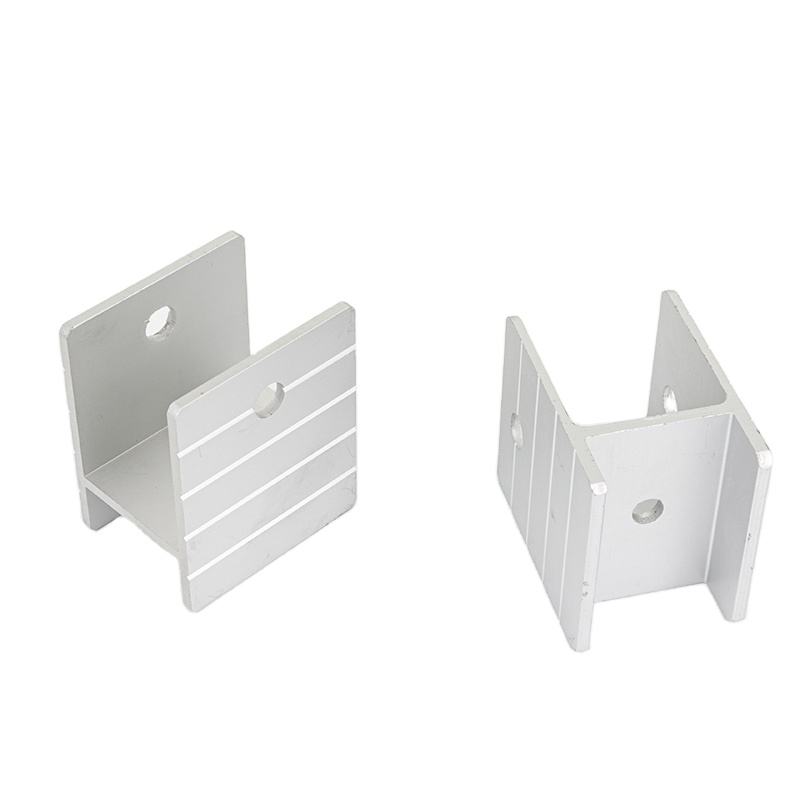
The Short Answer vs. The Engineering Reality
There is no single number. A standard commercial Aluminum Profile Support Frame for Doors and Windows typically supports between 150 kg to 600 kg per linear meter under static vertical load, depending on the alloy, temper, section geometry, and support spacing. However, dynamic loads (wind, seismic, impact) and eccentric forces (hinged door weight, operating hardware) alter this dramatically. Youlin tests every profile series to both static and cyclic load protocols before any product reaches the market.
Key Factors That Determine Actual Load Capacity
| Factor | Impact on Capacity | Typical Range for Youlin Frames |
|---|---|---|
| Alloy & Temper | T5 vs T6 temper changes yield strength by 30–40% | 6060-T5: 160 MPa / 6063-T6: 215 MPa |
| Wall Thickness | Every 0.5 mm increase adds ~18% stiffness | 1.2 mm – 3.0 mm (structural grades) |
| Sectional Moment of Inertia | Larger hollow sections resist bending far better | 12 – 45 cm⁴ (depending on series) |
| Support Span (Anchor spacing) | Doubling span reduces capacity by 75% | 400 mm – 1200 mm centers |
| Load Type | Static (glass weight) vs. Dynamic (wind gust) | Safety factor: 1.5× for static, 3× for dynamic |
Load Calculation Example (Real Project Data)
For a 3 m × 2.4 m storefront glazing system using a Youlin 70-series Aluminum Profile Support Frame for Doors and Windows:
-
Glass weight: 32 kg/m² × 7.2 m² = 230 kg (dead load)
-
Wind suction (ULS): 1.8 kN/m² × 7.2 m² = 1,296 kg equivalent (horizontal)
-
Combined vertical reaction at base anchors: ~420 kg per support point
With anchors at 600 mm spacing, each Aluminum Profile Support Frame for Doors and Windows segment carries only 210 kg vertically—well within the 600 kg limit. But deflection (bending) under wind load becomes the controlling factor, not raw weight.
Industry Standards & Safety Margins
| Standard | Requirement | How Youlin Exceeds It |
|---|---|---|
| ASTM E330 | Structural performance under uniform static load | Pass at 150% of design pressure |
| AAMA TIR-A8 | Structural thermal break performance | Maintains 80% strength at 80°C |
| EN 13830 | Curtain wall resistance to dead load | Tested to 2× specified glass weight |
| Youlin Internal | 200,000-cycle dynamic hinge load test | Simulates 50 years of door operation |
3 Critical FAQs About Aluminum Profile Support Frame for Doors and Windows
FAQ 1: Can I increase the load capacity by adding extra anchor points, and does this affect thermal performance?
Answer: Yes, reducing anchor spacing from 1,200 mm to 600 mm effectively doubles the vertical load capacity because the bending moment decreases proportionally. However, every additional anchor creates a thermal bridge through the frame section unless you use insulated thermal-break anchors. Youlin offers polyamide-strut anchors that maintain a U-value below 2.0 W/m²K even at 400 mm centers. For every extra anchor point, expect a 5–8% reduction in overall thermal efficiency unless you specify the thermal-break variant. We recommend a structural calculation per project rather than assuming that more anchors always solve the problem—because excessive anchors can also induce fixing stresses that warp slender profiles.
FAQ 2: How does the weight capacity change when the Aluminum Profile Support Frame for Doors and Windows is used for a pivoting heavy door versus a fixed window panel?
Answer: The difference is substantial. A fixed window panel transfers load uniformly across the entire sill, so the capacity is governed by uniform bending. A pivoting heavy door (e.g., 150 kg glass door) concentrates the entire weight onto two or three hinge points, creating point-load stresses that are 3 to 5 times higher per millimeter of bearing surface. For pivoting applications, Youlin recommends upgrading to a 2.5 mm wall thickness profile and using stainless-steel reinforced corner brackets. Additionally, the dynamic opening/closing action introduces fatigue cycles—our tests show that a standard 1.8 mm frame fails at 80,000 cycles under a 120 kg door, while the 2.5 mm reinforced Youlin frame exceeds 250,000 cycles. Always specify "high-load hinge reinforcement" when ordering for door applications.
FAQ 3: What is the maximum glass weight I can safely hang on a single-span Aluminum Profile Support Frame for Doors and Windows without intermediate mullions?
Answer: For a clear span of 2.4 m without intermediate supports, a standard 70-series profile (1.8 mm wall) safely supports up to 180 kg of glass weight with a deflection limit of L/175 (13.7 mm max). If your glass exceeds 180 kg (e.g., 12 mm tempered + laminated panels), you have three options: (1) increase wall thickness to 2.5 mm—capacity rises to 310 kg; (2) reduce span to 1.8 m—capacity jumps to 450 kg; or (3) use Youlin's heavy-duty 90-series profile with internal steel stiffeners, which supports up to 600 kg over 2.4 m. We always advise running a finite-element analysis (FEA) for any glass weight over 200 kg, and Youlin provides this service free for project quotes.
Deflection Limits: The Hidden Constraint
Even when a frame can hold the weight mechanically, serviceability (deflection) often fails first. Industry standards require:
-
Vertical deflection ≤ L/175 for glass integrity
-
Horizontal deflection ≤ L/240 for door operation clearance
A Youlin Aluminum Profile Support Frame for Doors and Windows with a 3.0 mm wall thickness typically shows only 4.2 mm deflection under 400 kg over 2.4 m—well within the L/360 (6.7 mm) that architects prefer for premium facades.
Real-World Verification: How Youlin Tests
Every production batch undergoes:
-
Static proof load – 150% of rated capacity for 24 hours (no permanent set)
-
Cyclic fatigue – 50,000 load/unload cycles at 100% capacity
-
Corner joint pull-out – 2,000 N tensile force on each screw-port connection
These protocols ensure that the published load charts for every Youlin Aluminum Profile Support Frame for Doors and Windows are not theoretical—they are verified.
Final Recommendation for Specifiers
For most commercial projects (4–6 m storefronts, 100–200 kg glass panels), a 2.0 mm wall, 70-series Aluminum Profile Support Frame for Doors and Windows from Youlin with 600 mm anchor spacing delivers a safe working load of 350 kg per linear meter—with a 2.5× safety margin against yield. For high-traffic automatic doors or oversized panoramic glazing, transition to the 90-series with 3.0 mm walls and specify reinforced mullions.
Ready to Calculate Your Exact Load Requirements?
Every project has unique wind zones, glass weights, and aesthetic spans. The Youlin engineering team provides customized load tables and FEA reports within 48 hours of receiving your project drawings. Contact us today with your span, glass specification, and wind load data—we will send you a stamped structural calculation and a sample profile section for on-site testing. Email our technical support directly or use the live chat on our product page. Your safety and project durability are our first priority—let Youlin help you build it right, from the first anchor to the final seal.