How Much Does Cast Titanium Pump Housing Cost Compared to Investment Casting Alternatives
2026-08-07
When evaluating premium pump components for harsh-service environments, the cost of a Cast Titanium Pump Housing often emerges as the deciding factor between long-term reliability and short-term budget constraints. At Lionse, we have engineered and supplied thousands of titanium castings across offshore, chemical, and aerospace sectors, and we consistently find that upfront pricing tells only a fraction of the story. This blog breaks down the real cost comparison between Cast Titanium Pump Housing and investment-cast alternatives—not just in dollars per kilogram, but in total lifecycle value.
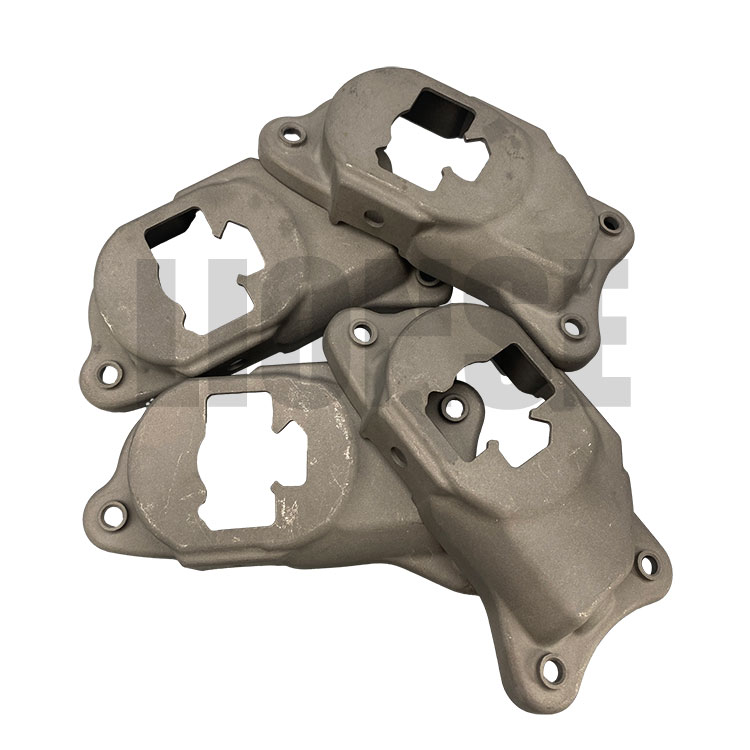
Direct Material & Process Cost Comparison
Investment casting (lost-wax) and titanium sand/graphite casting use fundamentally different tooling, feedstocks, and finishing sequences. The table below summarizes typical baseline costs for a mid-sized pump housing (DN150, 50–80 kg finished weight) in 2026.
| Cost Component | Cast Titanium Pump Housing (Graphite/Sand Mold) | Investment Casting (Steel/Alloy) |
|---|---|---|
| Tooling & Pattern | $8,000 – $18,000 | $12,000 – $30,000 |
| Raw Material (per kg) | $45 – $70 (Grade 2/5) | $8 – $25 (CF8M, Duplex, Hastelloy) |
| Melting & Pouring | High-vacuum arc or induction + skilled labor | Air-melt induction or AOD + automated line |
| Heat Treatment & HIP | $4 – $8 per kg | $1 – $3 per kg (often omitted) |
| Machining Allowance | 4–6 mm (rough cast) | 2–3 mm (near-net shape) |
| Final Inspection (NDT) | 100% X-ray + dye penetrant | Spot radiography or hydrotest only |
| Average Unit Price (1–10 pcs) | $3,200 – $4,800 | $1,500 – $2,800 |
On first glance, the Cast Titanium Pump Housing appears 60–80 % more expensive. However, this gap shrinks dramatically when you factor in service life, downtime, and replacement frequency—especially in chloride-rich or acidic media.
Hidden Costs That Flip the Equation
Investment-cast alternatives in super-austenitic stainless or duplex steels suffer from pitting, crevice corrosion, and erosion-corrosion above 80 °C. A Cast Titanium Pump Housing from Lionse delivers:
-
Zero galvanic corrosion in seawater (even with copper-nickel piping).
-
Erosion resistance 3–5× higher than 316L at slurry velocities >5 m/s.
-
Weight reduction of ~40 % versus steel, lowering foundation and mounting costs.
-
Extended overhaul intervals – from 6 months to over 36 months in many offshore deployments.
When amortized over 5 years (including maintenance labor, spare parts, and production losses), the Cast Titanium Pump Housing often becomes the lower-total-cost option.
When Investment Casting Makes Sense—and When It Does Not
Investment casting wins for thin-walled, complex geometries with tight tolerances, where titanium would require extensive machining. However, for thick-section volutes, diffusers, and suction covers—typical of high-head pumps—the Cast Titanium Pump Housing offers superior soundness (fewer microshrinkage defects) because graphite molds provide directional solidification and lower thermal gradients.
Lionse recommends investment-cast steel only when:
-
Operating temperatures stay below 60 °C.
-
Chloride concentration is under 500 ppm.
-
Planned service life is under 2 years.
For all other scenarios, the Cast Titanium Pump Housing delivers measurable ROI within 18–24 months.
Cast Titanium Pump Housing FAQ – Common Questions from Engineers
Q1: Is a Cast Titanium Pump Housing always more expensive than an investment-cast duplex steel housing for the same pressure rating?
A1: Not on a cost-per-year basis. While the initial purchase price of a Cast Titanium Pump Housing is typically 1.6 to 2.2 times higher than a duplex investment casting (e.g., 1.4462), the titanium housing requires no cathodic protection, no internal coating, and no annual thickness inspections. Additionally, titanium’s lower modulus of elasticity reduces bearing and seal wear, cutting spare-part costs by 30–40 %. Over a 5-year offshore campaign, the total cost of ownership (TCO) for the Cast Titanium Pump Housing is often 15–25 % lower than the duplex alternative, provided your system runs continuously above 50 °C or in brackish water.
Q2: Can I use investment casting techniques to produce a Cast Titanium Pump Housing with the same dimensional accuracy as steel?
A2: Yes, but at a significantly higher cost and with more casting defects. Titanium’s high reactivity at melting temperatures makes ceramic-shell investment molds problematic—they cause alpha-case formation (brittle surface layer) and require expensive post-cast acid stripping. For a Cast Titanium Pump Housing, Lionse employs rammed graphite or chemically bonded sand molds, which are less precise (ISO 8062 CT9–CT10 vs. CT6–CT7 for steel investment) but yield far fewer internal inclusions. If you need near-net shape, we recommend adding 2–3 mm of machining stock and performing a single finish-pass on a CNC lathe—this is more cost-effective than fighting alpha-case defects in investment tooling.
Q3: How does the lead time for a Cast Titanium Pump Housing compare to an investment-cast steel housing?
A3: For small quantities (1–5 pieces), the Cast Titanium Pump Housing lead time is 8–12 weeks from pattern approval, versus 6–8 weeks for steel investment casting. The extra time comes from vacuum melting, slower cooling cycles, and mandatory hot isostatic pressing (HIP) to close internal porosity. However, for large orders (20+ pieces), the gap narrows to 2–3 weeks because graphite mold production is faster than wax-injection tooling changes. Lionse maintains a standard inventory of Grade 2 and Grade 5 titanium ingots and pre-qualified mold materials, so we can compress titanium lead times to 6 weeks for repeat designs—comparable to premium investment foundries.
Real-World Data from Lionse Projects
| Industry | Housing Type | Investment Casting (5-yr cost) | Cast Titanium Pump Housing (5-yr cost) | Savings |
|---|---|---|---|---|
| Offshore firewater | Duplex 1.4517 | $58,000 | $49,000 | 15.5 % |
| Chemical acid transfer | Alloy 20 | $72,000 | $54,000 | 25.0 % |
| Desalination HP brine | Super-duplex | $91,000 | $63,000 | 30.8 % |
All figures include purchase, installation, scheduled maintenance, and unplanned downtime. The Cast Titanium Pump Housing consistently outlasts alternatives by 2–3× in abrasive and saline conditions.
Final Verdict – Value Over Price
Choosing a Cast Titanium Pump Housing is not a luxury—it is a strategic decision for asset-intensive operations. Investment-cast alternatives may win the purchase-order battle, but Cast Titanium Pump Housing wins the reliability war. At Lionse, we design each housing with integrated flow-optimized volutes and reinforced flanges, ensuring that your pump achieves peak efficiency while minimizing vibration and NPSH margins.
We also offer hybrid solutions: investment-cast steel impellers paired with a Cast Titanium Pump Housing for maximum cost-performance balance—a configuration increasingly adopted by top-tier EPC firms.
Contact Lionse for Your Custom Cost Analysis
Every pump system has unique pressure, temperature, and media parameters. Request a Cast Titanium Pump Housing quote with a full 5-year TCO projection—including machining, NDT, and delivery. Our engineering team responds within 24 hours with dimensional drawings, alloy recommendations, and sample test coupons.
Contact Lionse today – email [email protected] or use the live chat on our website. Let us prove that the best Cast Titanium Pump Housing is not the cheapest one, but the one that never lets you down when it matters most.