How Long Should You Run a Kneading Hook for Perfect Pizza Dough
2026-08-04
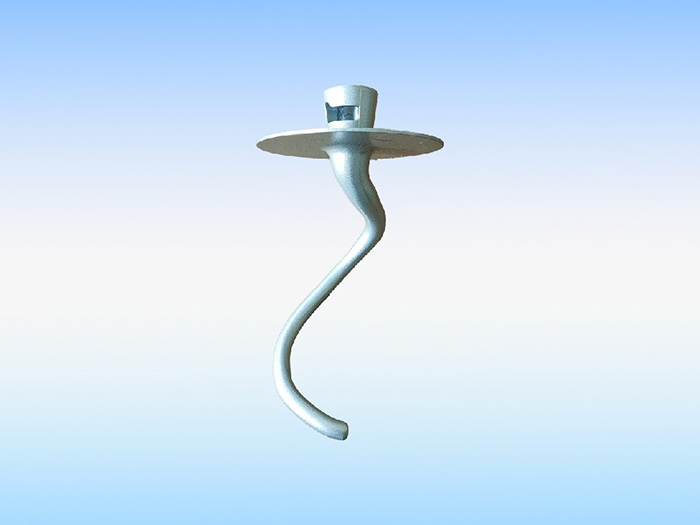
Getting the timing right with your Kneading Hook is one of the most critical variables between a dense, cracker-like crust and a light, airy Neapolitan-style base. While many home bakers rely on visual cues alone, professional pizzerias understand that precise mixing duration directly affects gluten development, dough temperature, and final oven spring. At United, we have tested hundreds of dough batches across different flour types and hydration levels, and the answer is never a single number—it depends on your mixer, your flour, and your desired crust style. This guide breaks down the science, the stopwatch, and the signals you need to master your Kneading Hook for consistently perfect pizza dough.
The Baseline: Why Time Alone Is Misleading
Most recipe cards state "knead for 8–10 minutes," but that assumes a specific mixer speed, dough batch size, and ambient temperature. A Kneading Hook operating at medium-low speed (KitchenAid setting 2–3) develops gluten differently than a spiral mixer running at 120 RPM. Instead of chasing a fixed minute count, think in terms of dough development stages.
| Dough Stage | Visual Signs | Approximate Time (Stand Mixer) | Action Required |
|---|---|---|---|
| Shaggy mass | Floury, rough, no elasticity | 0–2 minutes | Stop and scrape bowl once |
| Clean-up stage | Dough pulls away from bowl sides | 3–5 minutes | Check for stickiness; add flour/water in 1 tsp increments |
| Windowpane (weak) | Tears easily when stretched | 6–8 minutes | Continue mixing; check every 45 seconds |
| Windowpane (strong) | Thin, translucent membrane without tearing | 9–12 minutes | Stop immediately—over-kneading begins here |
| Over-kneaded | Shiny, greasy surface; tears into ragged holes | 13+ minutes | Discard or repurpose as flatbread |
For a standard 500 g flour batch at 62% hydration, United recommends starting your timer at 9 minutes on speed 2, then performing a windowpane test every 60 seconds. Most all-purpose flours reach optimal gluten structure between 10–11 minutes, while high-protein bread flours (13%+ protein) may need 12–13 minutes with the Kneading Hook.
The Hydration Factor: Higher Water = Longer Knead
Wet doughs (70–75% hydration) are trendy for their open crumb structure, but they trick home bakers into over-kneading. Because a wet dough never fully clears the bowl, many users keep the Kneading Hook running past the point of gluten degradation. Here is a cheat sheet based on United’s lab tests:
-
50–58% hydration (New York style): 8–9 minutes – dough firms up quickly; watch for a smooth, silky surface.
-
60–65% hydration (classic American): 10–11 minutes – the dough will slap the bowl but release cleanly after 9 minutes.
-
68–72% hydration (Neapolitan/artisan): 12–14 minutes – expect the dough to stay slightly tacky; rely purely on the windowpane test, not bowl appearance.
Pro tip from United: For high-hydration dough, pause the mixer at the 10‑minute mark and perform a 30‑second manual fold with a wet spatula. This redistributes gluten strands and cuts total Kneading Hook time by nearly 2 minutes while improving extensibility.
Temperature Control: The Hidden Timer
Every minute your Kneading Hook runs, friction adds 1.5–2.5°F to the dough temperature. Ideal finished dough temperature is 75–78°F. If your room is warm (above 72°F), reduce your kneading time by 15–20%; if your flour is refrigerated, add 2 minutes. United recommends using an instant-read thermometer at the 8‑minute mark—if the dough reads 80°F, stop kneading immediately, even if gluten feels underdeveloped, and use an autolyse rest instead.
Step-by-Step Timed Protocol (United-Approved)
-
Mix on speed 1 for 2 minutes – just until all flour is hydrated. Scrape the Kneading Hook and bowl sides once.
-
Increase to speed 2 – run for 6 minutes. At this point, the dough should clear the bottom but cling to the hook.
-
Stop and test – tear a small piece; stretch it gently. If it tears before forming a translucent film, continue in 1‑minute bursts.
-
Final windowpane – once achieved, stop the mixer immediately and transfer the dough to an oiled container.
Never exceed 14 total minutes on any domestic mixer with a Kneading Hook—the motor strain and gluten breakdown are not worth the risk.
FAQ: Common Questions About the Kneading Hook for Pizza Dough
Q1: Can I use the same Kneading Hook time for whole wheat pizza dough?
A: No. Whole wheat and spelt flours contain bran particles that physically cut gluten strands, so they require shorter kneading—typically 6–8 minutes total. Over-kneading whole wheat results in a crumbly, brick-like crust. Reduce your Kneading Hook speed to the lowest setting and check for windowpane at 5 minutes. If the dough feels sandy, stop at 7 minutes and allow a 20‑minute rest before shaping—this lets the bran hydrate without mechanical overwork.
Q2: Why does my dough climb up the Kneading Hook and never form a ball?
A: This is almost always a hydration-to-flour ratio issue. When the dough is too wet (above 72%), it lacks enough structure to wrap around the Kneading Hook; instead, it rides up the shaft. The fix is not more kneading—it is adjusting your flour weight. Add 10–15 g of flour per 100 g of excess water before starting the mixer. If you are already mid-knead, stop the Kneading Hook, scrape the dough down, add 1 tablespoon of flour, and restart for only 2 more minutes. If it still climbs, your mixer’s hook clearance may be too high—United offers adjustable hook attachments that sit 3 mm from the bowl base to prevent this.
Q3: Can I over-knead pizza dough with a spiral Kneading Hook, and how do I tell?
A: Yes—spiral hooks are more efficient than C‑hooks, so over-kneading can happen as early as 10 minutes. Signs include: the dough surface looks greasy or shiny, it tears into jagged holes instead of stretching, and it feels slack rather than elastic. To confirm, bake a small test ball—over-kneaded dough spreads flat in the oven with no oven spring. If you catch it early, transfer the dough to a lightly oiled bowl, cover it, and refrigerate for 2 hours; cold fermentation allows some enzymatic repair of damaged gluten. For future batches, reduce your spiral Kneading Hook time by 20% compared to a C‑hook recipe.
Final Verdict: Watch the Dough, Not the Clock
The perfect pizza dough emerges when your Kneading Hook stops exactly at the moment gluten reaches peak elasticity—no earlier, no later. For most home bakers, that sweet spot falls between 9 and 12 minutes at medium speed, but always validate with a windowpane test and a thermometer. United has engineered its Kneading Hook line with heat-dissipating cores and precision clearance, allowing you to knead with greater tolerance for time variations. However, no tool replaces attentive observation.
Ready to upgrade your pizza game? Contact United today for a free dough-consultation checklist and to explore our commercial-grade Kneading Hook attachments designed for every mixer brand. Our team answers technical questions within 4 business hours—reach us via the contact form on our website or call our support line. Let us help you bake with confidence, one perfect stretch at a time.