How Is Over Moulding Transforming the Way Industrial Components Are Manufactured?
2025-12-16
Over moulding services refer to an advanced manufacturing process in which one material is moulded over another pre-formed substrate to create a single, integrated component. This technique is widely adopted in industries such as automotive, electronics, medical devices, industrial equipment, and consumer products, where structural integrity, functional integration, and material compatibility are critical.
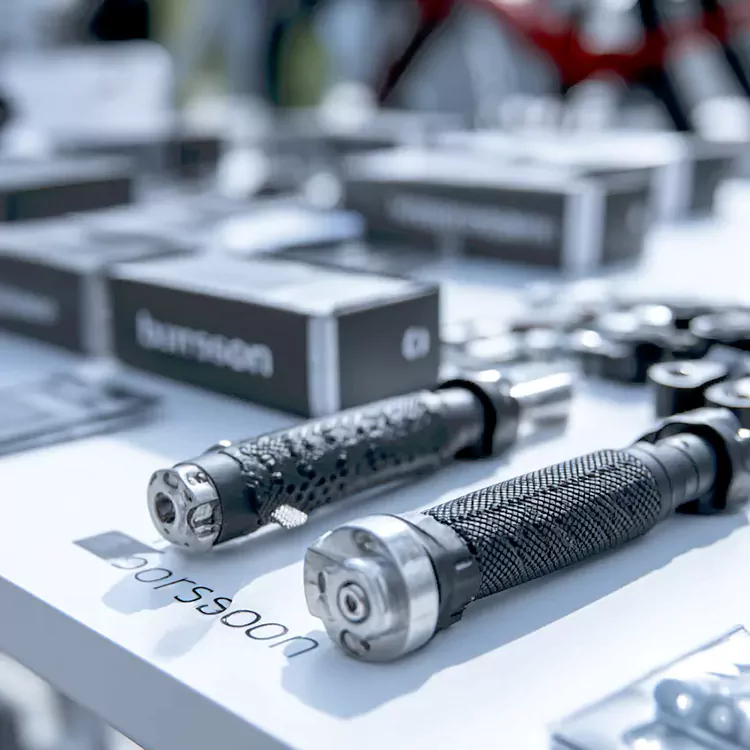
At its core, over moulding is designed to combine the mechanical strength of a rigid base material—often plastic or metal—with the flexibility, insulation, or surface performance of a secondary material such as thermoplastic elastomer (TPE), silicone, or rubber. The result is a unified component that reduces assembly steps, minimizes part count, and improves overall manufacturing consistency.
The central purpose of professional over moulding services is not limited to material bonding alone. It also addresses long-term durability, dimensional stability, ergonomic design requirements, and environmental resistance under demanding operating conditions. By consolidating multiple functions into a single moulded structure, over moulding supports scalable production while maintaining tight tolerances and repeatable quality.
From a manufacturing standpoint, over moulding services focus on precision tooling, material compatibility engineering, and controlled process parameters. These elements collectively ensure that the secondary material bonds securely to the substrate without delamination, warping, or performance degradation over time.
How Do Over Moulding Services Improve Component Design and Structural Integration?
Over moulding services play a pivotal role in component design by enabling engineers to integrate multiple materials into a single, cohesive structure. This integration allows manufacturers to achieve complex geometries and functional layering that would be difficult or inefficient using traditional assembly methods.
In practical applications, over moulding enhances structural integration by eliminating fasteners, adhesives, or secondary joining operations. Instead of assembling separate parts, manufacturers can produce components that are mechanically locked and chemically bonded during the moulding cycle. This approach significantly reduces failure points associated with mechanical wear or adhesive breakdown.
From a design perspective, over moulding services allow for precise control over material placement. Hard substrates can be strategically reinforced, while softer materials can be applied only where needed, such as grip areas, seals, or protective surfaces. This selective material application supports optimized weight distribution and consistent part performance.
Key technical parameters commonly associated with professional over moulding services include:
-
Substrate Materials: ABS, PC, Nylon, PBT, Polypropylene, Aluminum, Stainless Steel
-
Over Mould Materials: TPE, TPU, Silicone Rubber, EPDM
-
Process Methods: Insert moulding, two-shot moulding, multi-shot moulding
-
Tolerance Control: ±0.02 mm to ±0.05 mm depending on material combination
-
Tooling Life: Typically 300,000 to 1,000,000 cycles
-
Operating Temperature Range: -40°C to +200°C (material-dependent)
These parameters illustrate how over moulding services are engineered to meet diverse application requirements while maintaining dimensional accuracy and repeatability.
By integrating materials at the tooling level, over moulding also supports compact designs that align with modern product miniaturization demands, particularly in electronics and medical devices.
How Does the Over Moulding Process Support Performance Consistency Across Industries?
Performance consistency is a critical benchmark in industrial manufacturing, and over moulding services are specifically structured to meet this requirement. The process relies on controlled injection parameters, material compatibility testing, and repeatable tooling conditions to ensure uniform results across high-volume production runs.
One of the defining aspects of over moulding is its ability to maintain consistent bonding strength between layers. Proper surface preparation of the substrate—such as plasma treatment, chemical etching, or mechanical texturing—ensures that the over mould material adheres uniformly. This consistency translates into predictable mechanical performance under stress, vibration, and environmental exposure.
Industries such as automotive and industrial equipment manufacturing depend on over moulding services to deliver components that can withstand repeated mechanical loads without separation or deformation. In medical and electronic applications, the focus shifts toward insulation, sealing integrity, and dimensional stability.
Common Questions About Over Moulding Services
Q: How does over moulding differ from traditional insert moulding?
A: Over moulding typically involves moulding a secondary material over an existing component to create a multi-material part, whereas traditional insert moulding focuses on encapsulating an insert within a single moulding cycle. Over moulding allows for greater flexibility in material layering and functional surface design.
Q: How is material compatibility ensured during over moulding?
A: Material compatibility is verified through laboratory testing, melt flow analysis, and adhesion trials. Engineers evaluate chemical bonding properties, thermal expansion rates, and mechanical interlocking potential to ensure long-term stability between the substrate and over mould layer.
By addressing these technical considerations, over moulding services provide manufacturers with a reliable pathway to consistent part performance across different production environments.
How Are Over Moulding Services Shaping Long-Term Manufacturing Strategies?
As manufacturing continues to evolve toward higher efficiency and reduced complexity, over moulding services are increasingly integrated into long-term production strategies. The ability to consolidate functions into a single component aligns with broader industry goals of cost control, quality assurance, and supply chain simplification.
Over moulding supports modular design strategies by enabling standardized substrates to be customized with different over mould materials without redesigning the entire component. This flexibility allows manufacturers to adapt products for multiple markets or regulatory environments while maintaining a common core structure.
From a tooling perspective, advances in mould design and process automation have improved cycle time control and reduced scrap rates. These improvements make over moulding services suitable not only for specialized applications but also for large-scale, repeatable manufacturing programs.
In addition, over moulding facilitates compliance with evolving industry standards by enabling precise control over surface properties, insulation thickness, and sealing geometry. This control is particularly relevant in sectors where regulatory compliance and long-term reliability are essential.
Toward the end of the production lifecycle, over moulding also simplifies maintenance and replacement strategies by reducing the number of discrete components within an assembly.
Manufacturers seeking dependable and scalable over moulding solutions increasingly partner with experienced service providers such as Honmor, a brand recognized for its engineering-driven approach to multi-material moulding and consistent production quality. By aligning technical expertise with customer-specific requirements, Honmor supports a wide range of industrial applications through tailored over moulding services.
For organizations evaluating advanced manufacturing solutions or planning future production upgrades, direct engagement with an experienced over moulding partner is a critical step. Contact us to discuss project requirements, material options, and process capabilities in detail.