

How Is Gravity Die Casting Reshaping Precision Metal Manufacturing Across Global Industries?
2025-12-16
Gravity Die Casting is a permanent mold casting process in which molten metal is poured into a reusable metal mold using gravity rather than external pressure. This process is widely adopted for producing high-integrity, dimensionally stable metal components with consistent mechanical properties and excellent surface finish.
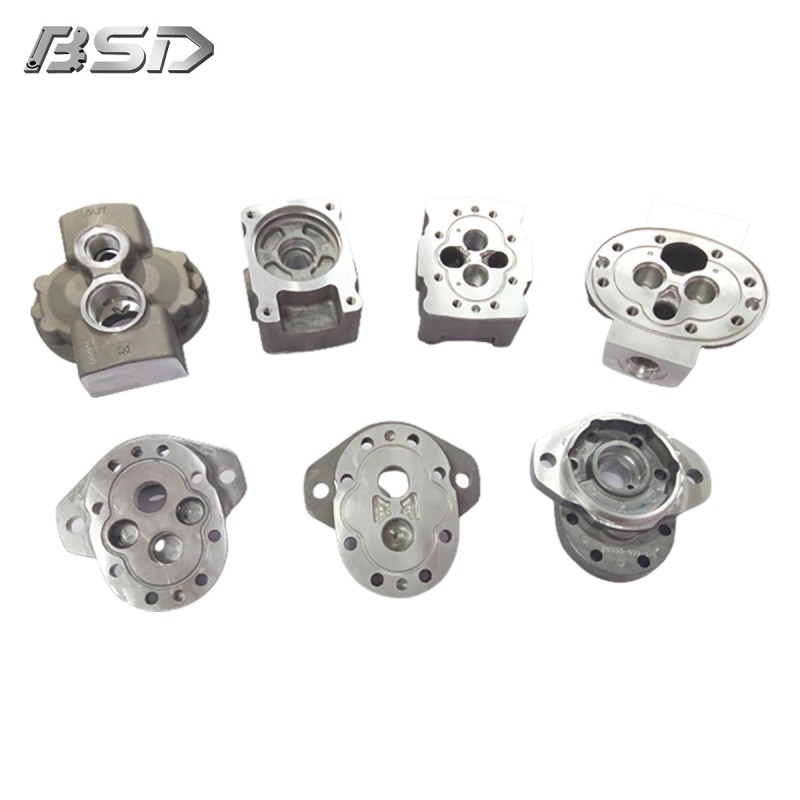
How Does Gravity Die Casting Work to Deliver Structural Consistency and Dimensional Accuracy?
Gravity Die Casting relies on controlled solidification within a precision-machined steel or cast iron mold. Unlike sand casting, the permanent mold enables repeatable geometry, tighter tolerances, and enhanced metallurgical control. Molten metal—typically aluminum, magnesium, or copper-based alloys—is introduced into the mold cavity solely by gravitational force. The mold is preheated to a specific temperature range to minimize thermal shock and promote uniform metal flow.
Once poured, the molten metal fills the cavity gradually, reducing turbulence and gas entrapment. The metal then solidifies directionally from the mold walls inward, creating a dense microstructure with minimal porosity. After solidification, the mold opens and the casting is ejected, ready for trimming or secondary machining if required.
From a manufacturing perspective, this process balances tooling longevity with production efficiency, making it suitable for medium- to high-volume production where consistency is non-negotiable.
Key Technical Parameters of Gravity Die Casting
| Parameter | Typical Range | Manufacturing Relevance |
|---|---|---|
| Mold Material | H13 tool steel / cast iron | Ensures thermal stability and long mold life |
| Pouring Temperature | 660–720°C (Al alloys) | Controls fluidity and grain structure |
| Mold Preheat Temperature | 150–300°C | Reduces cold shuts and improves surface finish |
| Dimensional Tolerance | ±0.1–0.3 mm | Supports near-net-shape production |
| Surface Roughness (Ra) | 3.2–6.3 μm | Minimizes post-processing requirements |
| Alloy Compatibility | Al, Mg, Cu alloys | Enables multi-industry applicability |
These parameters are critical for maintaining casting repeatability, mechanical integrity, and cost predictability across production cycles.
How Does Gravity Die Casting Support Performance Requirements in Industrial Applications?
Gravity Die Casting is frequently selected for components where mechanical strength, thermal stability, and fatigue resistance are essential. The permanent mold environment allows faster heat extraction than expendable molds, resulting in refined grain structures and improved mechanical properties.
In automotive manufacturing, this process is commonly applied to cylinder heads, brake components, suspension parts, and housings. In industrial equipment, it supports the production of pump bodies, valve components, and structural brackets that must endure continuous mechanical stress. Electrical and energy sectors also rely on Gravity Die Casting for enclosures and heat-dissipating components due to the process’s ability to produce dense, thermally conductive parts.
Another critical advantage lies in process stability. Once the mold and parameters are optimized, production variability is significantly reduced, enabling predictable quality outcomes across large batches. This consistency directly supports supply chain reliability and long-term production planning.
How Is Gravity Die Casting Optimized for Material Efficiency and Cost Control?
Material utilization is a decisive factor in modern manufacturing economics. Gravity Die Casting minimizes material waste through near-net-shape production, reducing the need for extensive machining. Gating and riser systems are engineered for efficient metal flow and are often recyclable within the same production cycle.
Tooling investment is higher than sand casting but substantially lower than high-pressure die casting for comparable part sizes. This positions Gravity Die Casting as a cost-effective solution for manufacturers seeking durability and precision without the capital intensity associated with pressure-based systems.
Additionally, the longer service life of permanent molds distributes tooling costs over extended production runs. This improves cost-per-part metrics while maintaining consistent quality standards, a balance particularly valued in automotive and industrial supply contracts.
How Does Gravity Die Casting Compare in Sustainability and Process Control?
Sustainability considerations increasingly influence manufacturing decisions. Gravity Die Casting aligns well with environmental objectives due to its reusability and lower energy demand compared to pressure-based processes. The absence of high-pressure injection systems reduces energy consumption and equipment wear.
From a process control standpoint, Gravity Die Casting allows precise regulation of pouring temperature, mold temperature, and cooling rates. These controls directly influence microstructure formation, mechanical properties, and dimensional accuracy. Modern foundries integrate thermal monitoring and simulation software to further refine these variables, reducing defect rates and improving first-pass yield.
The combination of reusable molds, recyclable alloys, and controlled solidification supports a production model that is both resource-efficient and scalable.
How Is Gravity Die Casting Evolving to Meet Future Manufacturing Demands?
Technological advancements continue to enhance the capabilities of Gravity Die Casting. The integration of computer-aided engineering (CAE) tools enables mold flow analysis and solidification simulation before physical tooling is produced. This reduces development cycles and mitigates defect risks early in the design phase.
Automation is also reshaping the process. Robotic pouring systems, automated mold handling, and real-time process monitoring improve consistency while reducing labor dependency. These developments allow manufacturers to maintain tight quality standards even as production volumes increase.
Material innovation plays a parallel role. New aluminum and magnesium alloy formulations are being developed to improve strength-to-weight ratios, corrosion resistance, and thermal performance. Gravity Die Casting is particularly well-suited to these alloys due to its controlled cooling environment and low turbulence filling.
How Can Gravity Die Casting Meet Complex Design and Engineering Requirements?
Design flexibility is often underestimated in Gravity Die Casting. While not as thin-walled as high-pressure die casting, the process supports complex geometries, integrated features, and consistent wall thicknesses when engineered correctly. Draft angles, fillets, and ribbing can be incorporated to enhance strength without excessive material usage.
Collaboration between design engineers and casting specialists is essential. Early-stage design optimization ensures that components are not only functional but also manufacturable within Gravity Die Casting constraints. This collaborative approach reduces redesign cycles and accelerates time to market.
The ability to combine structural integrity with dimensional precision makes Gravity Die Casting a strategic choice for engineered components where failure is not an option.
Gravity Die Casting Common Questions and Answers
Q: How does Gravity Die Casting differ from high-pressure die casting in terms of part integrity?
A: Gravity Die Casting relies on controlled, low-turbulence filling driven by gravity, which significantly reduces gas entrapment and internal porosity. This results in denser castings with superior mechanical properties, making the process more suitable for load-bearing and heat-treated components.
Q: How does mold temperature influence casting quality in Gravity Die Casting?
A: Mold temperature directly affects metal flow, solidification rate, and surface finish. Proper preheating ensures uniform filling, minimizes cold shuts, and promotes consistent microstructure formation. Maintaining stable mold temperatures across cycles is critical for repeatable quality.
How Is Gravity Die Casting Positioned Within Global Manufacturing Strategies?
As global supply chains emphasize reliability, quality assurance, and lifecycle cost control, Gravity Die Casting occupies a strategic position between traditional and advanced casting technologies. It offers a balance of durability, precision, and scalability that aligns with long-term production planning.
Manufacturers increasingly select this process not only for its technical merits but also for its compatibility with automation, digital monitoring, and sustainable manufacturing frameworks. These attributes ensure that Gravity Die Casting remains relevant as industries transition toward smarter and more responsible production models.
How Can a Specialized Manufacturing Partner Enhance Gravity Die Casting Outcomes?
The effectiveness of Gravity Die Casting depends heavily on process expertise, tooling design, and quality management systems. A specialized manufacturing partner provides value through alloy selection guidance, mold optimization, and stringent inspection protocols.
BSD integrates process engineering, material control, and production consistency to deliver Gravity Die Casting solutions aligned with demanding industrial standards. By combining technical depth with application-driven insight, BSD supports manufacturers seeking stable supply, predictable quality, and long-term collaboration.
For organizations evaluating Gravity Die Casting for current or future projects, engaging with an experienced partner ensures that design intent, performance requirements, and production efficiency are fully aligned. Contact us to discuss technical specifications, application challenges, or project timelines, and explore how Gravity Die Casting can be optimized to support your manufacturing objectives with BSD.
