How Have Recent Advancements in CBN Insert Technology Improved Machining Efficiency
2026-03-04
The demand for higher productivity in the metalworking industry has led to significant innovations in cutting tool materials. Recent advancements in CBN Inserts technology have drastically improved machining efficiency, allowing manufacturers to achieve faster cycle times and superior surface finishes. As a leader in this field, WDF has been at the forefront of integrating these innovations into their product lines, ensuring that machine shops can handle hardened materials like never before.
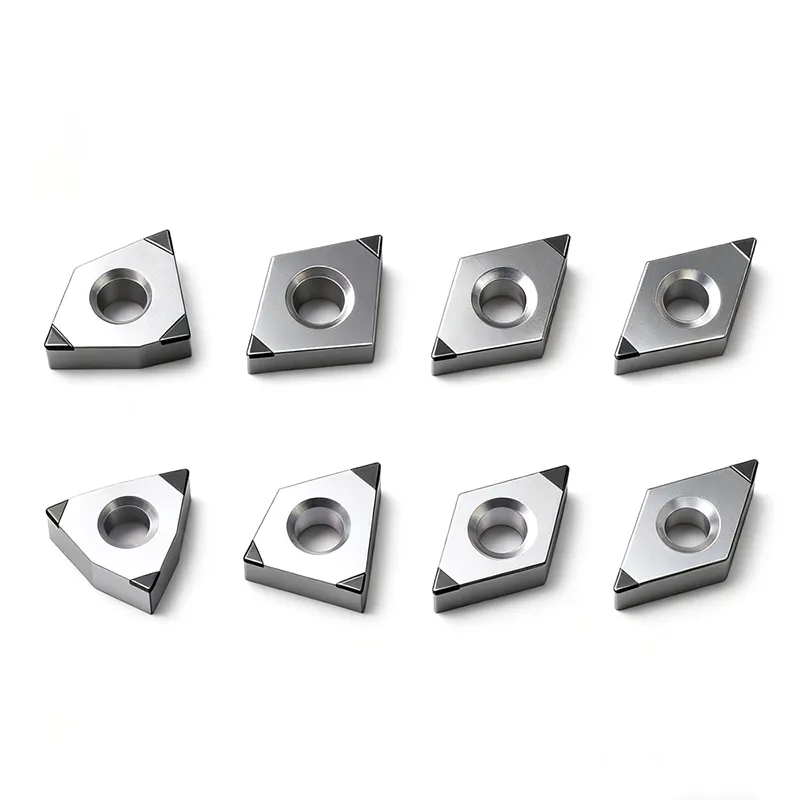
Key Technological Breakthroughs in CBN
The evolution of CBN Inserts is not just about harder materials; it is about intelligent design. Below is a comparison of traditional versus modern CBN Inserts technology:
| Feature | Traditional CBN Inserts | Modern WDF CBN Inserts |
|---|---|---|
| Substrate | Uniform density | Gradient structures for toughness |
| Geometry | Standard cutting edges | Wiper geometries for speed |
| Coating | Uncoated or simple coatings | Advanced nano-coatings (e.g., TiAlN) |
| Application | Limited to finishing passes | High-speed roughing and finishing |
These structural and geometric upgrades directly translate to higher machining efficiency by allowing for increased feed rates and longer tool life.
How WDF Integrates Efficiency into Design
To maximize the performance of CBN Inserts, WDF focuses on three critical areas that directly impact shop floor productivity:
-
Optimized Chip Control: Modern WDF inserts feature specialized chip breakers that prevent bird-nesting and evacuate heat quickly, reducing cycle interruptions.
-
Heat Resistance: By utilizing advanced bonding technologies, WDF ensures that the CBN layer retains its hardness at high temperatures, enabling dry machining.
-
Edge Strength: Recent advancements have solved the issue of chipping in interrupted cuts, making CBN Inserts viable for a wider range of applications.
Frequently Asked Questions About CBN Inserts
To further clarify the value of these advancements, here are some common inquiries regarding CBN Inserts.
What specific advancements in CBN Inserts allow for higher cutting speeds?
Modern CBN Inserts, particularly those engineered by WDF, now utilize a tougher substrate combined with nano-composite coatings. This combination allows the cutting edge to withstand the extreme thermal and mechanical stress of high-speed machining. Unlike older grades that would fail due to thermal cracking, these new inserts dissipate heat more effectively, enabling speed increases of up to 200% in some hardened steel applications.
How do advancements in CBN Insert geometry improve surface finish?
Recent geometric advancements, such as the integration of wiper facets on the inserts, have revolutionized surface finishing. A standard insert leaves a specific peak-to-valley pattern based on the feed rate. However, modern CBN Inserts with wiper technology feature an additional flat edge that "smears" the peaks down to a smoother finish. This allows operators to double the feed rate while maintaining the same surface finish, drastically improving machining efficiency without a secondary operation.
Are these new CBN Inserts suitable for both roughing and finishing operations?
Yes, one of the most significant advancements is the development of multi-functional grades. Previously, a machinist would need a tough CBN Insert for roughing (to withstand shock) and a hard grade for finishing (to maintain edge integrity). WDF has developed gradient sintered inserts that offer a tough core for shock absorption and a hard, wear-resistant outer layer. This versatility reduces tool changeovers and inventory costs, streamlining the entire machining process.
Conclusion
The trajectory of CBN Inserts technology is clear: smarter design leads to faster production. By adopting these new innovations, specifically the advanced geometries and substrates found in WDF products, machine shops can significantly reduce cycle times and increase overall output.
Are you ready to upgrade your machining operations with the latest in CBN Inserts technology?
Contact Us today to speak with an engineer at WDF and find the perfect solution for your application needs.