How Does Urethane Casting Deliver High-Precision, Cost-Effective Manufacturing for Modern Industries?
2025-12-05
Urethane casting is widely recognized as a core manufacturing method for producing high-quality prototypes and end-use parts with exceptional precision, speed, and cost efficiency. This process uses silicone molds to create polyurethane-based components that closely replicate injection-molded products—both visually and mechanically—while significantly reducing lead time and production expenses. As global demand for small-batch customization, rapid iteration, and complex geometries grows, urethane casting has become a strategic solution for industries such as medical devices, consumer electronics, automotive innovation, and industrial equipment development.
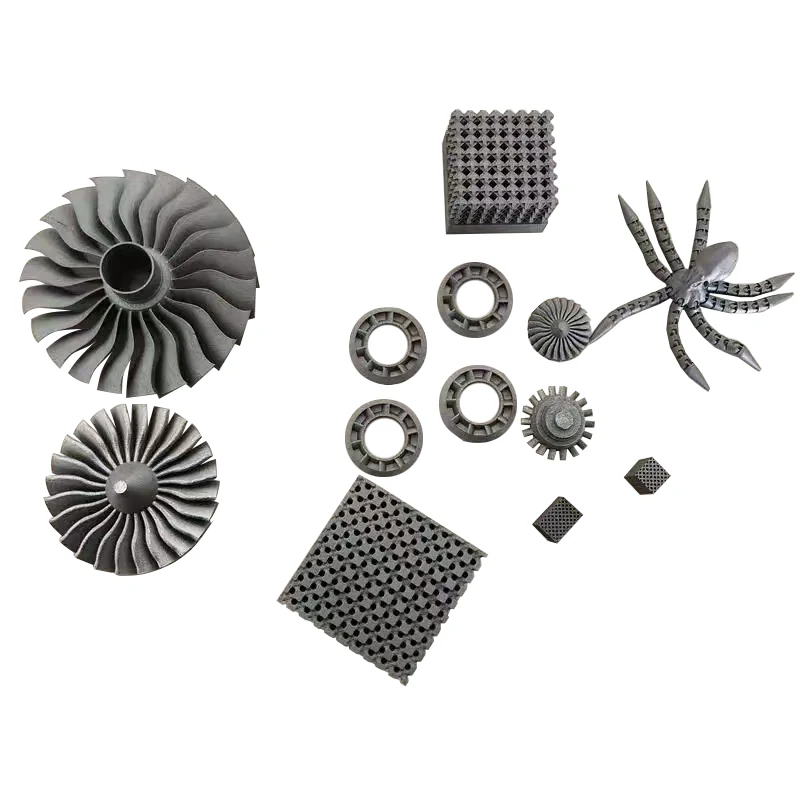
How Does the Urethane Casting Process Achieve High Accuracy and Repeatability?
Urethane casting begins with a master pattern—often produced by CNC machining or high-resolution 3D printing. A silicone mold is then created around this master model. Once cured, the mold captures every surface detail with remarkable precision. Liquid polyurethane resin is poured into the mold under vacuum or pressure to eliminate bubbles and ensure uniform density. After curing, the finished part is demolded, trimmed, and inspected.
This process offers a refined combination of surface smoothness, dimensional accuracy, and material performance. It enables prototypes and end-use parts that mimic injection-molded quality without the expensive tooling investment. Manufacturers leveraging urethane casting benefit from low-volume flexibility, short turnaround cycles, and the ability to test multiple design variations before committing to full-scale production.
Why Do Engineers Prefer Urethane Casting for Low-Volume and High-Detail Applications?
The preference for urethane casting arises from its substantial material selection, superb cosmetic finish, and fast production capability. The method is especially advantageous when the production batch ranges from 1 to 1000 units. It supports durable prototypes, functional parts, appearance models, and pilot manufacturing for market testing.
Key Performance Advantages
-
High surface quality that reduces or eliminates post-processing
-
Dimensional consistency comparable to molded plastic components
-
Fast mold creation enabling shorter development cycles
-
Flexible material properties including rigid, soft, clear, heat-resistant, or impact-resistant formulations
-
Cost-effective production with low upfront tooling investment
-
Ability to replicate complex geometries and fine surface features
-
Adaptability to color-matched and texture-matched requirements
These capabilities make urethane casting a powerful tool for pre-production validation, aesthetic testing, functional trials, and custom product series.
What Technical Parameters Define High-Grade Urethane Casting Materials?
The performance of urethane casting depends heavily on resin formulation and process control. The following table outlines typical parameters used by professional manufacturers to evaluate material suitability for applications involving load-bearing, impact resistance, thermal endurance, and transparency.
Urethane Casting Material Parameters
| Parameter | Typical Range | Description |
|---|---|---|
| Hardness (Shore A/D) | A 30–95 / D 60–85 | Defines softness or rigidity of the finished part |
| Tensile Strength | 10–55 MPa | Indicates load-bearing capability and elongation behavior |
| Elongation at Break | 50%–450% | Measures flexibility and resistance to tearing |
| Heat Deflection Temperature | 55°C–120°C | Determines stability under elevated temperatures |
| Impact Resistance | Medium–High | Depends on resin class; ideal for consumer electronics and automotive components |
| Transparency | Clear / Semi-clear / Opaque | Allows optical-quality parts when needed |
| Surface Finish | Smooth / Matte / Custom texture | Achieved directly from silicone molds |
| Production Tolerance | ±0.15 mm per 100 mm | Maintains consistency across low-volume batches |
| Mold Life | 15–50 shots | Varies by geometry, resin type, and curing method |
These parameters illustrate how urethane casting offers a wide range of performance characteristics that designers and engineers can match precisely to product requirements.
How Will Urethane Casting Shape the Future of Advanced Manufacturing?
The future of urethane casting is driven by digital manufacturing innovation and the rising need for customization. As industries pivot toward flexible production models and rapid engineering validation, urethane casting is expected to play an increasingly pivotal role.
Key Future Trends
-
Integration with digital workflows including AI-driven modeling, automated mold creation, and CAD-CAM optimization
-
Advanced polyurethane formulations offering improved thermal stability, biocompatibility, and sustainability
-
Enhanced surface replication enabling ultra-fine textures for consumer electronics and automotive trim
-
Hybrid production systems combining urethane casting with 3D-printed master patterns to accelerate prototype iteration
-
Environmentally conscious materials with reduced VOC emissions and increased recyclability
-
Greater global adoption as companies seek low-risk pilot production before committing to injection molding
These trends reflect a shift toward smarter, faster, and more adaptable manufacturing ecosystems that reduce investment risk while improving design freedom.
Common Questions About Urethane Casting
Q1: How durable are urethane casting parts compared with injection-molded components?
A1: Urethane cast parts can achieve durability levels close to injection-molded plastics, especially when using high-performance polyurethane resins. While they may not match the long-term production consistency of molded parts, urethane components deliver excellent structural integrity, reliable impact resistance, stable dimensional tolerances, and strong surface finish quality. For prototypes and low-volume production up to several hundred units, urethane casting is often the preferred choice due to its balance of durability, speed, and cost efficiency.
Q2: How does urethane casting ensure accuracy for complex geometries?
A2: Silicone molds used in urethane casting capture extremely fine details and maintain dimensional precision throughout multiple production cycles. When combined with vacuum or pressure casting techniques, the method eliminates trapped air and ensures uniform resin distribution even in intricate geometries, thin walls, or detailed surface patterns. The result is a finished part with high accuracy, smooth surfaces, and consistent repetition from unit to unit.
How Can High-Quality Urethane Casting Support Your Product Development?
Urethane casting delivers an adaptable, precise, and highly efficient production method for companies seeking to accelerate development cycles, refine product design, and produce market-ready components without the cost of traditional tooling. Its ability to replicate injection-molded quality makes it valuable for functional prototypes, consumer-ready models, customized parts, and low-volume manufacturing across diverse industries. The combination of material versatility, excellent surface replication, and rapid turnaround positions urethane casting as a vital technology within modern manufacturing.
For businesses seeking reliable, high-precision urethane casting services, Mudebao offers advanced production capabilities, strict quality control standards, and material expertise that ensure optimal results for every project. To explore customized solutions, discuss technical requirements, or request a production quote, contact us for professional assistance and dedicated engineering support.