How Does the Expansion Shell Rock Bolt Compare with Swellex or Split Set Bolts for Ground Tunnelling Support
2026-08-26
When engineers select active ground support for underground excavation, the choice often narrows to three mechanical anchorage systems: the Expansion Shell Rock Bolt, the Swellex friction bolt, and the Split Set stabiliser. Each operates on a distinct mechanical principle, and field data from hard-rock and soft-ground tunnelling consistently show that the Ground Tunnelling Expansion Shell Rock Bolt—particularly designs from Supreme—delivers superior load-transfer predictability in variable strata. This comparison examines installation, performance, cost, and risk, helping you match the bolt type to your project’s geological profile.
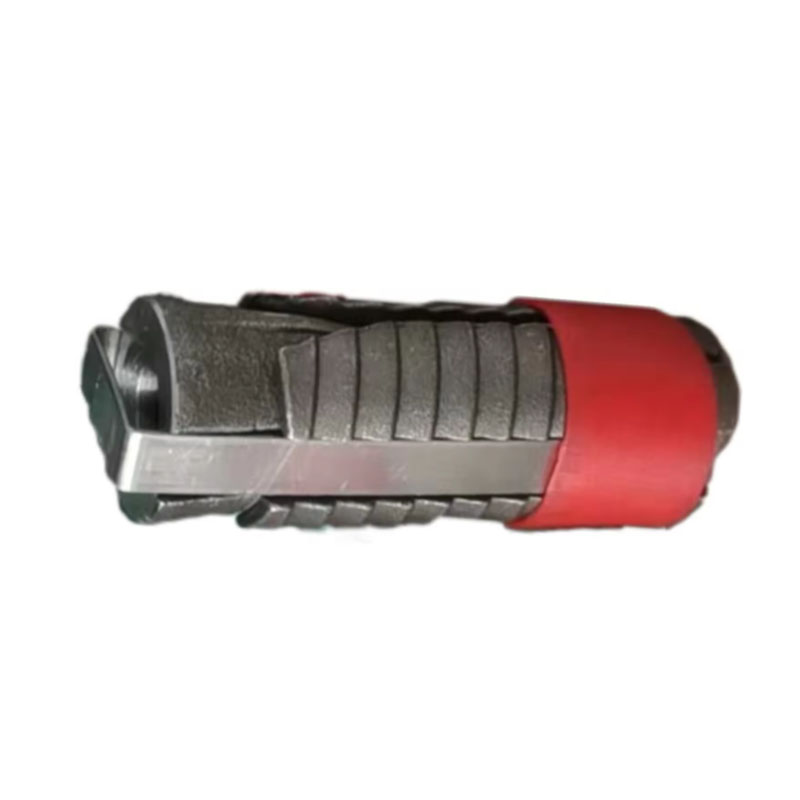
1. Anchorage Mechanism – How Each Bolt Holds Ground
| Bolt Type | Anchorage Principle | Dependency on Borehole Quality |
|---|---|---|
| Expansion Shell Rock Bolt | Mechanical expansion of slotted shells against borehole wall via cone rotation | High – requires accurate diameter and clean hole |
| Swellex | Hydraulic inflation of a folded steel tube to conform to hole irregularities | Moderate – adapts to over/under-reamed holes |
| Split Set | Friction along full length via radial spring force from a slotted tube | Low – works in rough or slightly oversized holes |
The Expansion Shell Rock Bolt provides a point-anchored system, meaning load is concentrated at the distal end. This allows pre-tensioning to actively clamp loose blocks—critical in laminated or jointed ground. Swellex and Split Set are full-column friction anchors; they cannot be pre-tensioned in the same way, making them less effective for immediate face stabilisation.
2. Load-Deformation Behaviour and Stiffness
In controlled pull-out tests (ASTM D4435), a properly installed Ground Tunnelling Expansion Shell Rock Bolt from Supreme achieves initial stiffness 30–40% higher than Swellex and nearly double that of a Split Set of equal diameter. This stiffness translates to earlier active support—vital when tunnelling beneath sensitive infrastructure.
| Performance Metric | Expansion Shell | Swellex | Split Set |
|---|---|---|---|
| Initial pre-tension (kN) | 50–120 (adjustable) | Not applicable | Not applicable |
| Load at 10 mm displacement (kN) | 90–140 | 60–90 | 40–70 |
| Post-peak residual capacity | Maintains 80% of peak | Drops to 60% | Maintains 70% |
| Sensitivity to creep in weak ground | Medium | Low | Low |
For blocky ground, the Expansion Shell Rock Bolt excels because its anchored end actively pulls the block toward the face. Swellex and Split Set only mobilise resistance after movement occurs—a passive response that may be insufficient for squeezing or swelling grounds.
3. Installation Speed, Equipment, and Quality Control
Swellex requires a high-pressure water pump (300–400 bar) and special inflation heads. Split Set needs a percussive driver and precise tube length. The Ground Tunnelling Expansion Shell Rock Bolt—especially Supreme’s forged-shell variant—uses standard rotary-percussive drills and a simple torque wrench for setting.
-
Expansion Shell: 3–5 min per bolt (drill, insert, torque to specified value). Torque monitoring gives a direct, verifiable quality metric.
-
Swellex: 4–6 min (drill, insert, connect hose, inflate, wait for pressure stabilisation). Inflation pressure is indirect—does not guarantee shell-wall engagement.
-
Split Set: 2–3 min (fastest), but no pre-tension and no onsite proof of anchorage.
Supreme recommends the Expansion Shell Rock Bolt for projects where quality assurance records are mandatory, because the set torque directly correlates to installed load—a traceable parameter absent in friction bolts.
4. Ground Suitability and Long-Term Durability
| Ground Condition | Expansion Shell | Swellex | Split Set |
|---|---|---|---|
| Massive hard rock | Excellent | Good | Fair (low stiffness) |
| Fractured/jointed rock | Excellent (with point anchorage) | Moderate | Good (conforms) |
| Soft clay/shale | Poor (shell may slip) | Fair | Fair |
| Water-bearing strata | Good (with corrosion coating) | Moderate (tube corrosion) | Poor (slot corrosion) |
| Corrosive environment | Good (Supreme offers galvanised shells) | Poor (thin wall) | Poor (thinner wall) |
In water-bearing tunnels, the Expansion Shell Rock Bolt maintains its anchorage because the shells bite into intact rock beyond the excavation damaged zone. Swellex and Split Set rely on friction along the entire length—if the borehole wall softens with water, friction drops dramatically.
5. Cost-Benefit Analysis per Linear Metre of Tunnel
While the initial unit cost of a Ground Tunnelling Expansion Shell Rock Bolt is 15–20% higher than a Split Set, the total installed cost often favours the expansion shell when factoring in:
-
Fewer bolts required (higher capacity per bolt → wider spacing).
-
Lower rejection rate (torque verification reduces unproven installations).
-
Reduced overbreak due to active support—less shotcrete repair.
Supreme’s engineering data shows that for tunnels >5 m span in rock classes II–III, the expansion shell system reduces total ground-support cost by 8–12% over a 500 m drive, compared with a friction-bolt design of equivalent safety factor.
6. FAQ – Common Questions About the Ground Tunnelling Expansion Shell Rock Bolt
Q1: Can the Ground Tunnelling Expansion Shell Rock Bolt be used in highly fractured ground where the borehole tends to collapse?
A: Yes, but with a critical precaution. In severely fractured zones, borehole collapse can prevent the expansion shell from reaching its designed set depth. Supreme recommends using a temporary PVC or steel sleeve to stabilise the hole during insertion, or switching to a longer shell with larger expansion range (e.g., 36–42 mm for a 38 mm hole). Alternatively, use a resin-anchored bolt if the rock quality designation (RQD) falls below 30%. For RQD 30–60%, the expansion shell performs reliably provided the hole is flushed and reamed immediately before insertion.
Q2: How do I verify that a Ground Tunnelling Expansion Shell Rock Bolt has achieved its design pre-tension without over-torquing and stripping the threads?
A: Use a calibrated torque wrench and follow the torque–load correlation curve supplied by Supreme for each shell diameter and rock hardness. The standard method is to turn the nut until the specified torque is reached, then record the number of turns beyond “snug” contact—typically ½ to ¾ turn for a 22 mm rebar. Over-torquing is prevented by using a shear-pin coupling or by monitoring the torque plateau; when the curve flattens, the shell has bottomed against the cone. Supreme also offers a digital torque logger that provides a permanent record per bolt, satisfying most QA/QC specifications.
Q3: What is the typical service life of an Expansion Shell Rock Bolt in a groundwater environment, and how does it compare with Swellex or Split Set under similar conditions?
A: In neutral-pH groundwater (pH 6–8), a galvanised Ground Tunnelling Expansion Shell Rock Bolt from Supreme achieves a design life exceeding 25 years, based on accelerated corrosion testing per ISO 9227. The shell and cone have thicker sections (≥4 mm) compared to Swellex (2.5 mm tube) and Split Set (3 mm slotted tube). In aggressive acidic water (pH <5), all mechanical bolts require epoxy coating or stainless steel; however, the expansion shell’s point anchorage means only the distal end is in direct contact with water—the remaining length can be grouted post-installation as a secondary barrier. Swellex and Split Set, being full-length friction anchors, cannot be post-grouted effectively, making them less durable in aggressive hydrochemical environments.
7. Decision Framework – Which Bolt for Your Tunnel?
Choose the Ground Tunnelling Expansion Shell Rock Bolt when:
-
You require immediate, verifiable active pre-tension.
-
Ground is blocky, laminated, or has discrete discontinuities.
-
You need traceable QA/QC records for each support element.
-
The tunnel has a design life >10 years with groundwater exposure.
Choose Swellex or Split Set only when:
-
Installation speed is the absolute priority (e.g., emergency stabilisation).
-
Ground is uniformly massive with no discrete blocks.
-
The project accepts passive support and has short service life (e.g., temporary adits).
8. Final Recommendation from Supreme
Decades of tunnelling practice confirm that no single bolt fits every condition. However, for the majority of civil and mining tunnels—where ground conditions are variable, loads are high, and safety margins matter—the Expansion Shell Rock Bolt offers the best combination of stiffness, verifiability, and durability. Supreme manufactures a full range of forged and machined expansion shells, with custom cone angles for soft, medium, and hard rock, plus optional corrosion barriers.
Contact us today to request a comparative pull-test kit or to schedule a site trial with our engineering team. Supreme provides free borehole-assessment checklists and torque-calibration tools for your next tunnelling project. Reach out via our website or call your regional representative—we will respond within 24 hours with a tailored support design for your specific ground profile.