How does the choice of cutting tool impact the precision of CNC metal prototypes
2026-04-01
When manufacturing CNC Prototype Metal Components, precision is not negotiable. Every micron matters, and the cutting tool used in the machining process plays a decisive role in determining dimensional accuracy, surface finish, and geometric consistency. At Honmor, the selection of appropriate cutting tools is treated as a fundamental engineering decision that directly influences the success of prototype validation and subsequent production scaling.
Cutting tools determine how material is removed, how heat is managed, and how tolerances are maintained throughout the machining cycle. A tool with improper geometry, coating, or substrate can introduce deflection, vibration, and thermal distortion—each of which degrades the precision of CNC Prototype Metal Components. Conversely, precisely matched tools enable stable machining, tighter tolerances, and repeatable results essential for functional testing and design verification.
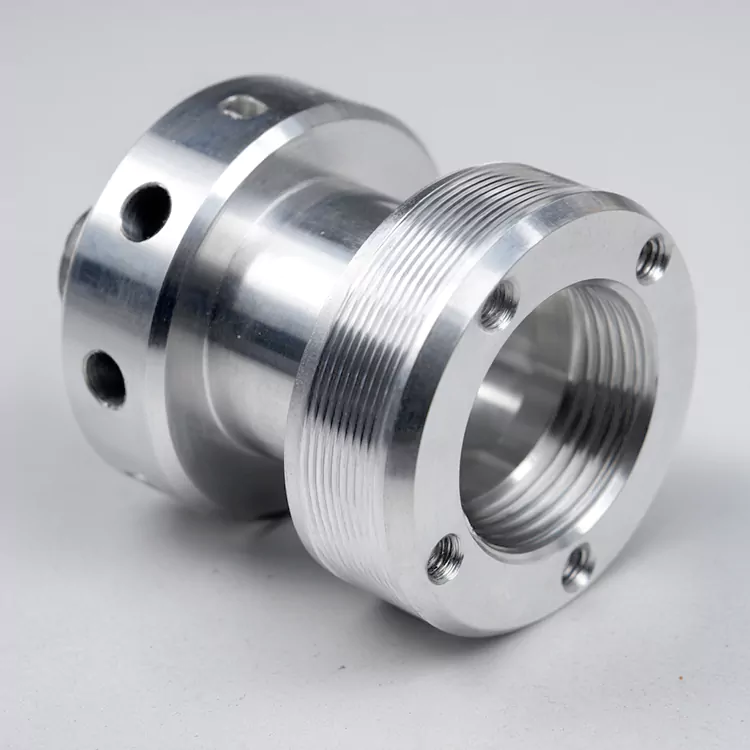
Key Factors in Cutting Tool Selection for Precision Prototyping
| Factor | Impact on Precision | Consideration for CNC Prototype Metal Components |
|---|---|---|
| Tool Material | Determines wear resistance and edge retention | Carbide tools offer superior hardness and thermal stability for metals |
| Coating Type | Reduces friction and heat generation | AlTiN and TiSiN coatings enhance performance in high-temperature alloys |
| Geometry | Affects chip evacuation and cutting forces | Optimized flute count and helix angle minimize deflection |
| Runout Tolerance | Directly impacts dimensional consistency | High-precision collets and holders maintain concentricity |
| Tool Diameter | Influences feature resolution | Smaller diameters required for fine details but increase deflection risk |
How Tool Geometry Affects Dimensional Accuracy
Tool geometry dictates the interaction between the cutting edge and the workpiece. For CNC Prototype Metal Components, variables such as helix angle, rake angle, and number of flutes must be matched to the material and feature geometry. A higher helix angle reduces cutting forces and improves surface finish on aluminum prototypes, while a lower helix angle with reinforced core provides stability for stainless steel or titanium components.
When machining thin walls or intricate features common in prototypes, excessive cutting force from poorly selected geometry causes workpiece deflection, resulting in out-of-tolerance conditions. Honmor employs toolpath strategies paired with geometrically optimized cutters to maintain feature integrity even in complex, high-precision prototypes.
The Role of Tool Wear in Prototype Reliability
Tool wear is often underestimated in prototype production. Unlike high-volume manufacturing where tool life is monitored statistically, prototype runs require consistent performance across limited quantities. As a cutting tool wears, cutting forces increase, surface finish degrades, and dimensional drift occurs. For CNC Prototype Metal Components intended for functional testing, even minor deviations can invalidate test results.
Proactive tool monitoring and the use of premium micro-grain carbide tools ensure that every prototype reflects the intended design tolerances. Honmor integrates tool condition tracking within machining processes to guarantee that precision remains uncompromised from the first to the last component.
CNC Prototype Metal Components FAQ
What cutting tool materials are best for achieving tight tolerances in metal prototypes?
Micro-grain solid carbide tools are the industry standard for precision machining of CNC Prototype Metal Components. Their high hardness, excellent thermal stability, and resistance to deflection allow for consistent tolerances within ±0.005 mm. For specialized applications such as hardened steel or superalloys, polycrystalline diamond (PCD) or cubic boron nitride (CBN) tools may be employed to maintain edge sharpness over extended machining cycles. The selection must account for material hardness, feature complexity, and required surface finish to ensure repeatable precision across prototype batches.
How does tool runout affect the accuracy of CNC machined metal prototypes?
Tool runout refers to the deviation between the tool’s centerline and the spindle’s axis of rotation. Even minimal runout—as little as 0.005 mm—can cause uneven chip loads, accelerated tool wear, and significant dimensional inaccuracies in CNC Prototype Metal Components. When runout occurs, one flute bears a disproportionate cutting load, leading to vibration (chatter), poor surface finish, and oversized or undersized features. Precision tool holders such as hydraulic chucks or shrink-fit holders reduce runout to near-zero levels, ensuring that programmed toolpaths translate faithfully to finished geometries.
What role does tool coating play in maintaining precision during prototype machining?
Tool coatings serve as thermal and chemical barriers that reduce friction and heat generation at the cutting interface. For CNC Prototype Metal Components, coatings such as AlTiN (Aluminum Titanium Nitride) or TiSiN (Titanium Silicon Nitride) enable consistent cutting performance by preventing built-up edge (BUE) and maintaining edge geometry throughout the machining cycle. Uncoated tools in difficult-to-machine materials often experience rapid wear and unpredictable cutting forces, leading to tolerance drift. Advanced coatings also allow for higher cutting speeds without thermal damage, preserving both precision and surface integrity in demanding prototype applications.
Conclusion
The choice of cutting tool is not merely a production detail—it is a precision-defining variable in the manufacturing of CNC Prototype Metal Components. From tool material and geometry to runout control and wear management, every decision influences whether a prototype meets its design intent or falls short of functional requirements. Honmor combines technical expertise in tool selection with rigorous process control to deliver metal prototypes that achieve tight tolerances, superior surface finishes, and reliable performance for validation and testing.
For engineering teams seeking precision-driven prototyping solutions, the right tooling strategy makes the difference between uncertainty and confidence.
Contact us today to discuss your next project and discover how Honmor’s precision machining capabilities can bring your CNC Prototype Metal Components to life with uncompromising accuracy.