

How Does Surface Treatment Enhance the Durability of CNC Valve Blocks
2026-01-14
In the world of precision hydraulic and pneumatic systems, the integrity of every component is paramount. CNC Valve Blocks serve as the critical nerve centers, directing fluid power with precision. However, even the most accurately machined block from raw material is not fully prepared for the harsh realities of industrial operation. This is where specialized Wangdefu surface treatment processes become a game-changer, transforming a machined part into a robust, long-lasting system component.
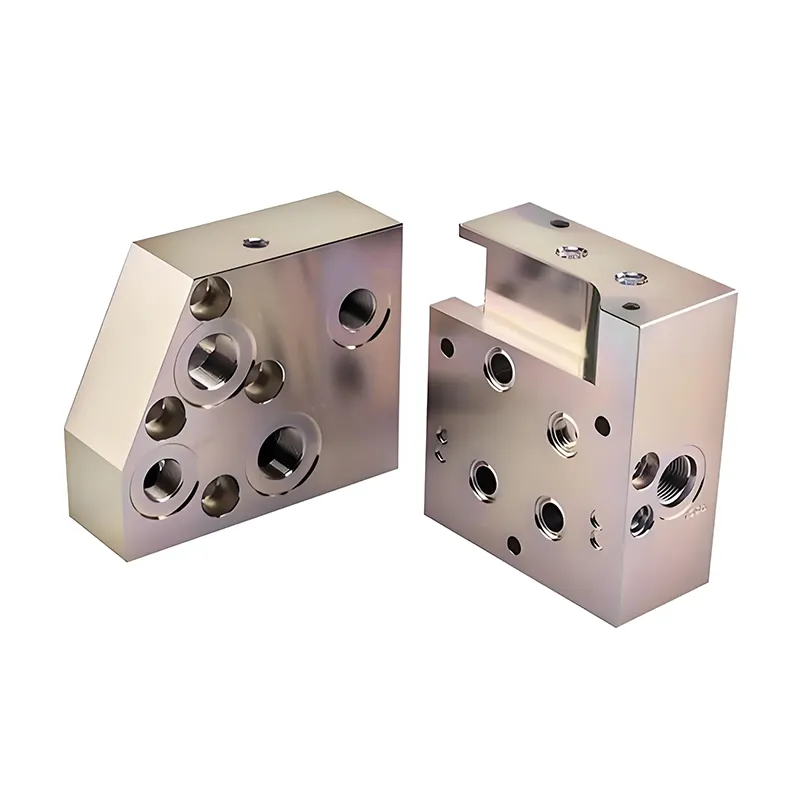
Surface treatment is not merely a cosmetic step; it is a vital engineering process that fortifies the valve block. The core benefits include:
-
Corrosion Resistance: Creating a barrier against moisture, chemicals, and environmental oxidants.
-
Wear Resistance: Hardening the surface to withstand constant friction from moving spools and seals.
-
Improved Surface Finish: Reducing micro-imperfections to ensure better seal adhesion and lower friction.
-
Enhanced Fatigue Strength: Increasing the surface’s ability to withstand repeated pressure cycles.
CNC Valve Blocks FAQ
What are the most common surface treatments for CNC Valve Blocks?
The most common treatments include Anodizing (for aluminum blocks, excellent for corrosion and wear resistance), Nickel Plating (offers a hard, corrosion-resistant layer, often used for steel), and Passivation (for stainless steel, which removes free iron and enhances the natural oxide layer). Each is selected based on the base material and operational requirements.
How does surface treatment prevent fluid leakage in valve blocks?
Leakage often initiates at microscopic surface pores or where seals interface with the metal. Treatments like anodizing or precise plating create a denser, more uniform surface topography. This smoother, more consistent finish allows seals to form a perfect, uninterrupted barrier, dramatically reducing the risk of leak paths.
Can surface treatment repair machining errors on a valve block?
No, surface treatments cannot correct dimensional inaccuracies or major surface defects from machining. Their purpose is to enhance an already precisely manufactured part. At Wangdefu, our philosophy is that superior treatments must be built upon a foundation of flawless CNC machining. The process is additive, not corrective.
The following table compares key surface treatment options:
| Treatment | Best For Material | Primary Benefit | Typical Application |
|---|---|---|---|
| Hard Anodizing | Aluminum | Extreme Wear & Corrosion Resistance | High-pressure, high-cycle systems |
| Electroless Nickel | Steel, Aluminum | Uniform Hardness & Chemical Resistance | Marine, chemical processing environments |
| Passivation | Stainless Steel | Maximizing Corrosion Resistance | Food, medical, and high-purity systems |
Ultimately, selecting the correct surface treatment is a strategic engineering decision that directly correlates to system reliability and total cost of ownership. A Wangdefu CNC Valve Block is engineered holistically, where precision machining is seamlessly integrated with the optimal protective treatment, ensuring peak performance in the most demanding applications. Contact us today to discuss how our expertise can enhance the durability and reliability of your fluid power systems.
