

How Does Surface Finish from CNC Processing Affect Pump Impeller Efficiency
2026-05-25
When discussing CNC Pump Impellers, surface finish is not merely an aesthetic feature—it directly dictates hydraulic performance, energy consumption, and service life. At BestPro, precision machining transforms rough blanks into high-efficiency components, where surface quality determines how smoothly fluids move through the impeller channels.
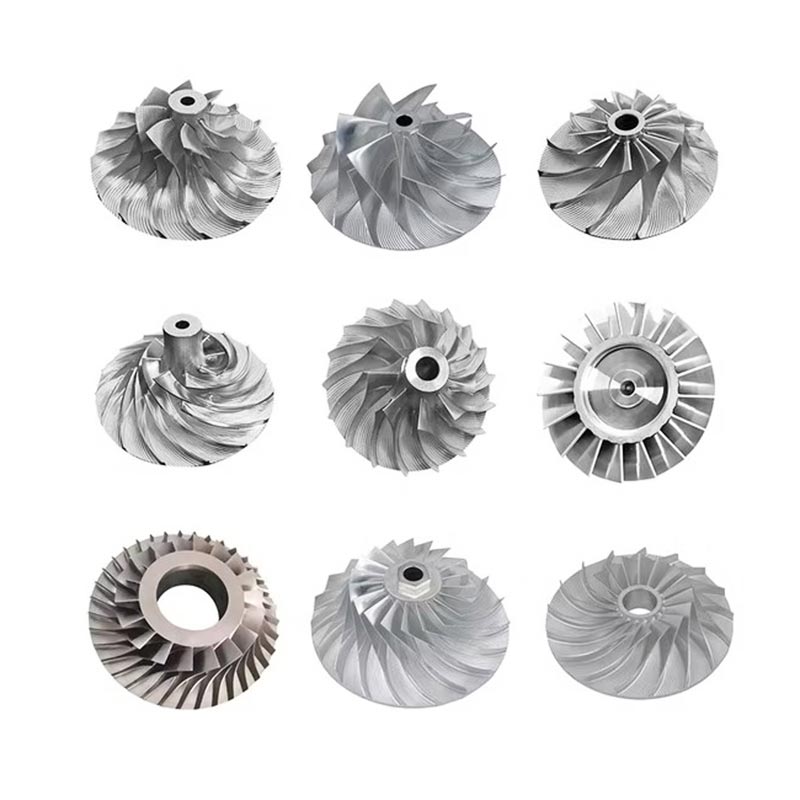
The Science Behind Surface Finish and Efficiency
Surface finish on CNC Pump Impellers influences boundary layer behavior, friction losses, and cavitation resistance. A rougher surface increases turbulence near the blade walls, forcing the pump to expend more energy to maintain flow rates. Conversely, a fine finish reduces parasitic drag.
| Surface Finish (Ra µm) | Relative Efficiency Loss | Cavitation Risk | BestPro Application |
|---|---|---|---|
| 3.2 – 6.3 (Rough) | 8–12% | High | Non-critical slurry pumps |
| 0.8 – 1.6 (Standard) | 3–5% | Medium | General industrial use |
| 0.2 – 0.4 (Fine) | <1% | Low | High-speed BestPro impellers |
| 0.05 – 0.1 (Mirror) | 0.2–0.5% | Minimal | Aerospace & medical pumps |
Key Mechanisms Affecting Pump Performance
-
Reduced Friction Drag: Smoother CNC Pump Impellers lower the friction coefficient between fluid and metal, cutting energy losses.
-
Cavitation Delay: Micro-asperities on rough surfaces act as nucleation sites for vapor bubbles. A high-quality finish prevents pitting.
-
Consistent Flow Paths: CNC processing ensures uniform surface texture across all blades, preventing local turbulence that erodes efficiency.
-
Lower Operating Temperature: Less friction means less heat, extending seal and bearing life in BestPro assemblies.
Frequently Asked Questions about CNC Pump Impellers
Q1: What is the ideal surface finish range for CNC Pump Impellers used in clean water applications?
A1: For clean water pumps, BestPro recommends a surface finish between 0.4 and 0.8 µm Ra. This range balances manufacturing cost and efficiency gain, reducing friction losses by approximately 4–6% compared to standard machined finishes (1.6 µm Ra). Finishes below 0.2 µm Ra provide only marginal additional gains for clean water but increase production time by up to 40%, making them cost-ineffective for most municipal or HVAC systems. Always match finish to fluid viscosity.
Q2: How does surface finish influence cavitation erosion resistance in high-speed CNC Pump Impellers?
A2: Cavitation occurs when local pressure drops below vapor pressure, forming bubbles that collapse violently. Rough surfaces (above 1.6 µm Ra) contain microscopic peaks that act as cavitation incubators, accelerating bubble formation by up to 300%. BestPro achieves finishes of 0.2–0.4 µm Ra on high-speed impellers, which eliminates most nucleation sites and delays cavitation inception. Field data show that CNC Pump Impellers with fine finish suffer 70% less pitting after 5,000 hours compared to coarse-finished counterparts.
Q3: Can polishing CNC Pump Impellers beyond 0.2 µm Ra further improve efficiency?
A3: Only in extremely low-viscosity or high-velocity fluids (e.g., light hydrocarbons, cryogenic liquids). For water or oils above 10 cSt, efficiency gains beyond 0.2 µm Ra are under 0.5%, while polishing costs double. BestPro advises mirror finishes (0.05–0.1 µm Ra) solely for specialized applications like blood pumps or fuel delivery systems where every fractional efficiency point matters. For 99% of industrial pumps, 0.2–0.4 µm Ra delivers optimal ROI.
Why Partner with BestPro for Superior Finish Control
Achieving consistent surface quality on CNC Pump Impellers requires advanced multi-axis machining, rigid tooling, and precise post-processing. BestPro utilizes in-process probing and automated deburring to guarantee Ra values within ±0.05 µm tolerance on every batch.
Contact Us
Ready to improve pump efficiency with precision-machined impellers? Contact BestPro today for a free surface finish consultation and performance simulation. Send your drawings to our engineering team—let us deliver CNC Pump Impellers that cut energy costs and extend pump life.
