How Does Slip On Flange Work?
2026-05-18
Article Abstract
Slip On Flange is one of the most widely used flange types in piping systems due to its simple structure, cost efficiency, and ease of installation. This article explains its working principle, structural characteristics, advantages, applications, and installation practices. It also addresses common customer concerns such as sealing reliability, welding requirements, and maintenance considerations, helping engineers and buyers make informed decisions for industrial piping projects.
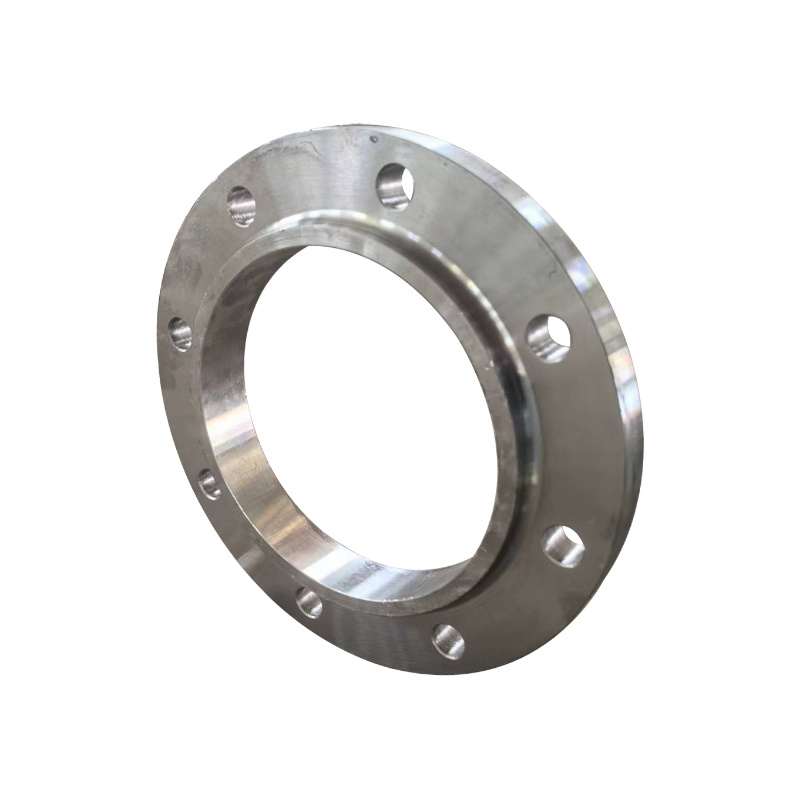
Table of Contents
- 1. Overview of Slip On Flange
- 2. Structural Design and Working Principle
- 3. Key Advantages
- 4. Industrial Applications
- 5. Installation and Welding Guide
- 6. Slip On Flange vs Weld Neck Flange
- 7. Common Problems and Solutions
- 8. Maintenance and Inspection
- 9. Frequently Asked Questions
1. Overview of Slip On Flange
A Slip On Flange is a type of pipe flange that is designed to slide over the pipe and then be welded in place. Unlike threaded or welded neck flanges, it does not require precise pipe cutting or alignment, making it a preferred choice in low-pressure and non-critical applications.
Its simplicity reduces installation time and labor cost, which is why industries such as water treatment, HVAC systems, and low-pressure chemical pipelines frequently adopt it.
2. Structural Design and Working Principle
The Slip On Flange consists of a flat circular disc with a bore slightly larger than the outer diameter of the pipe. The pipe is inserted into the flange, and then fillet welds are applied both inside and outside the flange to secure it.
Working Principle:
- The pipe slides into the flange bore.
- Internal and external welding ensures mechanical strength.
- A gasket is placed between two flanges for sealing.
- Bolts tighten the flange connection to prevent leakage.
This dual-weld structure ensures moderate strength while keeping fabrication relatively simple.
3. Key Advantages
Slip On Flanges are popular because of their balance between performance and cost efficiency. Below are the main advantages:
- Lower Cost: Less material and simpler machining compared to weld neck flanges.
- Easier Installation: No need for precise pipe cutting or alignment.
- Reduced Welding Effort: Only fillet welds are required.
- Versatility: Suitable for a wide range of piping systems.
- Availability: Commonly stocked in many pressure ratings and sizes.
4. Industrial Applications
Slip On Flanges are widely used across multiple industries where pressure conditions are moderate. Typical applications include:
- Water supply and drainage systems
- HVAC pipelines
- Fire protection systems
- Low-pressure chemical transport
- Food processing pipelines
- Shipbuilding auxiliary piping
Their adaptability makes them a standard choice in non-critical piping infrastructures.
5. Installation and Welding Guide
Proper installation is crucial for ensuring long-term performance and leak-free operation.
Step-by-Step Installation Process:
- Slide the flange onto the pipe end.
- Align the pipe to ensure correct positioning.
- Perform internal fillet welding.
- Perform external fillet welding for reinforcement.
- Install gasket between mating flanges.
- Tighten bolts in a cross-pattern sequence.
Important Note: Overheating during welding can cause deformation, so controlled welding parameters should always be used.
6. Slip On Flange vs Weld Neck Flange
| Feature | Slip On Flange | Weld Neck Flange |
|---|---|---|
| Installation Difficulty | Easier | More complex |
| Cost | Lower | Higher |
| Strength | Moderate | High |
| Pressure Rating | Low to medium | High pressure systems |
| Alignment Requirement | Flexible | Strict |
7. Common Problems and Solutions
1. Leakage at Connection Points
Cause: Improper gasket alignment or insufficient bolt tightening.
Solution: Re-torque bolts and replace gasket if necessary.
2. Weld Cracks
Cause: Poor welding technique or thermal stress.
Solution: Use qualified welders and controlled heat input.
3. Misalignment Issues
Cause: Improper pipe positioning before welding.
Solution: Use proper fixtures and alignment tools.
8. Maintenance and Inspection
Routine inspection ensures long-term reliability of Slip On Flanges. Recommended practices include:
- Checking bolt tension periodically
- Inspecting weld seams for corrosion or cracks
- Replacing gaskets during scheduled maintenance
- Monitoring leakage under operating pressure
In industrial environments, preventive maintenance significantly reduces downtime and operational risks.
9. Frequently Asked Questions
Q1: What pressure levels are suitable for Slip On Flanges?
They are generally suitable for low to medium pressure systems.
Q2: Can Slip On Flanges be used in high-temperature applications?
They are not recommended for extreme temperature conditions where weld neck flanges are preferred.
Q3: What materials are commonly used?
Carbon steel, stainless steel, and alloy steel are widely used depending on the application.
Q4: Are Slip On Flanges reusable?
While the flange itself can be reused, gaskets should always be replaced during reassembly.
Conclusion
Slip On Flanges provide a practical and cost-effective solution for many piping systems that do not require high-pressure resistance. Their simple structure, ease of installation, and wide availability make them a preferred choice in industrial and commercial applications.
For high-quality manufacturing and reliable supply, Zhejiang Shuangneng Steel Industry Co., Ltd. delivers durable and precision-engineered Slip On Flanges designed to meet global industrial standards.
Contact us today to learn more about specifications, pricing, and customized solutions for your project requirements.