How Does Sheet Metal Fabrication Support Precision Manufacturing?
2026-02-27
Article Summary
Sheet Metal Fabrication is a foundational manufacturing process used to produce durable, precise, and scalable metal components across multiple industries. From design and material selection to cutting, forming, and finishing, each stage directly impacts cost, performance, and lead time. This comprehensive guide explains how sheet metal fabrication works, addresses common customer challenges, and outlines how manufacturers can achieve consistent quality and efficiency. It also highlights how Difon delivers reliable sheet metal fabrication solutions tailored to complex industrial requirements.
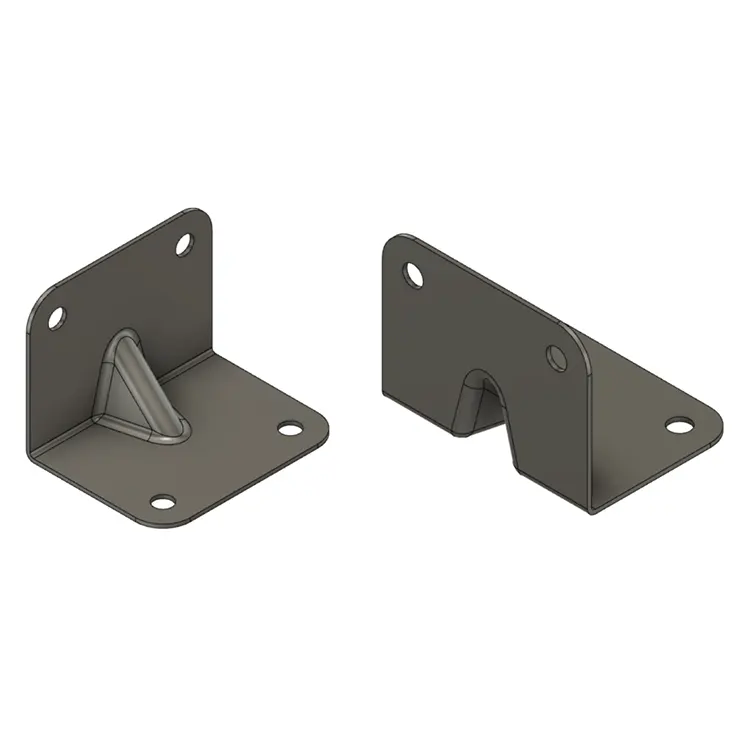
Table of Contents
- Content Outline
- Sheet Metal Fabrication Overview
- Common Customer Pain Points
- Material Selection Considerations
- Core Fabrication Processes
- Process Comparison Table
- Quality Control and Tolerances
- Industry Applications
- Frequently Asked Questions
- Conclusion and Contact Us
Content Outline
- Defining modern sheet metal fabrication
- Understanding customer challenges and expectations
- Exploring materials and fabrication methods
- Evaluating quality, precision, and scalability
- Selecting a reliable fabrication partner
Sheet Metal Fabrication Overview
Sheet Metal Fabrication refers to the process of transforming flat metal sheets into functional components or assemblies through cutting, bending, forming, and joining operations. It is widely used due to its flexibility, cost efficiency, and ability to support both low-volume prototyping and high-volume production.
Modern fabrication integrates advanced machinery, digital design files, and strict process control to ensure dimensional accuracy and repeatability. Difon combines engineering expertise with advanced fabrication capabilities to deliver components that meet demanding structural and aesthetic requirements.
Common Customer Pain Points
Customers sourcing sheet metal fabrication services often face recurring challenges that impact project success and profitability.
- Inconsistent part dimensions and tolerances
- Material waste leading to higher costs
- Long lead times and unreliable delivery schedules
- Design limitations due to fabrication constraints
- Poor surface finish or secondary processing issues
Addressing these pain points requires not only capable equipment but also strong process planning and experienced engineering support.
Material Selection Considerations
Material choice is a critical factor in sheet metal fabrication, directly influencing strength, corrosion resistance, formability, and cost.
- Carbon steel for structural strength and cost efficiency
- Stainless steel for corrosion resistance and hygiene
- Aluminum for lightweight and thermal performance
- Copper and brass for electrical and decorative uses
Difon assists customers in selecting suitable materials based on application environment, mechanical requirements, and downstream processing needs.
Core Fabrication Processes
Sheet metal fabrication consists of several core processes that can be combined to achieve complex geometries and assemblies.
- Cutting – Laser cutting, punching, or shearing to achieve precise outlines
- Bending – Press brake forming to create angles and channels
- Forming – Rolling, stamping, or deep drawing for complex shapes
- Joining – Welding, riveting, or fastening to assemble components
- Finishing – Powder coating, plating, or polishing for protection and appearance
Each process must be carefully controlled to avoid distortion, material fatigue, or dimensional deviation.
Process Comparison Table
| Process | Primary Function | Key Advantages | Typical Applications |
|---|---|---|---|
| Laser Cutting | Precision cutting | High accuracy, clean edges | Enclosures, panels |
| Press Brake Bending | Angle formation | Repeatable bends | Frames, brackets |
| Welding | Permanent joining | Structural strength | Assemblies, housings |
| Surface Finishing | Protection and aesthetics | Corrosion resistance | Visible components |
Quality Control and Tolerances
Consistent quality in sheet metal fabrication depends on strict control at every stage of production. This includes material inspection, dimensional verification, and final surface evaluation.
- Dimensional tolerance management
- In-process inspection
- Weld integrity checks
- Surface finish consistency
Difon applies standardized quality procedures to ensure that fabricated parts meet design specifications and functional requirements without costly rework.
Industry Applications
Sheet metal fabrication supports a wide range of industries due to its adaptability and performance.
- Industrial equipment and machinery
- Electronics enclosures and cabinets
- Automotive and transportation components
- Energy and infrastructure systems
- Architectural and construction elements
The ability to scale production while maintaining precision makes sheet metal fabrication a preferred solution for both emerging and established manufacturers.
Frequently Asked Questions
What tolerances can sheet metal fabrication achieve?
Tolerances depend on material, thickness, and process, but modern fabrication can achieve highly consistent dimensional accuracy.
Is sheet metal fabrication suitable for custom designs?
Yes. Digital design integration allows for efficient customization and rapid iteration.
How does fabrication affect production cost?
Cost is influenced by material choice, process complexity, volume, and finishing requirements.
Can fabrication support both prototypes and mass production?
Sheet metal fabrication is well-suited for both low-volume prototypes and high-volume manufacturing.
Conclusion and Contact Us
Sheet Metal Fabrication remains a critical manufacturing solution for producing precise, durable, and cost-effective metal components. By understanding materials, processes, and quality controls, businesses can reduce risk, improve efficiency, and achieve consistent results. Selecting an experienced fabrication partner is essential to long-term success.
Difon is committed to delivering high-quality sheet metal fabrication services supported by engineering expertise and advanced production capabilities. If you are seeking a dependable partner to support your next project, contact us today to discuss your requirements and discover how Difon can help bring your designs to life.