How Does Outdoor Permanent Magnet Circuit Breaker Work?
2026-06-30
Abstract
The Outdoor Permanent Magnet Circuit Breaker is a critical component in modern power distribution networks, designed to ensure reliable switching, fault isolation, and long-term operational stability in harsh outdoor environments. Unlike traditional spring-operated mechanisms, this technology utilizes a permanent magnet actuator to achieve faster response, reduced mechanical wear, and higher reliability. This article explains its working principle, structure, advantages, applications, and selection considerations in detail, helping engineers and procurement specialists make informed decisions.
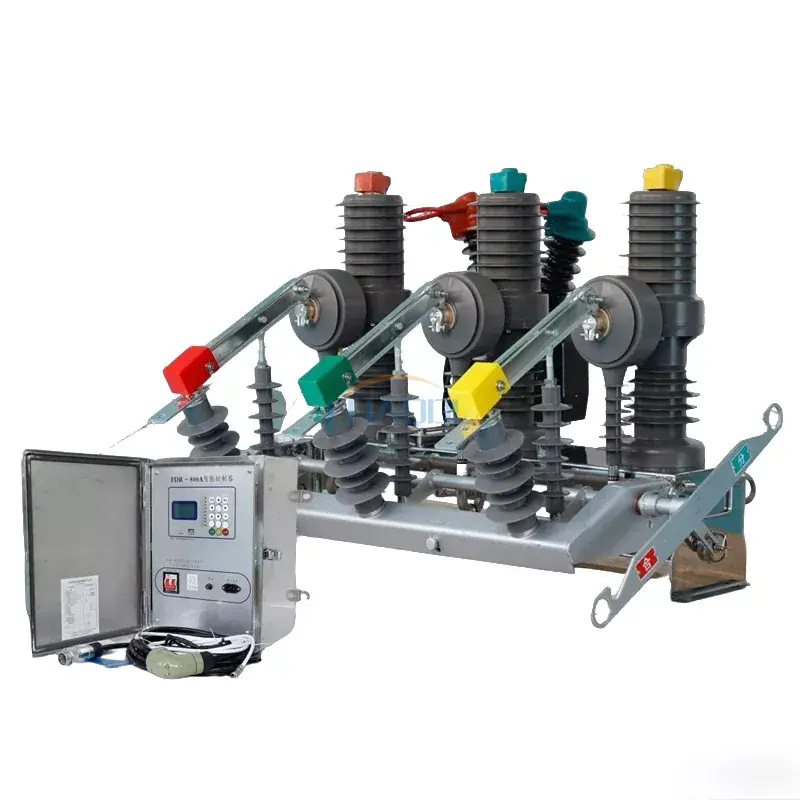
Table of Contents
- 1. Overview of Outdoor Permanent Magnet Circuit Breaker
- 2. Working Principle
- 3. Key Components
- 4. Advantages
- 5. Application Scenarios
- 6. Selection Guide
- 7. Installation and Maintenance
- 8. Technology Comparison
- 9. Frequently Asked Questions
- 10. Conclusion
1. Overview of Outdoor Permanent Magnet Circuit Breaker
An Outdoor Permanent Magnet Circuit Breaker is a high-voltage switching device designed for outdoor power distribution systems such as substations, industrial grids, and renewable energy networks. It uses a permanent magnet actuator instead of conventional spring or hydraulic mechanisms, significantly improving operational speed and reducing maintenance requirements.
This technology is widely adopted in medium-voltage and high-voltage applications where reliability, environmental resistance, and rapid fault interruption are essential. The breaker ensures safe isolation of faulty sections while maintaining uninterrupted service for the rest of the grid.
2. Working Principle
The core working principle of the Outdoor Permanent Magnet Circuit Breaker is based on electromagnetic force generated by a controlled coil interacting with a permanent magnetic field. The system has two stable states: open and closed.
- Closing operation: When the control coil is energized, electromagnetic force overcomes the holding force of the permanent magnet, allowing the contacts to close.
- Opening operation: A reverse current or pulse energizes the coil in the opposite direction, releasing the magnetic holding force and opening the contacts rapidly.
- Stable state retention: Once in position, the permanent magnet maintains the state without continuous energy consumption.
This bistable mechanism significantly reduces energy usage and mechanical fatigue compared to spring-operated systems.
3. Key Components
The system is composed of several integrated parts that ensure efficient operation:
| Component | Function |
|---|---|
| Permanent Magnet Actuator | Provides stable holding force for open/close states |
| Control Coil | Generates electromagnetic force for switching operations |
| Vacuum Interrupter | Extinguishes arc during switching operations |
| Insulating Housing | Protects internal components from environmental stress |
| Control Unit | Manages switching commands and system protection logic |
4. Advantages
Compared with traditional circuit breakers, the permanent magnet type offers significant operational improvements:
- High reliability: Fewer mechanical parts reduce failure probability.
- Low maintenance: No spring charging mechanism required.
- Fast response: Switching time is significantly reduced.
- Energy efficiency: Only requires energy during switching, not during holding.
- Long service life: Reduced wear and tear improves durability.
- Outdoor adaptability: Designed for extreme weather conditions including humidity, dust, and temperature fluctuations.
5. Application Scenarios
Outdoor Permanent Magnet Circuit Breakers are widely used in modern electrical infrastructure, including:
- Urban power distribution networks
- Wind and solar power plants
- Industrial manufacturing systems
- Railway electrification systems
- Mining and heavy-duty energy facilities
Their ability to operate reliably in remote or unmanned substations makes them especially valuable in renewable energy and smart grid systems.
6. Selection Guide
When selecting an Outdoor Permanent Magnet Circuit Breaker, several technical and environmental factors must be considered:
- Rated voltage: Must match system voltage requirements.
- Breaking capacity: Should be sufficient for expected fault currents.
- Environmental conditions: Temperature, humidity, and altitude considerations.
- Insulation level: Ensure compatibility with surge protection standards.
- Control system compatibility: Integration with SCADA or automation systems.
Proper selection ensures long-term system stability and minimizes operational risks.
7. Installation and Maintenance
Although maintenance requirements are lower than traditional breakers, proper installation and periodic inspection are still essential.
- Ensure correct grounding and insulation coordination during installation.
- Regularly inspect control circuits for signal integrity.
- Check sealing systems to prevent moisture ingress.
- Perform operational testing under scheduled maintenance cycles.
Due to its simplified mechanical structure, downtime is significantly reduced, improving overall grid efficiency.
8. Technology Comparison
| Feature | Permanent Magnet Type | Spring Type | Hydraulic Type |
|---|---|---|---|
| Energy Consumption | Low (only during switching) | Moderate | High |
| Maintenance Requirement | Low | Medium | High |
| Operational Speed | Very Fast | Fast | Moderate |
| Mechanical Complexity | Low | High | Very High |
9. Frequently Asked Questions
Q1: What makes permanent magnet circuit breakers more reliable?
A: Their reduced number of moving parts and stable magnetic holding system significantly lower failure rates.
Q2: Are they suitable for harsh outdoor environments?
A: Yes, they are specifically designed for outdoor applications with robust insulation and protective enclosures.
Q3: Do they require frequent maintenance?
A: No, maintenance intervals are longer compared to spring or hydraulic systems.
Q4: Can they be integrated into smart grid systems?
A: Yes, they are compatible with modern automation and remote control systems.
10. Conclusion
The Outdoor Permanent Magnet Circuit Breaker represents a significant advancement in power distribution technology, offering improved efficiency, reliability, and operational simplicity. Its innovative design reduces maintenance costs while enhancing switching performance in demanding environments.
As global energy systems evolve toward smarter and more resilient infrastructure, solutions like this become essential for ensuring stable power delivery. Companies such as Anqiang Power continue to develop and supply advanced switching solutions that meet modern grid requirements and industrial expectations.
For detailed specifications, technical consultation, or customized solutions, please contact us to explore how Anqiang Power can support your project requirements with reliable and high-performance circuit breaker technology.