How Does Metal Injection Molding Compare to Traditional Machining
2025-12-31
In the world of precision metal part manufacturing, engineers and product developers are often faced with a critical choice: Metal Injection Molding (MIM) or traditional Machining. Each process offers distinct advantages, and the optimal path depends heavily on your project’s specific requirements for complexity, volume, material, and cost. At BSD, we specialize in guiding our clients through this decision, leveraging our expertise in both advanced MIM technology and precision machining to deliver optimal manufacturing solutions. This blog provides a professional comparison to help you determine which method is best suited for your application.
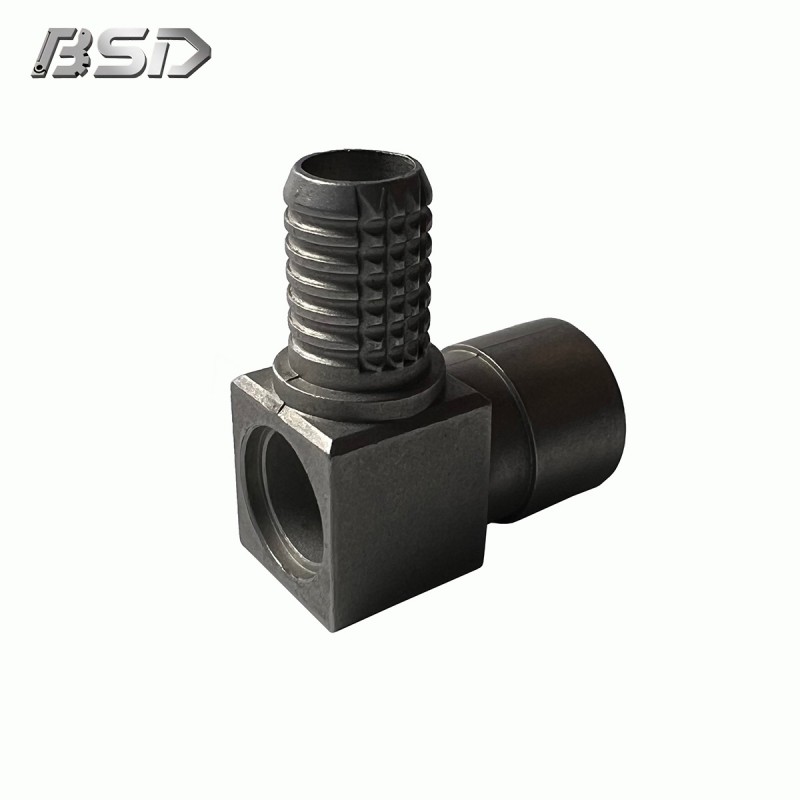
Key Differences at a Glance
The fundamental distinction lies in the production philosophy:
-
Metal Injection Molding is a net-shape process. It builds a part by injecting a feedstock (metal powder + binder) into a mold, followed by debinding and sintering. It is ideal for high-volume production of complex geometries.
-
Traditional Machining is a subtractive process. It creates a part by removing material from a solid block (bar, rod, or forging) using tools like mills, lathes, or drills. It offers maximum flexibility for low-volume production and very tight tolerances.
A Detailed Comparative Analysis
| Feature | Metal Injection Molding (MIM) | Traditional Machining |
|---|---|---|
| Process Type | Additive/Forming | Subtractive |
| Best for Volume | High Volume (10,000+ parts) | Low to Medium Volume |
| Part Complexity | Excellent for complex, 3D shapes | Limited by tool access and setups |
| Material Waste | Minimal (<5%) | Significant (can be 40-80%) |
| Initial Cost | Higher (tooling investment) | Lower (no hard tooling) |
| Per-Part Cost | Very low at high volumes | Higher, less sensitive to volume |
| Lead Time | Longer initial lead time | Shorter for prototypes |
| Tolerances | Good (±0.3% typical) | Excellent (±0.01mm possible) |
When to Choose Which Process?
Choose BSD's Metal Injection Molding services when you need:
-
High production quantities to amortize tooling costs.
-
Complex, miniature, or intricate components.
-
Efficient material utilization for expensive alloys.
-
Consistent part quality across large batches.
Opt for BSD's precision Machining capabilities when your project involves:
-
Prototypes or low-volume production.
-
Extremely tight tolerances or superior surface finish.
-
Large or very simple parts.
-
Frequent design changes.
Metal Injection Molding FAQ
Q: Is the strength of a MIM part comparable to a machined part?
A: Yes. After sintering, MIM parts achieve near-full density (typically >96%), resulting in mechanical properties (strength, hardness, ductility) that are virtually identical to those of wrought or machined materials of the same alloy.
Q: Can MIM handle the same materials as machining?
A: MIM is compatible with a vast range of alloys, including stainless steels (17-4PH, 316L), tool steels, superalloys, and titanium. However, it is most cost-effective for materials that are difficult or expensive to machine, as it minimizes waste.
Q: What are the primary design constraints in MIM?
A: Key design guidelines for Metal Injection Molding include maintaining uniform wall thickness for consistent sintering, incorporating generous radii, and accounting for linear shrinkage (typically 15-20%) that occurs during the sintering process.
Making the Right Decision for Your Project
Both Metal Injection Molding and traditional Machining are powerful tools in the manufacturing arsenal. The choice isn't about which is universally better, but which is more efficient and cost-effective for your specific part geometry, material, and production volume. At BSD, our engineering team possesses deep EEAT (Experience, Expertise, Authoritativeness, and Trustworthiness) in both technologies. We provide unbiased analysis to ensure you select the process that maximizes performance while minimizing total cost.
Contact us today for a free design-for-manufacturability review. Let our experts at BSD help you navigate the choice between MIM and Machining to optimize your component's production and accelerate your product's journey to market.