

How Does Hydraulic Manifold Machining Improve System Performance and Reliability?
2026-03-18
Abstract: Hydraulic manifold machining is a precision-driven process that directly impacts the efficiency, durability, and safety of hydraulic systems. Poorly machined manifolds can lead to leakage, pressure loss, and system failure—common pain points for engineers and buyers. This article provides a comprehensive, structured guide to how hydraulic manifold machining works, key technical considerations, material selection, common challenges, and how to choose a reliable machining partner such as Difon. The goal is to help decision-makers minimize risk and maximize performance.
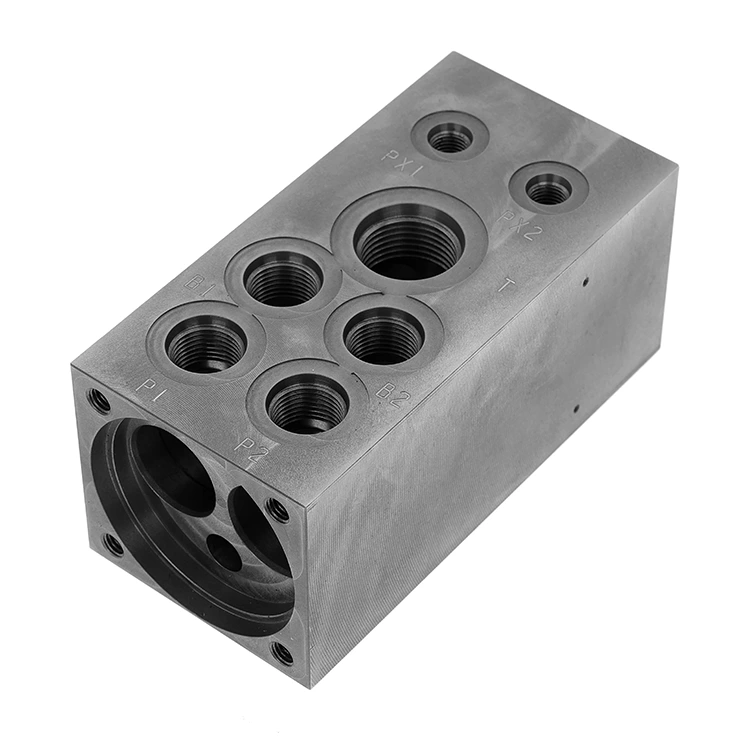
Table of Contents
- 1. What Is Hydraulic Manifold Machining?
- 2. Why Precision Matters in Hydraulic Systems
- 3. Core Machining Processes Explained
- 4. Material Selection and Its Impact
- 5. Common Challenges and How to Solve Them
- 6. Key Technical Parameters
- 7. How to Choose a Reliable Manufacturer
- 8. Frequently Asked Questions
- 9. Conclusion
1. What Is Hydraulic Manifold Machining?
Hydraulic manifold machining refers to the process of manufacturing a solid block—typically metal—into a highly engineered component that controls fluid flow within a hydraulic system. Instead of using multiple pipes and fittings, a manifold integrates flow channels internally, reducing leak points and improving system efficiency.
Key functions of a hydraulic manifold include:
- Directing fluid flow between components
- Reducing system complexity
- Enhancing pressure stability
- Minimizing leakage risks
For buyers, the primary concern is consistency and accuracy. Even a minor deviation in machining can compromise the entire system.
2. Why Precision Matters in Hydraulic Systems
Hydraulic systems operate under high pressure, often exceeding thousands of PSI. In such environments, machining tolerance becomes critical.
Common customer pain points include:
- Internal leakage due to poor surface finish
- Misalignment of ports causing assembly issues
- Pressure drops from inefficient flow channels
- Frequent maintenance due to premature wear
Precision machining ensures:
- Accurate channel geometry
- Smooth internal surfaces
- Reliable sealing performance
- Long service life
This is why companies like Difon focus heavily on advanced CNC machining and strict quality control protocols.
3. Core Machining Processes Explained
Hydraulic manifold machining involves several critical steps, each contributing to final product quality.
- CNC Milling: Used to shape the external structure and create flat surfaces.
- Deep Hole Drilling: Essential for forming internal fluid channels with high precision.
- Tapping: Creates threaded ports for valves and fittings.
- Surface Finishing: Improves sealing performance and reduces friction.
- Deburring: Removes sharp edges and internal burrs that could disrupt fluid flow.
Advanced manufacturers often integrate multi-axis machining to reduce setup errors and improve accuracy.
4. Material Selection and Its Impact
The choice of material significantly affects durability, corrosion resistance, and machining complexity.
| Material | Advantages | Applications |
| Aluminum | Lightweight, easy to machine, cost-effective | Mobile equipment, general industrial use |
| Carbon Steel | High strength, durable | Heavy-duty hydraulic systems |
| Stainless Steel | Corrosion-resistant, long lifespan | Marine, chemical environments |
Choosing the wrong material can lead to premature failure or excessive costs. A professional machining partner will guide material selection based on application requirements.
5. Common Challenges and How to Solve Them
Hydraulic manifold machining is complex, and several issues frequently arise:
- Internal Burrs: Can block flow or damage seals. Solution: high-pressure flushing and precision deburring.
- Cross-Drilling Alignment Errors: Leads to flow inefficiency. Solution: multi-axis CNC machining.
- Surface Roughness: Causes leakage. Solution: honing or polishing processes.
- Thermal Deformation: Affects dimensional accuracy. Solution: controlled machining environments.
Addressing these challenges requires both advanced equipment and experienced engineers.
6. Key Technical Parameters
Understanding technical specifications helps buyers make informed decisions.
| Parameter | Typical Range | Importance |
| Tolerance | ±0.01 mm | Ensures precise fit and sealing |
| Surface Roughness | Ra 0.8–1.6 μm | Reduces leakage and friction |
| Pressure Rating | Up to 5000 PSI+ | Determines system capability |
| Channel Diameter Accuracy | ±0.02 mm | Maintains flow consistency |
These parameters directly affect performance and should always be verified before procurement.
7. How to Choose a Reliable Manufacturer
Selecting the right supplier is critical for ensuring consistent quality and timely delivery.
Key evaluation criteria include:
- Experience in hydraulic manifold machining
- Availability of advanced CNC equipment
- Quality inspection standards
- Customization capabilities
- Technical support and communication
Difon stands out by offering precision machining, strict quality control, and tailored solutions for diverse industries. Their expertise helps clients reduce operational risks and improve system performance.
8. Frequently Asked Questions
Q1: What is the typical lead time for hydraulic manifold machining?
A: Lead time varies depending on complexity and quantity, but typically ranges from 2 to 6 weeks.
Q2: How can internal cleanliness be ensured?
A: Through high-pressure cleaning, ultrasonic washing, and strict inspection procedures to remove chips and contaminants.
Q3: Is customization available for specific applications?
A: Yes, most manufacturers including Difon provide fully customized solutions based on design drawings and system requirements.
Q4: What certifications should a manufacturer have?
A: ISO quality certifications and relevant industry standards are important indicators of reliability.
9. Conclusion
Hydraulic manifold machining is a critical process that determines the overall performance, safety, and longevity of hydraulic systems. From material selection to precision drilling and finishing, every step must be carefully controlled to avoid costly failures.
By partnering with an experienced manufacturer like Difon, businesses can ensure high-quality components that meet demanding operational requirements. Investing in precision machining is not just a technical decision—it is a strategic move to enhance efficiency and reduce long-term costs.
If you are looking for reliable, high-precision hydraulic manifold solutions tailored to your needs, contact us today to discuss your project and discover how professional machining can elevate your system performance.
