How Does Home Appliance Injection Mold Improve Product Quality and Manufacturing Efficiency?
2026-01-12
Abstract
Home appliance injection mold technology plays a decisive role in determining the appearance, durability, safety, and production efficiency of modern household appliances. From coffee makers and blenders to air fryers and washing machines, the quality of molded components directly affects market competitiveness and user satisfaction. This article provides a comprehensive overview of how home appliance injection mold solutions address common customer pain points, optimize production workflows, and ensure consistent quality. It also explores design principles, material selection, process control, and long-term value for appliance manufacturers seeking reliable molding partners.
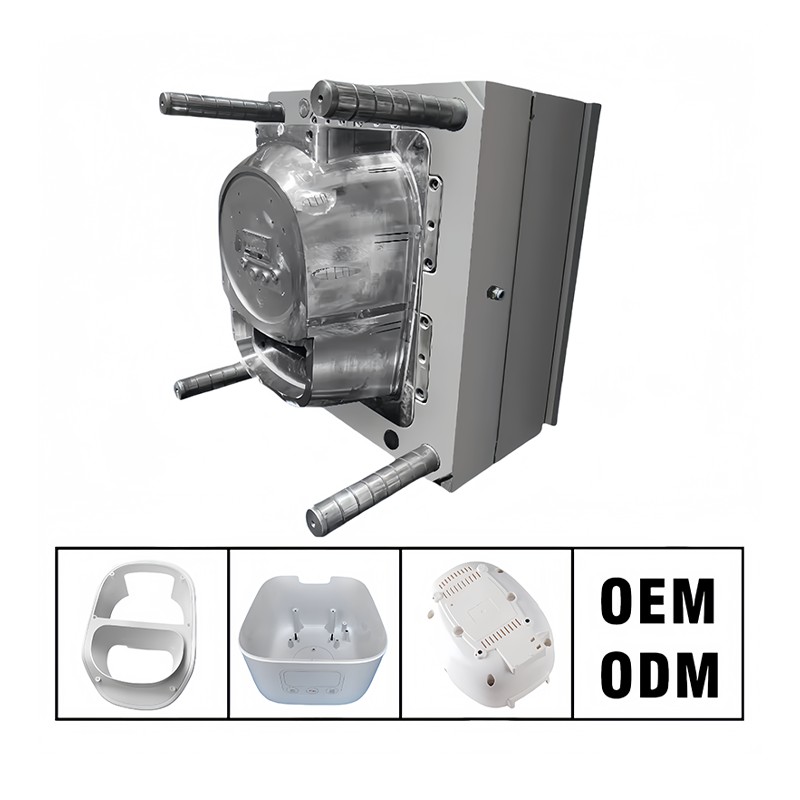
Table of Contents
- Article Outline
- What Is a Home Appliance Injection Mold?
- Key Customer Pain Points in Appliance Manufacturing
- How Mold Design Influences Appliance Performance
- Material Selection for Home Appliance Injection Mold
- Injection Molding Process Flow Explained
- Quality Control and Consistency Assurance
- Typical Applications in Home Appliances
- Frequently Asked Questions
- Conclusion and Cooperation Opportunity
Article Outline
- Overview of home appliance injection mold technology
- Manufacturing challenges faced by appliance brands
- Mold design, materials, and process optimization
- Quality assurance and long-term cost efficiency
- Practical applications and real-world value
What Is a Home Appliance Injection Mold?
A home appliance injection mold is a precision-engineered tool used to produce plastic components for household appliances through injection molding. Molten plastic is injected into a custom-designed mold cavity, cooled, and ejected as a finished part. These molds are designed to meet strict dimensional tolerances, surface finish requirements, and functional specifications.
Unlike general-purpose molds, appliance molds often require higher accuracy, better thermal balance, and longer service life due to mass production demands and strict safety standards. Components such as outer housings, control panels, internal brackets, and functional parts all rely on stable mold performance.
Key Customer Pain Points in Appliance Manufacturing
Manufacturers sourcing home appliance injection mold solutions often face several recurring challenges:
- Inconsistent part dimensions affecting assembly accuracy
- Surface defects impacting product appearance
- Short mold lifespan leading to frequent replacements
- Extended production cycles increasing overall costs
- Difficulty adapting molds for design updates
These pain points directly influence delivery schedules, brand reputation, and long-term profitability. Addressing them requires a combination of engineering expertise, material knowledge, and advanced manufacturing capabilities.
How Mold Design Influences Appliance Performance
Mold design is the foundation of successful injection molding. For home appliances, design considerations extend beyond basic shape replication.
| Design Factor | Impact on Final Product |
|---|---|
| Gate and runner layout | Ensures uniform material flow and reduces warpage |
| Cooling system design | Shortens cycle time and improves dimensional stability |
| Ventilation structure | Prevents air traps and burn marks |
| Ejection mechanism | Protects part surface and maintains shape integrity |
A well-designed home appliance injection mold reduces defect rates while enabling smooth, high-volume production. Engineering teams often simulate mold flow and thermal behavior before fabrication to avoid costly revisions.
Material Selection for Home Appliance Injection Mold
Material choice affects both mold durability and product performance. Appliance components must withstand heat, mechanical stress, and long-term use.
- ABS: Suitable for housings with good surface finish
- PP: Common for internal structures due to chemical resistance
- PC: Used for transparent or high-impact parts
- PA: Ideal for load-bearing components
Similarly, mold steel selection is critical. High-quality steel improves wear resistance and maintains precision across millions of cycles, ensuring consistent output throughout the mold’s service life.
Injection Molding Process Flow Explained
Understanding the injection molding workflow helps manufacturers evaluate production efficiency:
- Mold closing and clamping
- Plastic injection into the cavity
- Cooling and solidification
- Mold opening and part ejection
- Inspection and post-processing
Optimized cycle parameters reduce energy consumption and scrap rates. Advanced automation further enhances repeatability, especially for complex appliance parts.
Quality Control and Consistency Assurance
Consistent quality is essential for appliance brands. Effective quality management includes:
- Dimensional inspection using precision measuring equipment
- Surface finish evaluation under standardized lighting
- Material performance testing
- Regular mold maintenance and calibration
Companies such as Changhua Intelligent Electric Appliance Co., Ltd. emphasize integrated quality control systems to ensure that every molded component meets functional and aesthetic expectations across production batches.
Typical Applications in Home Appliances
Home appliance injection mold solutions are widely applied across product categories:
- Coffee makers and beverage machines
- Kitchen appliances such as mixers and air fryers
- Household cleaning equipment
- Smart home electrical devices
Each application requires tailored mold structures to accommodate unique design features, safety requirements, and usage conditions.
Frequently Asked Questions
Q1: How long does a home appliance injection mold typically last?
With proper design and maintenance, a high-quality mold can support hundreds of thousands to millions of production cycles, depending on material and usage conditions.
Q2: Can existing molds be modified for new appliance designs?
Yes, many molds can be optimized or partially modified to accommodate design updates, reducing redevelopment costs.
Q3: What factors most affect molding cycle time?
Cooling efficiency, material type, and part thickness are the primary factors influencing cycle duration.
Conclusion and Cooperation Opportunity
A reliable home appliance injection mold is not just a production tool—it is a strategic asset that influences quality, efficiency, and brand perception. By focusing on precise design, appropriate material selection, and consistent quality control, manufacturers can overcome common production challenges and achieve long-term operational stability.
Changhua Intelligent Electric Appliance Co., Ltd. continues to support appliance manufacturers with customized injection mold solutions designed for performance, durability, and scalability. If you are seeking a dependable partner to enhance your appliance manufacturing capabilities, contact us today to discuss your project requirements and explore tailored solutions.